09/03/2010.
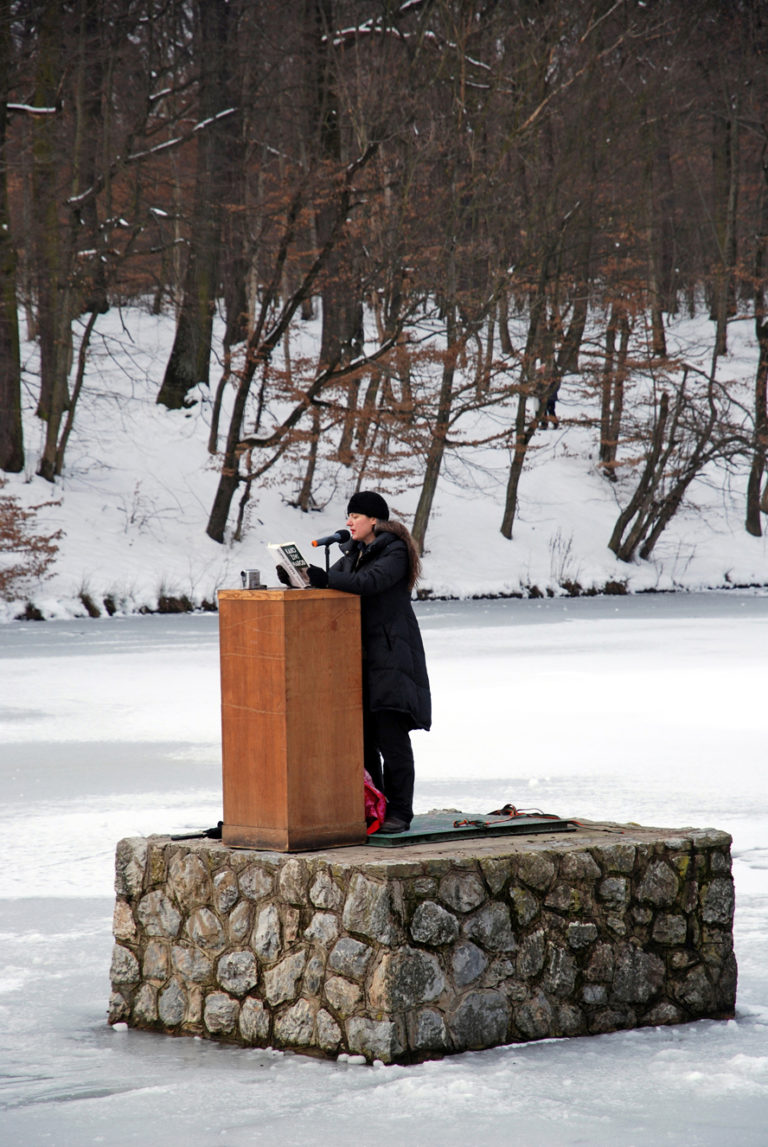
For the Venice Architecture Biennale in 2008 STEALTH.unlimited co-curated the Dutch Pavilion with the project 'ARCHIPHOENIX - Faculties of Architecture'. Their response to the overall topic 'Out There: Architecture Beyond Building' was triggered by the recent burn-down of the Faculty of Architecture in Delft. Instead of thinking in terms of an exhibition, the Dutch Pavilion was turned into a stage for research and exploration and a debate platform focusing on faculties for architecture – in the sense of its multiple capacities, powers, capabilities. For a week, the project took the opportunity to engage a vast network of architects and other professionals in a direct exchange either as speakers, interviewers, or moderators. The spatial set-up for the pavilion changed on a daily basis to accommodate the line of activities and an on-site instantly edited video and book production unit. While the pavilion has been acting as a temporary 'school', the produced content aimed to become an imaginary curriculum for architecture beyond division on education and practice...
A year later, in autumn 2009, STEALTH curated one of the three episodes of the Tirana International Contemporary Art Biannual (T.I.C.A.B). In an attempt to critically respond to the current development of Tirana - through
23/02/2010.
"What is robbing a bank compared to founding a bank?"
“Robbing a bank is an act of an amateur. True professionals found a bank.”
(Bertolt Brecht, The Threepenny Opera)
“They say he is dishonest, that he does not pay his debt. But what should we think of the one who took our interests, left his prices, and approved our prices?”
“Whoever set foot inside a bank never left it.”
(Rudolf Bićanić, How the People Live)
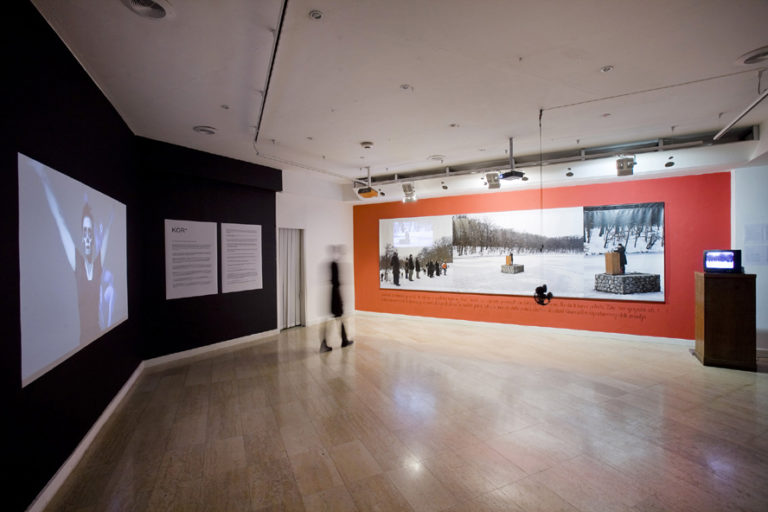
The phenomenon of money is as old as civilization itself and studying its nature and history drifts between two extremes: the liberal theory of economy which perceives money as a neutral means and sees its development from commodity to currency as a spontaneous process, as opposed to the conception of money as a complex system of social and political relations. At the beginning of the 20th century, Georg Simmel saw how money changes its social function and how, from being a means to accomplish a goal, it becomes the sole means, which is independent from the goal it tries to accomplish. Today’s electronic technologies question the term of money itself. According to some estimations, out of the total amount of US dollars in world circulation, 97%