


New exhibition
10ka space, GMK, Ulica Pavla Šubića 29, Zagreb
Opening: Thursday, 3 December 2026 at 7 pm
Exhibition dates: 3–17 December 2026
Gallery opening hours: Tue–Fri 4–7 pm / Sat 10 am–1 pm
Free admission
Join us for the opening of Jelena Bogdanić’s solo exhibition Dućan (Shop) on Thursday, 3 December at 7 pm at the Miroslav Kraljević Gallery.
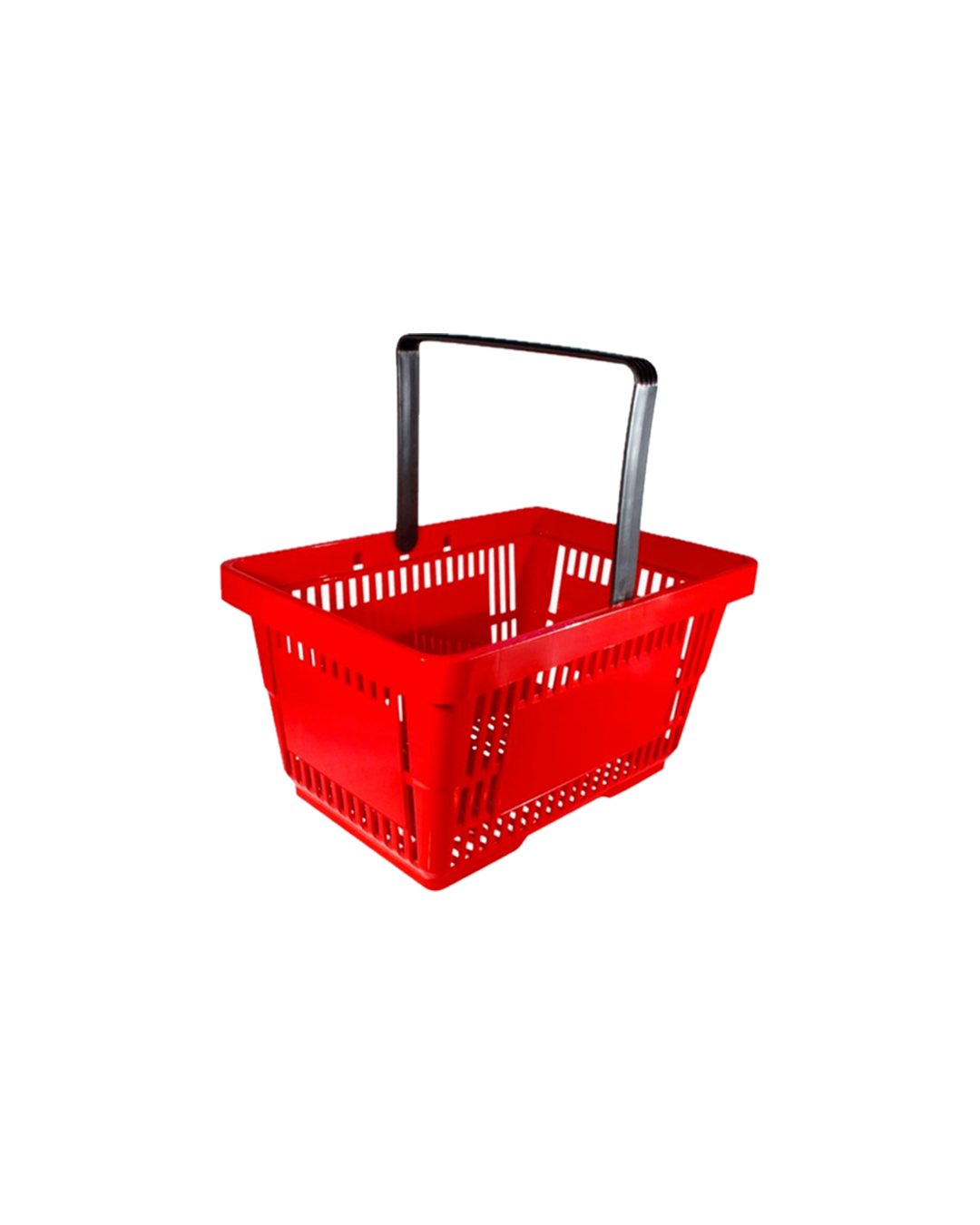
Shelves, baskets and an illuminated OPEN sign transform the gallery into a seemingly familiar retail space. In place of everyday products, Jelena Bogdanić fills the shelves with forms made from melted plastic, raising questions about the ritual of shopping, the value of commodities and the material consequences of consumption. The preface is by Marko Drmać.
Preface
A shop is one of the most recognisable spaces of contemporary everyday life. Its spatial organisation, product displays, shelves, baskets and illuminated signs form a familiar system that continually reproduces the ritual of shopping. It is a space where production, distribution, desire and consumption meet, but also one in which the value of things is often determined by their very availability and the possibility of buying them. The exhibition reconstructs the visual and spatial identity of a shop, adopting its characteristic elements while fundamentally changing their function. Instead of familiar consumer products, the shelves hold forms made from melted plastic: a material stripped of recognisable use value and a definitive shape, yet presented in a space intended for display and sale. Plastic is presented here as a product that has not yet had the chance to become a product, as a commodity that has already taken its place on the shelf without ever being assigned a specific purpose. A product that, in effect, has not even been produced yet, but is already offered for sale. The illuminated neon OPEN sign and shopping baskets further establish the illusion of a functioning shop, creating a situation in which the act of shopping is expected, while its object remains undefined.
This situation raises questions about the relationship between production, consumption and the material consequences of human activity. In her essay Life & Death in the Anthropocene: A Short History of Plastic,* theorist Heather Davis considers plastic one of the defining materials of the Anthropocene, closely bound to the development of capitalist systems of production and consumption. Her analysis points to the paradox of a material that originates in the fossilised remains of ancient life, enters cycles of mass production and often very brief consumption, and then persists in the environment across timescales far beyond human experience. Plastic thus embodies both the acceleration of contemporary consumption and the almost indefinite deferral of its consequences. This temporal and material paradox lies at the centre of the exhibition. The objects we buy every day often have short lifespans compared with the time their materials remain in the environment. The act of buying ends at the moment of payment, while its material consequences continue to exist. Plastic, meanwhile, has ceased to be merely an external element of our living environment and has become an integral part of our everyday practices, eating and consumption habits, surroundings, and even our bodies. Its ubiquity leads to a kind of normalisation of a material that has become almost invisible precisely because of its constant presence.
In this context, the shop can be read as a microcosm of the Anthropocene: a space in which the human relationship with natural resources, production and our own needs takes material form. Its apparent neutrality conceals complex processes of exploitation, extraction, processing, transport and waste accumulation. Shelves organise and present goods as a series of interchangeable possibilities, while shopping becomes a recurring pattern of behaviour. In such a system, what matters is not necessarily what is bought, but the very possibility and need to buy. The product carries the promise of short-lived satisfaction, a sense of novelty, or belonging to a particular social or consumer trend. Consumption therefore takes place not only in response to an actual need, but also as a learned emotional and social practice.
The choreography of shopping — picking up a basket, moving between shelves, looking, selecting and taking possession of products — becomes an almost automated ritual of contemporary life. The exhibition adopts this choreography but deprives it of its usual goal. Visitors find themselves in a space they recognise, yet the objects they encounter do not offer the possibility of a conventional consumer decision. Melted plastic, placed where merchandise would normally be, simultaneously evokes its origins, transformation and future. It represents a material that has already undergone processes of human intervention, but also one whose final destination remains beyond the reach of the immediate act of consumption. If everything on a shelf is a potential commodity, what is it that we are actually buying? Objects, their symbolic value, a feeling of satisfaction, or simply the opportunity to participate in an endless cycle of consumption? And what remains once the purchase is complete?
Taking the shop as a model of an Anthropocene space, the exhibition does more than present the problem of plastic waste: it questions the system within which waste emerges as an almost inevitable consequence of production and consumption. The gallery sets up a temporary shop whose shelves are stocked, baskets ready and doors open. Yet the goods it offers cannot simply be bought, used or discarded. They confront us with a material that has already become part of our world and whose consequences will outlive our immediate needs, desires and patterns of behaviour.
Marko Drmać
* Heather Davis, Život i smrt u antropocenu: kratka povijest plastike [Life & Death in the Anthropocene: A Short History of Plastic], Biblioteka 0 Općenito, 2021.
About the artist

Jelena Bogdanić (b. 1998, Zagreb) graduated from the Art Education Department of the Academy of Fine Arts in Zagreb in 2022, in the class of Associate Professor Vlasta Žanić, with Professor Ines Krasić as co-supervisor. She spent the fifth semester of her studies at the Faculty of Fine Arts in Belgrade, in the class of Mileta Prodanović, through the Erasmus+ programme. Through objects and installations, she explores the materiality, aesthetics and poetic qualities of single-use plastic, whose unpredictable transformations she achieves through melting. She has exhibited in several group exhibitions in Zagreb, Labin and Dublin. She currently teaches at the School of Applied Arts and Design.
Credits
Artist: Jelena Bogdanić
Exhibition title: Dućan (Shop)
Preface: Marko Drmać
Gallery directors: Tea Matanović, Antonela Solenički
Production: Generator multidisciplinarnih koprodukcija (GMK)
