

23/02/2018.
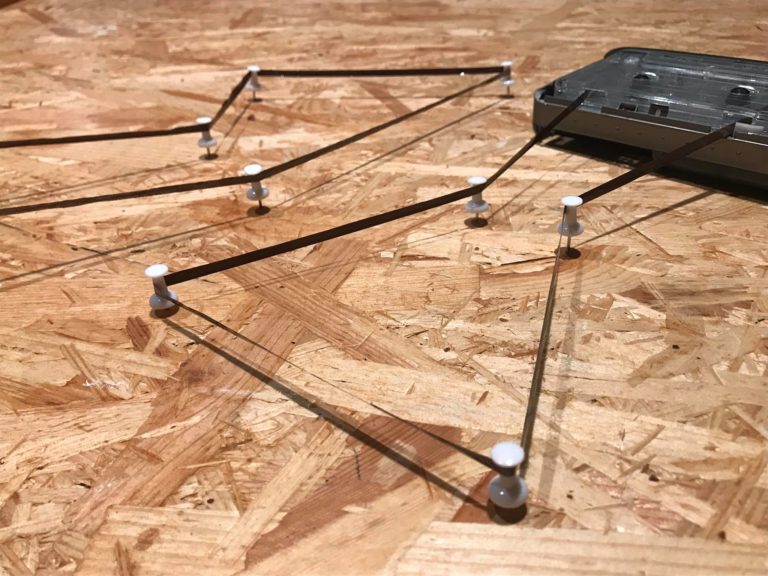
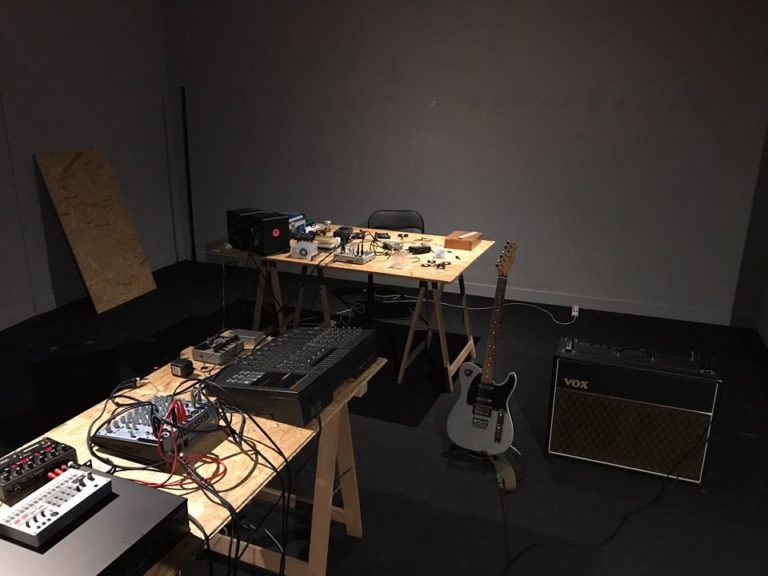
As the part of a residential programme Open Studio, experimental musician Andro Giunio is going topresent a segment of his work currently in the process of making, in a form of sound installationmade of Walkmans, cassettes and modified audio tapes. Different loops, samples and delay effectsare products of the research in the medium of an audio cassette, which artist is going to continue inthe following weeks of his residence in the gallery. Audio recordings on sound tapes are sequencesrecorded live on electronic baritone guitar in the space of gallery „Miroslav Kraljević“ between 19thand 26th February. Noise, irregularities, distortions and other specific nusproducts of using the lo-fimedium such as audio cassettes entice a closer relation between the music and its surroundings,and in turn presents recordings immanence in time and space. Possibility of forming new musicalcompositions is enabled by manipulation of existing recorded materials, and audio cassette as lo-fitechnology becomes a kind of materialized memory.Next Open Door are going to be held on 10th March at 19h, and on 17th March, the last day of OpenStudio programme, the artist will stage a musical performance.Open studio is supported by the Ministry of culture of Republic of Croatia and City of Zagreb.GMK program is
20/02/2018.
Andro Giunio comprehends and approaches music as temporal art form which he uses to explore nuances of time, space and memory. To create in this context means to structure and organize different fields of noise, melody and dissonance. The process of composing a musical piece becomes an experiment in determining a map and establishing basic navigation, whereat sensibility and orientation have precedence over specific sound. Applying techniques of superimposition of sound sequences, creating loops and bysubtle transformations of fluid parts, experimental approach in this case is attempt to reach deeper layers that constitute essence of all musical instruments, effects that are used, as well as medium that is used to record and document that process, which in turn becomes instrument itself.
Electric guitar is often a primary source of sound, but in process of composition and performance certain effects, for example various samples and existing recordings of ambience (interior and exterior) equally participate in forming a structure. Simpleand fixed compositions are often supplemented with temporary improvisations, and as a result music that is created is defined by tendency of sound sequences to remain in perpetual condition of creation and dissolution, positioning themselves between memory and moment, simultaneous processes of imagination
13/02/2018.
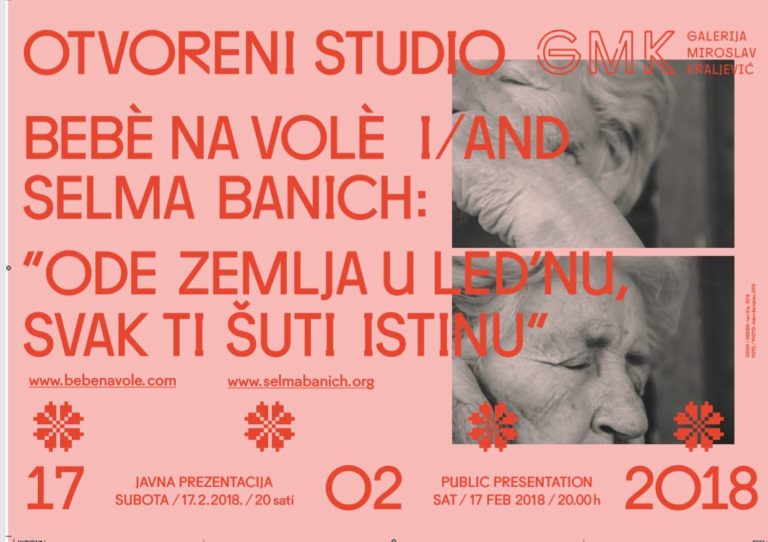
Open studio residency at the Miroslav Kraljević Gallery was an opportunity for a more studious research of the folklore heritage - as the people’s blues - and folk customs associated with it. On Saturday, February 17, we will hold a public presentation with which we temporarily complete the research and study process. We will present two lines of research - the first one leans on the tradition of naricanje - a stylized mourning of the deceased to bring the crowd into an uncontrolled thrill of emotions, and the other derives from traditional tunes we got to be fond of while studying ethnomusicological records at the Institute of Ethnology and Folklore Research.Hihotača and Ustenjača, two collective practices experimenting with breath, voice and body, have originated from the first line of research and can be read as a social, therapeutic and /or music practice built on laughing and moaning. From the second line of research Bebè Na Volè created improvisations based on melodies from the islands of Susak and Pag, Koprivnica and Slavonia.You will be able to hear some of the recordings and find out more about the whole research process at the presentation.
Adam Semijalac/ Bebè na Volè /
Musician, composer,
16/01/2018.
Ženila se tugai nevolja.Pir delala,kruha ni imala.*
He began to reveal his love for folklore music spontaneously and to some extend shyly remaking the traditional Slavonian song 'Đakovo, Đakovo' and by composing his 'Baba Ljuba blues' in Posedarje's dialect. As a versatile explorer of the traditional delta blues, Bebè Na Volè has been authoring, recording and performing music for years by do-it-yourself principles, continuing to explore musical heritage of its Slavonian and Dalmatian roots occasionally.
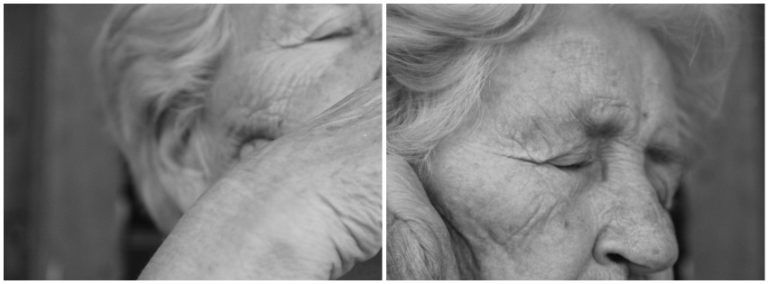
Open studio residency at the Miroslav Kraljević Gallery is an opportunity for a more studious research of the folklore heritage - as the people’s blues - and to folk customs asocciated with it. In the studio research and in creation of a temporary reading room and auditoryin the gallery, Adam will be joint by Selma, who, although not performing music herself, often finds inspiration in anarchist, work and feminist songs.
Open studio’s research, performance and listening space will be open to anyone interested in an encounter with experimental, eclectic reading of Croatian folk music and its associated blues. Performance event scheduled in the gallery on February 17th, starting at 8 p.m., will mark a temporary wrapping up of the research process.
Open studio can be

10/01/2018.
Chromaton is an experimental sound duo pulled from CRT TVs and DVD players. They mount their audio as video, and translate the colors of those videos into different frequencies. The chromaton is by Vanda Kreutz and Dorotea Cerin, graduates of the Academy of Fine Arts in Zagreb at New Media. They made their first appearance as Chromaton on SineLinea in November 2017.
Micronia is a solo project by Deborah Hustic that deals with various forms of experimental electronic music for dancers or other collaborative projects, especially DIY electronic instruments that she often creates, modifies, exhibits or curates. Took part with Messy Oscillators and solo appearances at festivals such as Device_art, Modern Sound Showcase, Leave Normal, Music Tech Festival, Perforations, Sound Art Incubator, SineLine, etc. Member of the do-it-yourself culture association - Workshop / Zagreb Makerspace.
Organization: Chromaton, Micronia, GMK
Partners: OZAFiN, ALU, Radiona
18/12/2017.
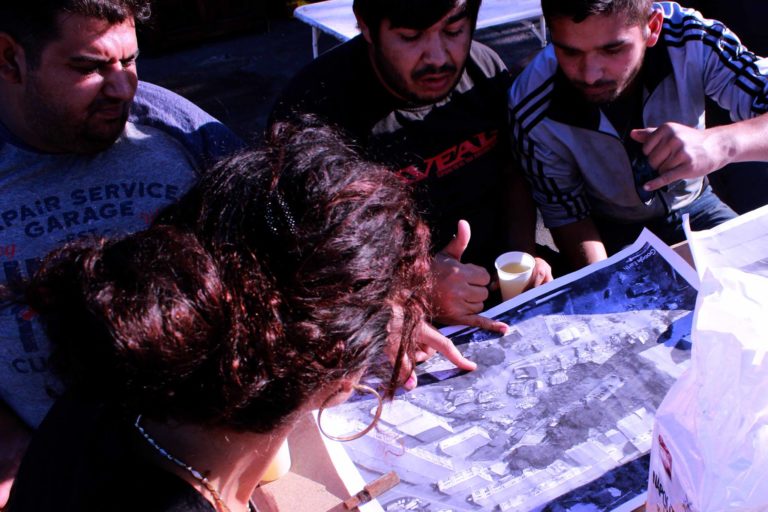
Marginality - point of communication / round table with the inhabitants of the Roma settlement Vrtni put
Participants: Stevo Golubovac (resident of the Garden Road), Nedjatin Kamberovski (Council of the Roma National Minority of the City of Zagreb), Sinisa Senad Music (Roma Education Fund)
Round table moderator and project leader: Bojan Mucko
The goal of the Marginality - Point of Communication project is to develop and implement field-based methods of civic empowerment for the inhabitants of Zagreb's ghettoized Roma settlements and to link them with relevant city and state structures. The Garden Road is a settlement of about 13 households in which the most vulnerable people live, and there is no strategic plan for their housing, as well as for the future of the settlement itself.
The majority of the population is illiterate, and there is no person in the settlement who would articulate and address the social and infrastructural problems of the settlement with the competent instances, nor is there a necessary official communication channel to the city and state structures.
The aim of the round table is to give visibility to the problems of the Garden Road, but also to foster long-term, continuous cooperation between residents, Roma representative
