


07/03/2012.
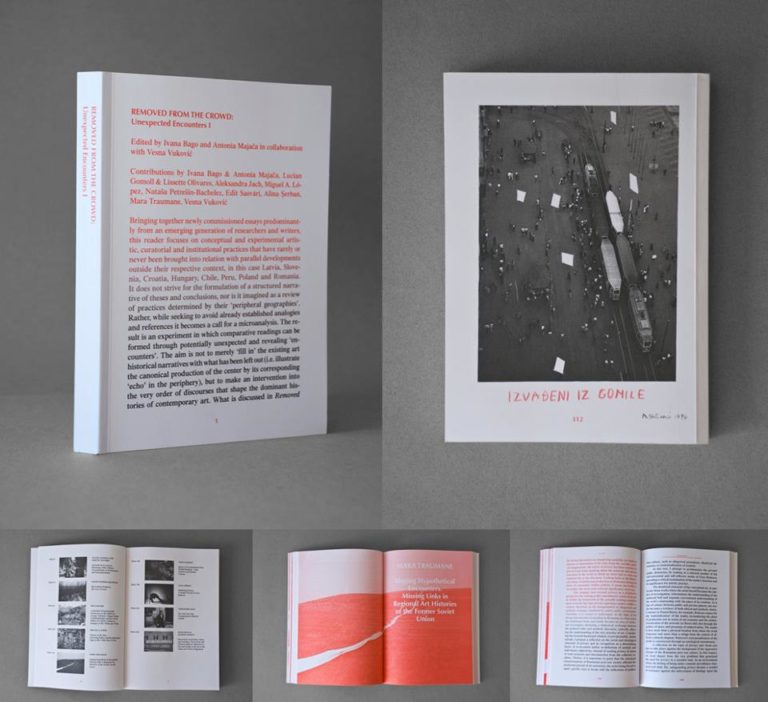
Bringing together newly commissioned essays predominantly from an emerging generation of researchers and writers, this reader focuses on conceptual and experimental artistic, curatorial and institutional practices that have rarely or never been brought into relation with parallels outside their respective context, in this case Latvia, Slovenia, Croatia, Hungary, Chile, Peru, Poland and Romania. It does not strive for the formulation of a structured narrative of theses and conclusions, nor is it imagined as a review of practices determined by their ‘peripheral geographies’. Rather, while seeking to avoid already established analogies and references it becomes a call for close reading. The result is an experiment in which comparative readings can be formed through potentially unexpected and revealing ‘encounters’.
Bringing together newly commissioned essays predominantly from an emerging generation of researchers and writers, this reader focuses on conceptual and experimental artistic, curatorial and institutional practices that have rarely or never been brought into relation with parallels outside their respective context, in this case Latvia, Slovenia, Croatia, Hungary, Chile, Peru, Poland and Romania. It does not strive for the formulation of a structured narrative of theses and conclusions, nor is it imagined as a review of practices determined by their ‘peripheral geographies’. Rather,

07/03/2012.
G-MK presents the new project by the Swedish artists and architects Magnus Bartas and Lars Henrik Stahl. The project is the result of a several months of research focusing on the usage of public space in the city of Zagreb and is based on questioning the relations between the public and private sector and their role in reshaping the urban landscape in the Croatian transitional economy.
In the video installation "Bogey", Bärtås and Ståhl develop parallel narratives revolving around the two neighboring areas in Blato, one of the Zagreb suburbs: the never completed building of the University hospital from the 1980s and the newly developed Golf & Country Club Zagreb. The presence of the huge building of the hospital next to the exclusive golf club points towards the dramatic changes and shifts in recent Yugoslavian and Croatian history. rnrnThe artists depart from the location of the hospital by repetitive reading of the text addressing the story of its history and its present. The last remaining guard keeps patrolling the hospital unable to prevent the continuous robbery of the building that gradually becomes stripped of all of its functioning parts and valuable metal. The gigantic skeleton of the hospital has kept

07/03/2012.
Bartas i Stahl svoje istraživanje prenose u dvokanalnu video-instalaciju ”Bogey” kreirajući paralelu između nikada dovršene sveučilišne bolnice i Golf & Country Club-a Zagreb, dva \'carstva\' koja se nalaze jedno uz drugo, na samoj obali Save u zagrebačkom Blatu.
Dok je javna bolnica polako ali sigurno propadala, u njenoj blizini je rastao privatni golf klub. Odlukom suda 2010. godine naloženo je vlasnicima golf kluba da isplate 4,5 milijuna kuna za ilegalno iskorištavanje predjela oko Save u blizini njihovog zemljišta. Vlasnici su do tog trenutka, naime, iskopali 300 000 kubičnih metara pijeska i šljunka, što je uzrokovalo zagađivanje podzemnih voda oko rijeke Save.
Rad se razvija oko figure posljednjeg i jedninog preostalog ”čuvara bolnice” koji patrolira zgradom, nemoćan u namjeri da spriječi propadanje zgrade i konstantnu krađu svih vrijednih materijala s njenog skeleta. Narativ u bolnici i brojni okolni zvukovi čine zajednički soundtrack dva videa i njihove dvije stvarnosti. Čuvareva rutinska šetnja bolnicom sa svim tragovima kradje, skvotera, grafiti umjetnika i drugih istovremeno egzistira s kretanjima automobila za golf.
Magnus Bartäs (1962, švedska) je umjetnik, pisac i profesor likovnih umjetnosti u Konstfacku, Stockholm. U svojim interdisciplinarnim projektima najčešće radi s biografijama, pripovjedačkim metodama i arhitekturom. Njegov video-radovi višestruko su nagrađivani na
