


02/01/2021.
For the beginning of 2021, we present the work by Vida Guzmić, winner of the competition for the production and exhibition of the new work Tvornica under the title „Shadows of her paintings“. During the month of December, Vida Guzmić used the gallery space as her studio, a place where processuality and production coexist. „Naive for women“ was the working title of the accepted proposal for research of the archive of amateur artist Sofia Guzmić, the artist's grandmother, and her intervention in the collection of grandmother's never-before-exhibited paintings. The idea for the work arose from the continuation of research on feminist geography with focus on the relationship between amateur and professional artistic position. It is an important fact that this work is located in the space of Miroslav Kraljević Gallery, whose work until the mid-nineties was associated with amateur art. Sofija Guzmić used painting on glass as her main technique - on the backs of the paintings it can be seen that it was in the period of the eighties and nineties. Her paintings were created by copying, redrawing and collaging, and Vida also appropriates these techniques, using them in the analysis and deeper understanding of her grandmother's art. In

19/11/2020.
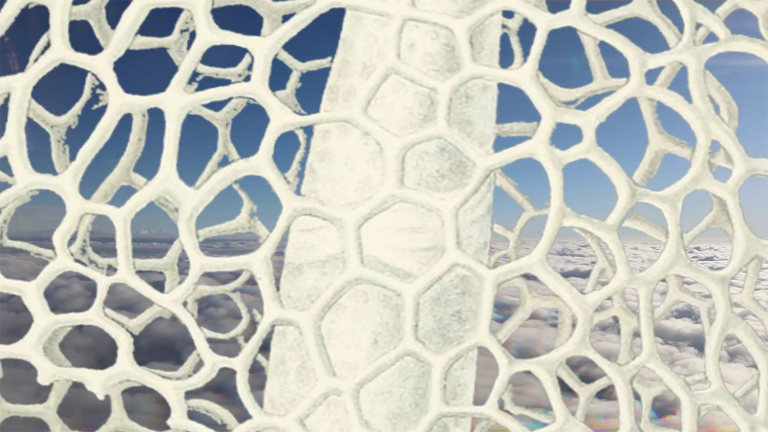
"The prototype of a motif (breakfast with all other objects on the table) is vacuumed into the plastic and automatically it becomes an artifact of ecological pollution. In retrospect, the motif is with its singularity, content, and physical appearance compression of historical and artistic meaning (as dead nature), and of the making process (vacuum forming). This process retroactively sublimes the whole garrison of the similar plastic progeny of our market: from plasticized tangerine slices to living plants wrapped in plastic. In that way, the process disrupts any possible potential of transmedial aggregation of pollution. Motif Dead nature is the reconstruction of my breakfast and contains a plate with food and utensils, a cup of coffee, a box of eggs, an artistic magazine, two books, a bowl with fruit, and two house plants. The scene is reconstructed in the plastic form via the termo vacuum-forming technique. During the making process, some motifs were vacuumed from both sides. Newly-made copies are still in 3D but they are hollow and they are just the illusion of their outer form and texture on transparent plastic. They are becoming disguised entities that are detached from the plastic mass only as of the illusion of the
08/09/2020.
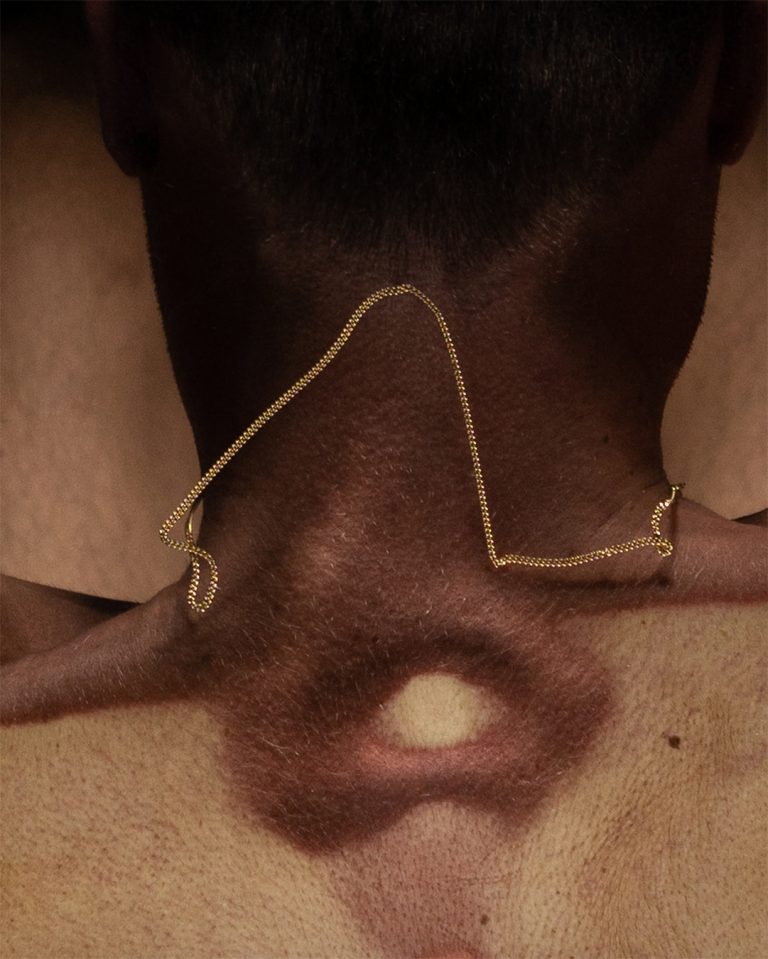
Sprouting from a persistent need to share our artistic processes and find a possibility for contact even now when every such potential seems to slip out of the domain of the possible or reachable into the domain of total biopolitical control Ivana Mirchevska, Natasha Nedelkova and Elena Chemerska (Skopje, North Macedonia) will try and meet for a three week long residency in Zagreb during September of 2020.
31/08/2020.
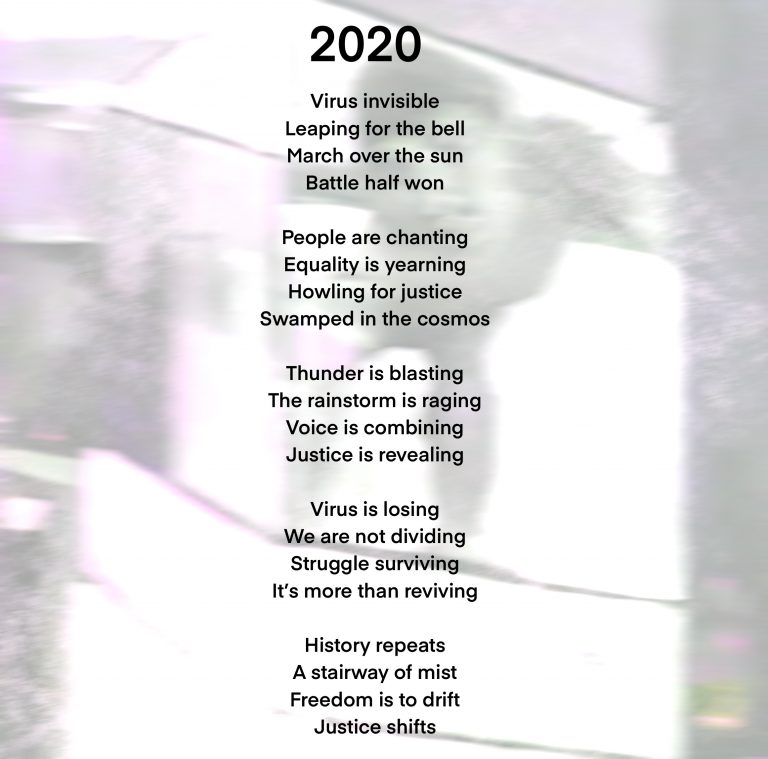
“Privacy advocates will find it difficult to convince the public that traditional definitions of privacy are of higher value than the freedom to leave your house. No one should want to abandon privacy as a value, of course, or even to downgrade its importance. But it’s entirely possible to develop a concept of privacy that is less metaphorical, with new boundaries consistent with the practical challenges society now faces.” (1) In a time of self-isolation, the home becomes the main arena of events. Between a film set and a black box theater, the home becomes the setting for a staged life, a life that only recently took place somewhere outside. The illusion of normalcy is enabled by the screen that delivers new functions with each day. We have set a new framework of living within which, isolated behind glass, we fulfill our needs, desires and obsessions. Meetings and sex parties over Zoom, socializing via Chatroulette, Michelin-starred restaurants available thanks to Wolt, 6 a.m. raves on Sundays at regular Club Quarantine parties. The screen has become the only place where any significant contact takes place, it enables us to reintegrate into the society from which we are cut off. In front
23/08/2020.
Annual student exchange facilitated by Nicole Hewitt and Ben Cain. During an exceptionally difficult period that included a pandemic and earthquakes, along with various other challenges, BA Art students from Zagreb Academy of Fine Art and LondonMet found ways to communicate, to share times, spaces, ideas… and to make work together over distance. Ordinarily -and this has been happening for more than 10 years now- this is an exchange project that involves real physical travel between London and Zagreb. On other occasions this project would also include an exhibition event at GMK Zagreb. Travel restrictions and social distancing have meant that we have had to manage the project very differently this year. Instructions, links, images, sound, text etc. were exchanged online, and following remote discussions on various platforms people responded to each other’s prompts and started making work. Much of that work dealt with changing conditions for interpersonal contact, and with world-changing situations at home and on the street (the period of the exchange coincided with the murder of George Floyd). Some of that work is easy to call collaborative, and some of it perhaps isn’t, but everything that’s presented here has developed from a shared space of remote contact

02/07/2020.
Final event of Open Studio: Vlad Brăteanu4.7.2020. 19h / 7ica artist statementFor this open studio, I am proposing several works // interventions // collaborations that centre around communication, interaction and urban acupuncture in public spaces. Scrutinising societal and geographical issues in neoliberalism, supermarkets as a place of exchange, consumption, labour and gathering, have been my point of departure for this artistic examination. With the presented ideas, I am conflating the matters of architecture and language to reflect on issues of exchange, value systems and the public sphere.When looking at public spaces, one can distinguish between places in use or places of gathering and non-places or abandoned places. I am juxtaposing supermarkets as a representative of living places to the forsaken place that is depicted on the wallpaper. Presented as a barcode, it asks of the value of these forgotten places, about Socialist architecture and how we deal with memory and heritage.Special guests: Ivan Kuharic, Sven SoricbioVlad Brăteanu (1986, Romania) holds a M.A. in Photography and Moving Image and a B.A. in Graphics from the Bucharest National University of Arts. He studied Philosophy in the Context of Contemporary Art with Catherine Malabou at the Royal Institute of Art in Stockholm. His
