


01/07/2019.
Miguel Soto has worked together with a student from the Art Academy of Zagreb Natan Sudec, to convert found rock cores into a design for a space heater. Living in Santiago de Chile, Soto first encountered these cores when his grandmother came back to Croatia after migrating to Chile during the Frist World War. On arriving, she realised she owned a property on the peninsula of Pelješac and drilled the cores to see if the property could be exploited for minerals. By shaping these cores into old designs of radiators, Soto creates a material narrative between the stone and the common objects they create which become part of the local visual vernacular.Ana Alenso has worked consistently with the theme of oil extraction and its link to “resource curse.” The curse is the common trend that minerally rich countries often fall victim to intense political corruption, mafias, and even warlords who vie for control of productive areas. Originally from Venezuela where a national crisis continues at the expense of the population, Alenso has investigated a scandal linked with a succession of events around 2014 in which fracking was intended for the Adriatic. Tracing the line of events from oil and gas
29/05/2019.
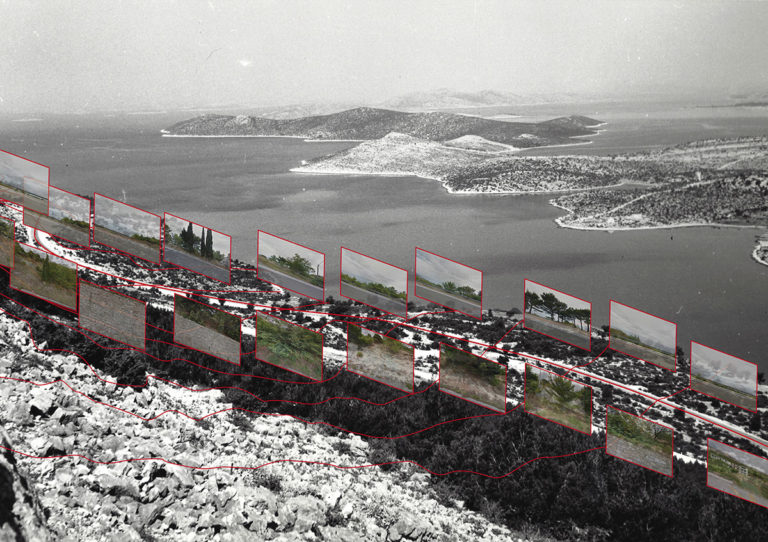
In the context of this project, Jadranska Magistrala has a double meaning. Most directly, it was only in 1965, the year when it has been opened, that the preconditions for the development of a continuously connected and wholly accessible coastal territory were met. This coastal territory had been fragmented due to unstable political, military or economical jurisdictions since the Roman times. On the other hand, Jadranska Magistrala was also a setting stone for the generations of rapid transformative processes. Magistrala has in less than half of a century of its existence irretrievably changed the image and the usage of historical urban nuclei situated previously mostly in intact nature. Surroundings of Magistrala subsequently changed into a continuous linear peri-urban line completely relegated to tourist exploitation.
By enabling present and intensive processes of privatization together with planned allocation of tourist, industrial and military complexes with the simultaneous growth of the individual, secondary construction, Magistrala is still the main artery of this area.
Unlike usual cartographic and statistics methods of spatial analysis, the starting point of this project is contemporary artistic researches. Several quantitative and artistic tools have been developed in this project for the understanding and representation of this extensive territory. From
27/05/2019.
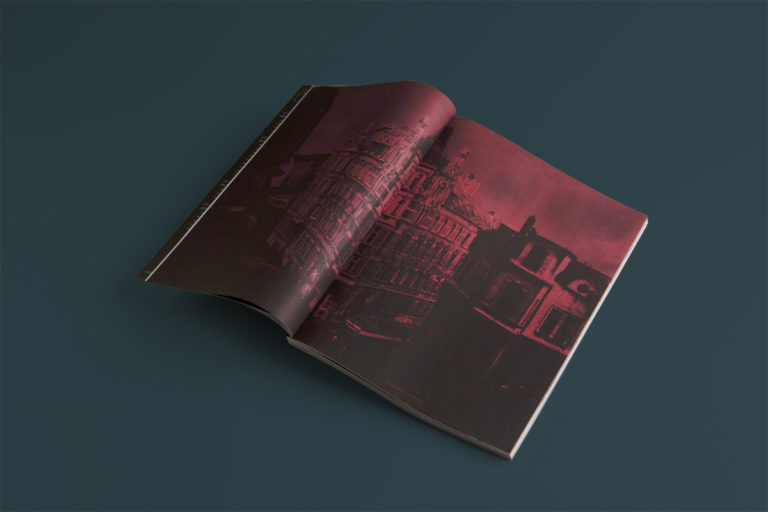
The editors of Flaneur Magazine are hosting a three-day workshop in collaboration with GMK. Employing psychogeographic and collaborative strategies, the workshop will provide a creative reading of the cityscape that reveals the hidden layers and mythologies of the place. GMK's space will be turned into a temporary editorial office where a one-off magazine will be made with the editors and 15 participants. The magazine will be made collaboratively and inter-disciplinarily.The participants will get an introduction to the cultural techniques of flaneuring and the narrative strategies of psychogeography. The magazine will be dedicated to exploring Martićeva street.
To join the workshop please write a brief description of yourself and why you want to participate (in English). You will receive further instructions once the selection of participants has been made. Deadline for submissions is 7th of June 2019.The workshop is primarily intended for photographers, illustrators, architects, urban designers, historians, writers, artists, performers and graphic designers as well as other interested audiences.About Flaneur Magazine:Flaneur is a nomadic, independent magazine focussing on one street per issue. The magazine embraces the street’s complexity, its layers and fragmented nature with a literary approach. The content of the magazine is produced with and for Flaneur by artists
30/04/2019.
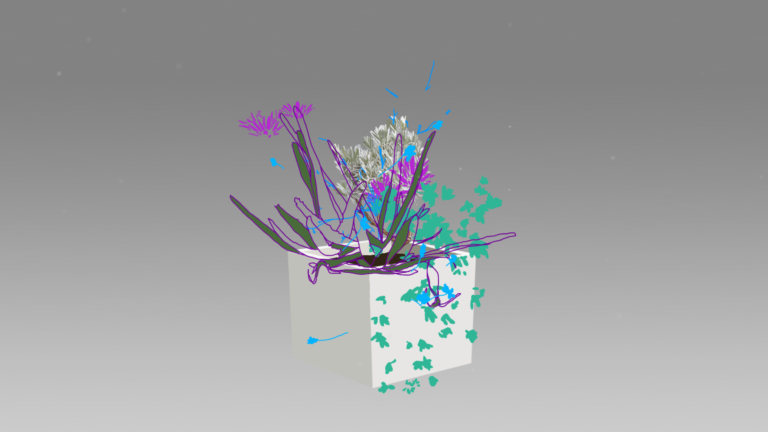
The elements we can manipulate with are in control of growth, appearance, and life of the plant. Light, color, transparency, sound, and combination of these four elements are a base to cultivate your digital plant. Each element can reach a value of a maximum of 100 points. The player is trying to find balance among all of the elements to achieve homeostasis: the optimal conditions needed to keep the plant alive. There are more than 8 billion different combinations of intertwined elements and at the same time, there are 8 billion possible visual representations of created plants. The videogame is envisioned as a set of possible digital translations of the herbal world and how the concept of flora can be redefined in a digital surrounding. A large number of plants digital visualization is directly inspired by nature, while others in their color, texture, and placing suggest work in progress, heterogeneous structure. Through leaves, stems, and roots, different digital plants are networked in the emerging hybrid organism. In the '90s, Tamagotchi, the digital pet, appeared. The main concept of Darko's game is close to this model. On a basic level, taking care of and upbringing healthy pet replicates models of real

28/03/2019.
Laura Netz
Live stream lecture (30 min + Q&A)
Vitalist materialism. Mining life
Start: at 7:30 pm
Interested in the Anthropocene, I think abour how my work as an artist and curator can denounce the exploatation of natural resources. It is known that all information and communication technologies need minerals to be created. Any piece of hardware is dependent on this source of natural wealth that are minerals. Currently, computers need rare minerals and minerals. A little investigation around the production channels of these technologies reveals that most of the minerals come from ex-colony countries that have been mistreated by colonialist policies. The Congo is currently suffering from post-national politics based on imperialist capitalism that is intensely technological. In Congo, the red mines are not regulated by the government of the Congo. The green mines are those that are subject to government controls and issue certificates of authentication to the EU and US corporations. However, the red mines are currently resulting in child exploitation, the guerrillas (who control these mines) and the displacement of people, with consequent famine and unhygienic living conditions. This dependence of the computational with the minerals transforms the geographical discourse into a geological dimension. The interest
04/03/2019.
Tin Dožić has completed the study of psychology on the faculty of Croatian studies, University of Zagreb and New media department on Acadamy of fine arts in Zagreb. He uses the sound medium as a starting point in his art. His fields of activities also include field recordings, radio, experimental music, and art installations. His work is based on media research through the practice of developing his own electronic musical instruments, appropriation of outdated technologies and recycling. In his work, he questions the role of technology and media in pollution of the planet Earth and the link between natural resources and technology. His interests are DIY culture, Anthropocene and geology, alchemy, contact between science and art, sleep and dreams. He has exhibited and performed in many Croatian and foreign platforms, both solo and as a part of collaborative projects (Summer Sessions @V2_Rotterdam, Creart @LAVA Valladolid, Gallery Windows, ZK/U Berlin, Showroom of contemporary sound, MIMO, Sine Linea, Sound art incubator – Zagreb, Device art @Prag). Dožić's work Electromagnetisms: 14 simple interactions with electronic devices was used to represent Croatia on Palma Ars Acoustica Award 2018 organized by European Broadcasting Union. Artwork named Songs for Anthropocene won the award Golden watermelon (Zlatna
