


29/10/2018.
As a result of the careless activities and lack of the general system of waste disposal in the economic structure of the state, waste becomes part of marine life. It appears: floating on the surface of the sea and under the sea surface, at the bottom of the sea and on the beaches. It has a different origin, it is in different sizes, shapes, durability, etc. Without proper handling, it becomes a threat to marine life which can be seen in a series of ecological, economic, cultural and health indicators. Jelena Perišić, designer of the visual communication made this concept as visualization and interpretation of the available data of the recent scientific researches on the subject of sea and ocean plastic pollution with the focus on microplastic waste. The base of the concept is the formation of the booklet in PDF which can be shared simply and can easily penetrate in different social groups to raise the awareness of this specific social situation. The booklet is a series of illustrations with two mini-narratives on the ways how plastic can get to our food. Through six scenes, we follow one specific object which finally ends up in the sea (in its

24/10/2018.
The aforementioned audio drama was created as a product of workshops on the theme of memory in which Medveščak home users and preschool and lower elementary school children participated. Workshops were held in the home space during May 2018.
The starting point for the workshops was the Wilfrid Gordon McDonald Partidge picture book talking about the friendship of a boy and a lady living in a nursing home. A boy, faced with the loss of his friend's memory, tries to find out what that memory would be, questioning other people what the memory represents to them.
Through a series of workshops, an effort was made to engage in dialogue between children and the elderly, with memory and its importance being a central theme.
After the presentation, it will be possible to download your own copy of the audio drama.

24/10/2018.
History is an interpretation of the meaning that the past has for us. - Johan Huizinga
The exhibition 'Micro Archeology' shows what happens when a number of integrated circuits - in the common name: chips - are found in one place and move into 'archaeological excavations' below the surface of micro artifacts.
The history of electronics knows the concept of the integrated circuit thanks to physicists Robert Noyce and Jack Kilby who presented their work in 1958 as part of Texas Instruments. Exactly sixty years later, two authors begin their primitive 'archeological' excavations on the surfaces of monolithic chips, some thirty years old, in their local makerspace. Using crude mechanical methods, they defile their artifacts, but at the same time apply methods of preserving objects in situ and fence the surfaces of their excavations on chips, making them 'micro-sites'.
Excavating and scraping archeological artifacts beneath the microscope, they come across a fascinating world of electronic "cities", functional and rational architectural structures and markings. But the author's focus in this case is not on reconstructing the original meanings and logic of the chips (reverse engineering), but on recognizing the aesthetic values of found, commonly unknown and invisible structures.
By exposing the
18/10/2018.
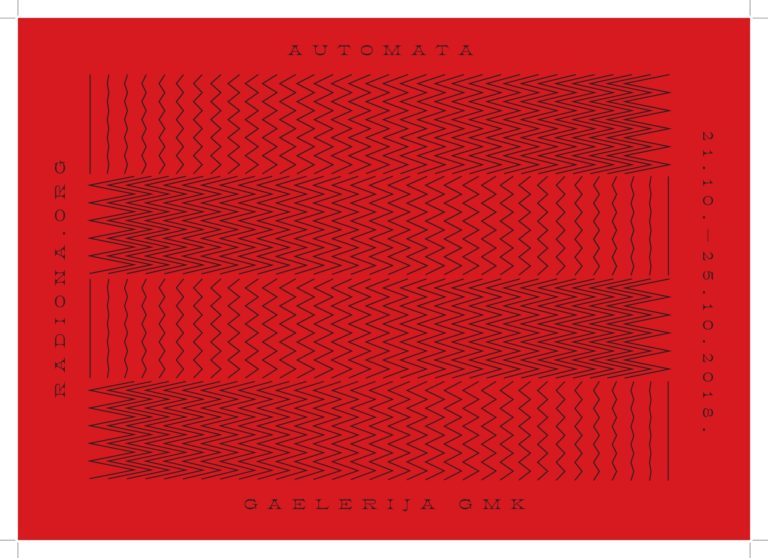
As part of the series "Imaginary Electronics - Coded Worlds", Radiona.org continues its journey through electronic geographies, bringing the game of absurdity and the seriousness of automata theory to the GMK gallery on this occasion.
Two years after the Alan Turing exhibit - an "electronic alchemist" as part of the Re-Making / Re-Mixing History series, where the Turing Machine was exhibited, a theoretical device capable of executing any computer algorithm whose medium is an infinite strip - the ultimate automata instance, returns to the same concept through free interpretations of machines, mechanics and digital interfaces in the context of citizen science.
The automaton as a mathematical and finite model of infinite states executing a certain algorithm can be connected to almost all devices from our environment whose action is enrolled through state and transition. Therefore, the challenge of processing information and the mechanics of automata served as an inspiration to the Radionin collective to approach the creation of machines and digital interfaces that (anger) usefully turn into a co-play of the usefulness of the objects that surround us on a daily basis.
In dealing with the very name of a series of exhibitions, the authors question the ways in which

05/10/2018.
In Situ - Missing Objects is a project aimed at finding new articulations of urban public space through active citizen participation. Urban public space is viewed not only as the sum of material and social interactions and their relations, but also as a place of continuous transformation that results from the complex interrelationship of technology, media, society and public space.
In situ publication - Missing Objects includes a two-year exploration of a project of the same name. The aim of the project was to develop citizen participation methodologies in the process of designing / creating interventions in a real and hybrid public space - one that exists at the boundary of the physical and the virtual. The publication archives and explains the conducted research, that is, its theoretical and practical segment, which consisted of a series of workshops and interviews with citizens. In addition to the publication, we will also present a web platform that brings together research findings, but also acts as a space for collaborative reflection on the potential of public space.
Authors: Dora Đurkesac and Karla Paliska
The project and publication were created within the program of the Miroslav Kraljević Gallery Factory with the support of the
05/10/2018.
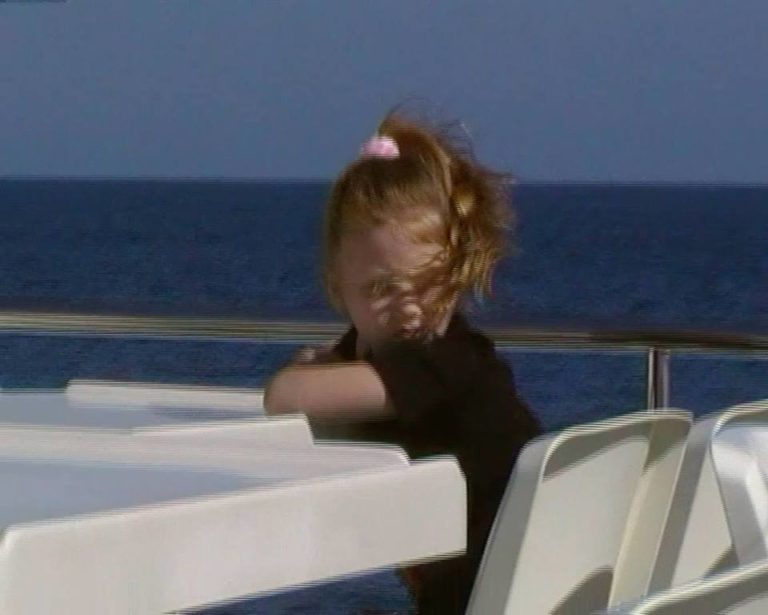
Katarina Šoškić will present her research ”The Tourist: zones, seasons, and fields in between" as part of her PhD in artistic research at University of Applied Art Vienna. She is curious about European coastal tourism in well-organized societies as well as in those in developing countries in the middle of transitional processes. Wild examples of the latter could help me locate and emphasize the issues in the zones where the change of landscape is performed more subtly. What stays invisible and what becomes obvious in these comparisons will serve as a basis for each individual case, emphasizing: the position of a tourist and her encounter with the localities, the way the localities are constructed and maintained and the way this interaction functions or doesn’t through successful and unsuccessful implementations of tourist attractions.Second phase of the research ”The Tourist: zones, seasons, and fields in between” serves as a sample for my investigation on the tools of research, namely photography and written word, their codependency and potential necessity. After the first phase “Poolsides and spring boards”, the film “Tourist agency” comes as an intentional ‘jump’ into 'reality' and investigates relevance of personal experience as opposed to the formal theoretical approach which the
