

18/12/2017.
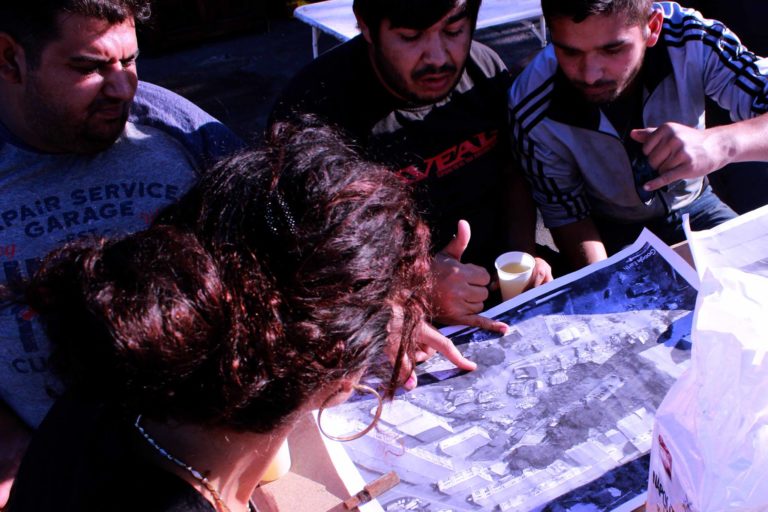
Marginality - point of communication / round table with the inhabitants of the Roma settlement Vrtni put
Participants: Stevo Golubovac (resident of the Garden Road), Nedjatin Kamberovski (Council of the Roma National Minority of the City of Zagreb), Sinisa Senad Music (Roma Education Fund)
Round table moderator and project leader: Bojan Mucko
The goal of the Marginality - Point of Communication project is to develop and implement field-based methods of civic empowerment for the inhabitants of Zagreb's ghettoized Roma settlements and to link them with relevant city and state structures. The Garden Road is a settlement of about 13 households in which the most vulnerable people live, and there is no strategic plan for their housing, as well as for the future of the settlement itself.
The majority of the population is illiterate, and there is no person in the settlement who would articulate and address the social and infrastructural problems of the settlement with the competent instances, nor is there a necessary official communication channel to the city and state structures.
The aim of the round table is to give visibility to the problems of the Garden Road, but also to foster long-term, continuous cooperation between residents, Roma representative bodies and relevant city and state offices. We will contextualize life in the Roma settlement through discussion in the broader picture of urban spatial "policies", but we will also address the internal contradictions of the functioning of the "collective" of residents: critically both upwards and downwards, but constructively.
The roundtable was the result of a workshop in which all interested residents of the Garden Road participated. It was carried out in the settlement itself, and through the workshop we tried to jointly articulate the settlement problems and prepare them for presentation at the round table.
In addition, we organized the distribution of humanitarian aid packages in cooperation with social worker Tina Debeljak (City Red Cross Society of Zagreb), purchased and installed a new boiler in a hygienic container that was out of function, organized a consultation of residents on their civil rights with Sinisa Senad Music ( Roma Education Fund) and physical education and exercise workshops for children with drama educators Martin Protulipac and Katarina Vukadin.
The long-term goal of the Marginality - Point of Communication project is to develop a cross-sectoral collaboration model for working in the most vulnerable communities - a cultural project as a platform for connecting, mediating and hybridizing social, educational, artistic and representational levels.
The project is funded by the City of Zagreb and the Ministry of Culture

18/12/2017.
The project "Industrial heritage of the island of Korcula" was launched in 2015 as part of the Gray Zone association and is based on raising awareness, redefining and re-evaluating the cultural heritage and the concept of the intangible industrial heritage of the island of Korcula, especially Vela Luka. Critically reviewing and recording local memory creates an "alternative" archive, raising awareness and recording the specifics of gender and women's work experience, encouraging intergenerational dialogue and sensitizing the local population. At the same time, dilemmas and questions arise about the dynamics and methodology of work, conceptual and other frameworks of research, and ways of approaching the local community to which the concept of industrial is equally close and foreign.
Presentation of research besides presentation and discussion also includes artistic production and ethnographic material; video, audio, text and photographic material.
The project was funded by the City of Zagreb.
The work of the Gallery is supported by the Nova Culture Foundation.

12/12/2017.
Since 1990, when the textile and apparel industries in Croatia employed more than 125,000 people, mostly women, to date, 110,000 textile workers have lost their jobs. According to the Union of Textiles, Footwear, Leather, and Rubber of Croatia in 2009, there were 280 textile manufacturing companies and 131 garment manufacturing companies.
The United project brings together workers who have been laid off as redundancies over the last twenty years and still working women workers, union commissioners and those who are distrustful of the union, those who worked in silence and those who protested. Although they have similar fates and similar work and life habits, they have different perspectives on life and in different ways cope with the conditions in which they work or have worked, and ultimately, loss of work, loss of financial stability, but also a sense of belonging. They are all bound by the experience of working in textile, so-called. women's industry, experience of working under the norm. Middle-aged women who have been invisible for years working in the facility, in precarious and inhumane working conditions, are often intimidated that if they talk about working conditions, they will lose their jobs. Even today, they are completely invisible in the labor market at the age of 45+.
This exhibition is set up as a kind of triptych. One segment consists of a photo showing a female worker on a break - this photo was glued to the cabinet of one of the textile factory workers in Slavonia for years. Break time is a break, but it is part-time and so is work time. The second part of the exhibition is a kind of photo extension. Four empty chairs and four audio tracks; about existential and economic uncertainty, about the legacy of the working class and the transmission of poverty, about anger and rebellion. The last part of the work is printed on the gallery walls and represents the "performance log". The name is taken from the terminology of the textile industry and is a kind of dystopian manual for standardizing (and violating) labor rights. Employers can monitor the performance of the implementation of the given norms of individual workers by the performance log. The collected and interwoven articles of the Labor Law and transcripts of interviews with workers on working conditions in the textile industry were printed on the walls. What does it mean to work under the norm? Binding wages to the production standard, regularly changing and increasing the standard is part of the capitalist logic that systematically violates and degrades the social security of female workers.
Nevertheless, talking about the textile industry in the context of layoffs, bankruptcies and the downfall of factories has become almost a common place, not only in the media, but also in culture and the arts. It is necessary to show the strength and courage of the workers, but at the same time to point out the inhumane cost of the labor paid by these workers and, by Marxist vocabulary, their alienation
26/10/2017.
Kik Melone:
GLAČER EXTENDED
Sonja Pregrad, Silvia Marchig, Pavle Heidler, Ana Horvat
In collaboration with: Dance Department of the Academy of Dramatic Arts in Zagreb, Jedinstvo Drive and Miroslav Kraljević Gallery, as part of the 2017 Improspection Festival.
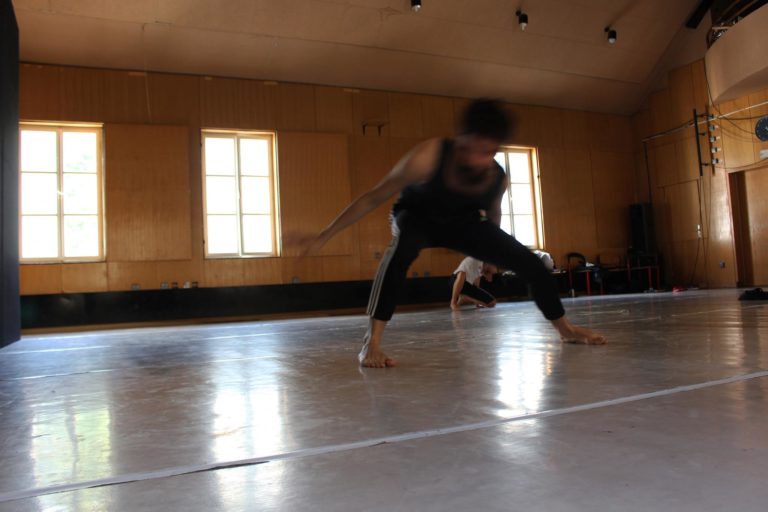
The Extended Glacier is a continuation of work on a complex performance eco-system started in 2014, operating in the media of dance, music and performance in split post-time, and the medium in which it is manifested is called the New Performing Media - the Media of Motion. By stripping the medium of performance, moving away from the choreographic pursuit of aesthetic organization of movement, that is, the composition of sound, movement and sound emerge as a material extension of the senses, out of the body's need to respond to being in this world by recognizing the movement and sound that already exists before we become aware of it.
The Extended Glacier is also a performance in duration and an image that you can immerse yourself in any moment you find yourself in front of it, a kind of time experiment in which we treat work as a 7-day continuum, within which we open the door for those who are ready to dive into deep weather glaciers:
Small Hall of Jedinstvo Drive, Trnjan embankment bb: Friday, 27.10. 6pm to 10pm
ADU Zagreb, Frankopanska 22: Saturday, 28.10 from 17h to 21h and Sunday, 29.10. from 11am to 3pm
Miroslav Kraljević Gallery, Šubićeva 29: Monday, 30.10 from 17h to 22h, Tuesday, 31.10. 6pm to 10pm. - Tuesday's performance begins with a talk moderated by Ana Fazekaš.
Pavle Heidler, Ana Horvat, Silvia Marchig and Sonja Pregrad were awarded the 2016 UPUH Annual Award. for the collective performance of the Glacier.
Funded by the City of Zagreb's Office for Culture, Education and Sports.
26/10/2017.
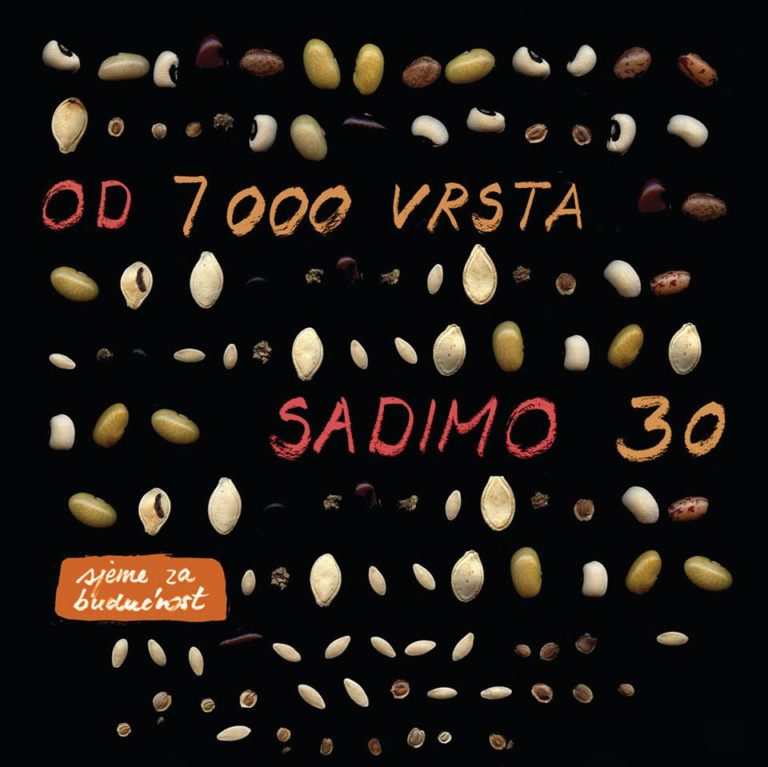
The seed is the basis of food cultivation and represents the sovereignty of one state, and since 2014 it has been declared a UNESCO Intangible Cultural Heritage.
The purpose of the project is to encourage people to think about and encourage the consumption of food that comes from seeds of traditional varieties, to encourage multiculturalism, gardening, seed exchange, and generally awareness of what we eat.
Each society selected the plants according to their tastes and needs,
thus creating a vast wealth of their genetic diversity. For thousands of years, humans have stored seeds on holdings, and so the variety of cultivated species has emerged. Why not continue this work today?
By buying seeds from seed companies, consciously or not, we relinquish our right and leave it in the hands of corporations that profit first and only then our health and quality of life. Seed exchanges are therefore very important in maintaining the habit of preserving traditional varieties, as they provide the opportunity for lively contact among gardeners and strengthen the social networks of local communities.
On October 29, 2017 from 11am there will be an exchange of seeds of traditional varieties in Botanicar (Marko Marulic Square).
Plant, and if you can't support the cultivation of local and natural foods!
21/10/2017.
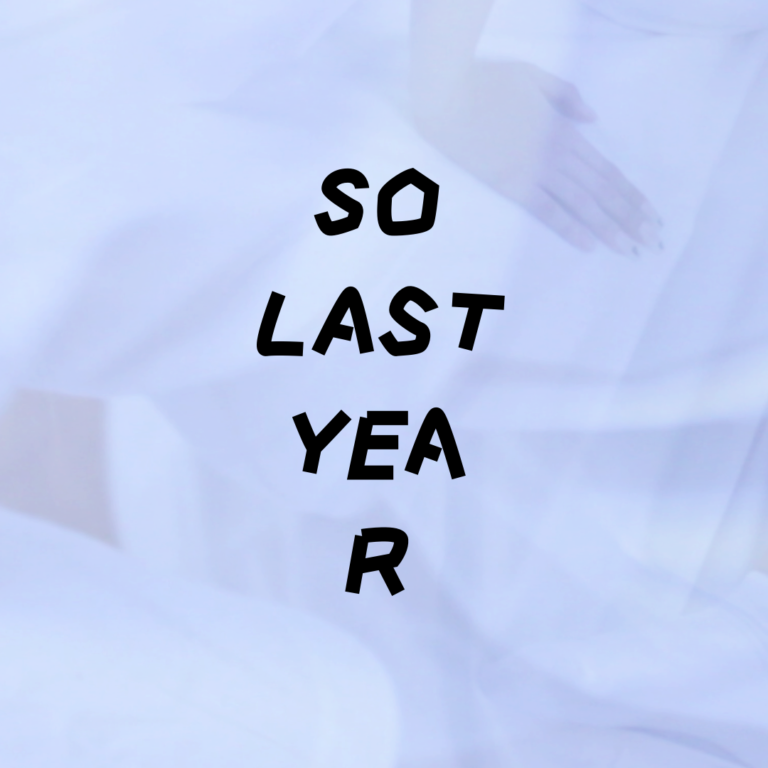
"SO LAST YEAR" is an exhibition - installation project that brings together six authors who gathered under the title SAD GIRLS COLLECTIVE.Martina Granić, Marina Jukić, Nina Bačun, Iva Markovac, Dora Đurkesac and Iva Korenčić in collaboration with curator Irena Tomašić are referring to "girls empowerment" in popular culture within the Sad Girl theory and the fourth wave feminism. The exhibition remains open from 21st - 28th October.
Through the virtual collective pooling and exchange of viral information, the SAD GIRLS COLLECTIVE questioned the recent phenomena of the mainstream Internet aesthetics of the so called Tumblr girls to Sad Girls / Sad Boys culture and their visual branded products, guided exclusively through intuitive approach based on intimate aspirations and expressions.The Internet promotes hyper-productive pop culture that through social networks creates new trends and continues to support demand and consumption by making viral phenomena an esthetic statement but also a lifestyle. So, we live in a fairly subtle and ironic world where every concept and even feminism succeeded in capitalizing and becoming consumer goods. Somewhat ironically, but again recognizing their own femininity, the artists have created a joint critical, but definitely positivist, reflection on the viral phenomena of depicting a sad girl on the Internet by exploring their own position of emotions and bodies by observing forms of the forgotten female principle in the imposed paradigms of contemporary society accepting the ambivalence of male-female relations just by nurturing the present emotional diversity.Seeing the position of women as an object of marketing and cosmetic manipulation, "SO LAST YEAR" empowerment cynically reflects on the transience of viral trends and actually suggests that sad girls are already in the pass, while cultural appropriation has created a new trend of nail girls.In the concept of a pedicure salon, the Collective builds an expanded space of women's solidarity and exchanges of women's experience away from the ears of men, creating a safe space for exchange, while the nails themselves become weapons, not signs of aesthetic beauty or weakness. On the other hand, yet another ubiquitous trend of statement t-shirts was used as a template for creating antimanifest, always subtly packed into a marketable and aesthetically-priced branded consumer goods.
The project was realized and supported by the City Office for Education, Culture and Sport of the City of Zagreb in collaboration with Miroslav Kraljević Gallery.

12/09/2017.
Inner Connections is a multimedia project created by artists from the Russian Federation which encompasses the work of visual artists and musicians who are connected both professionally and personally. The title Inner Connections refers to the work's character which is the result of their close collaboration and their (spontaneous) relationship to the surroundings and new situations. Such principle of work, which is based on close collaboration of artists and art groups, is a tradition in Russian art, often caused by the political situation. In this case it does not imply consolidation and solidarization with the aim of effectively achieving cultural goals, but continuous construction of new relationships within the group of collaborators and participants, which in turn results in new situations, events and experiences, leading to the creation of shared ideas that are turned into an instrument of general cultural work. From this perspective, the dimension of the space of honest and selfless relationships as a basis for creating artworks can be seen as a political act, taking into account the contemporary art scene and its internal relations and phenomena not just in Russia, but globally. Against the processes of individualization, self-sufficiency and finally alienation of man within the dominant contemporary social and cultural models, this concerns love as the basis of social interaction and the connective tissue of interpersonal action. The exhibition is conceived as a presentation and expansion of two previous projects, The Return of a Curonian Pilot and Arctic 1 by Petr Zhukov, realized in collaboration with Kirill Shirokov (composer), Nikita Pavlov (photography director), Luisa Nobrega (performer), Daniil Zinchenko, Anton Kuryshev, Alexey Akimov and WOLFFX (music).The previous two projects and related exhibitions were conceived as 'structures' open to the layering of meaning depending on the context in which they are performed. They were created as a result of research and interaction with specific places where the artists had resided and presented the work. In addition to the existing places, namely, Nida in Latvia and the Siberian peninsula Taimyr, Zagreb is going to be the third of the total of four imaginary spaces in which this project is finalized. The access to each space includes the interaction between the subjective, sensory experience, mythology created through cultural history, and personal mythologies of people who are 'creating' this space (by living and working in it). The works are presented in the so-called live cinema form, which represents a relatively new genre in media art. It refers to a non-traditional way of projecting films that does not entail linear narration, but an interactive performance that gives the artist the freedom to experiment and improvise within different, previously selected media and materials.Presentation of the project consists of several parts:Performances of video films in live cinema form by the author Petr Zhukov: The Return of a Curonian Pilot (performed by Kirill Shirokov), Arctic 1 (performed by Kirill Shirokov, Sasha Elina, Daniil Pilchen and Darya Zvezdina).The presentation of the documentary series of concerts created by a group of musicians: The same (Kirill Shirokov and Sasha

10/07/2017.
“Image Blockade” is a new body of work by Maayan Amir and Ruti Sela that focuses on the intersection between the visual, political, and legal. The works, made within the framework of the Exterritory project, explore the ties between sensory perception, insubordination, censorship, and advanced technology and their links to the control of images.
Initiated by Amir and Sela in 2009, Exterritory is an ongoing art project dedicated to encouraging the theoretical, practical, and interdisciplinary examination of “extraterritoriality,” i.e. being excluded or exempt from the standard system of law within a designated area. The project uses the notion of extraterritoriality to critique power structures and re-imagine practical, conceptual, and poetical possibilities. The works in “Image Blockade” move beyond the straightforward geographical and judicial notions of extraterritoriality as it pertains to people and spaces to consider how the concept may be extended to regimes of information, representation, and practices that may produce “extraterritorial images.” The works raise many questions such as: How is the sensory perception of those who are obliged to keep information confidential over time affected? What are the limits of transparency when it comes to activism and documentation? What happens when images that may incriminate their creators are withheld from public view through legal means and cannot be used as evidence? Together, the works here offer a riveting look at attempts to regulate images and what that might mean for shaping our worldviews today.
https://exterritory.wordpress.com/ Curator: Chen Tamir
The Battle Over Images
On May 31, 2010, a flotilla of six boats carrying hundreds of people and humanitarian aid aimed at alleviating and protesting the ongoing Israeli siege of Gaza was intercepted by the Israeli navy on the international waters of the Mediterranean Sea. The takeover operation began with an attempt to shut down all satellite connections to and from the flotilla, marking the beginning of a battle over images. On board the largest vessel, the Mavi Marmara, a violent confrontation resulted in the death of ten activists and many wounded, including soldiers. After taking control of the ships, the Israeli military confiscated hundreds of memory cards from cameras, mobile phones, hard discs, and videos, to control the media portrayal of the incident. As a result, the international investigations of the flotilla incident have taken place without much of the vital visual evidence that remains out ofbounds. As part of their research, the artists examined the various judicial investigations on the flotilla incident compiled by both Israeli and foreign bodies. The reports demonstrate that images were not only the major symbolic motivation for the confrontation, but that the fight over images shaped the battle onboard the Mavi Marmara and its aftermath. Selections of the reports are presented here with Hebrew texts taken from the report by the Public Commission to Examine the Maritime Incident of the 31 May 2010 (the Turkel Commission) and protocols from the Israeli Parliament meeting on 21 June 2012. These are presented alongside reports in English by the Turkish National Inquiry Committee and
