

01/12/2016.
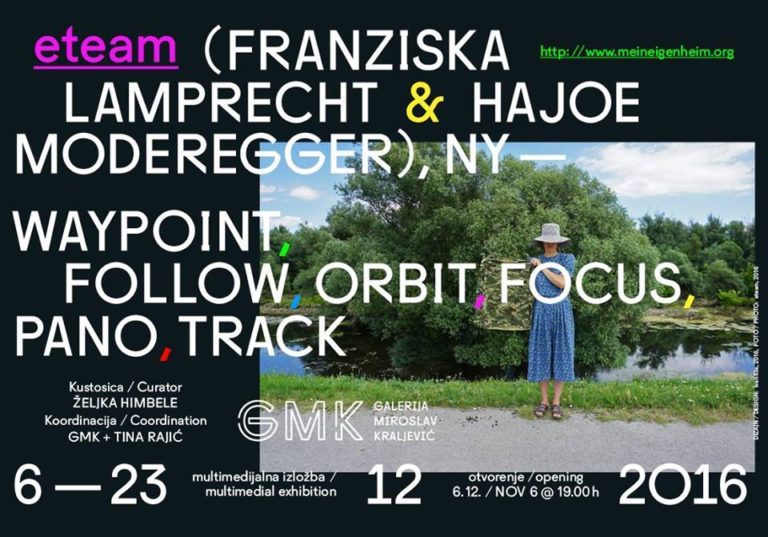
For their most recent exhibition at Miroslav Kraljevic Gallery, eteam (the New York-based duo Franziska Lamprecht and Hajoe Moderegger) engaged in a multimedia project titled Waypoint, Follow, Orbit, Focus, Pano, Track. The whole endeavor started with the artists visiting Croatia last summer, in an effort to research a peculiar camouflage design of Croatian military uniform which, in order to render a person concealed, incorporates the geographical mapping shape of Croatia itself. This intriguing issue, found by the artists through their initial online research, is in fact very much along the lines of eteam’s constant interest in disappearance, (in)visibility, land and its numerous uses in public and private contexts. In this newest project, the topics of disguise, appearance, absence and surveillance were further researched through eteam’s travel through Croatia and finally implemented through the exhibition featuring the video Waypoint, Follow, Orbit, Focus, Pano, Track, several paper mâché sculptures, a photograph and a novel The Case of Distance Disengaged. The visited locations, extensively presented in the book form as well as captured in the video, included a factory that makes military uniforms, then Liberland (a territory of the self- proclaimed nation on a small terrain between Croatian and Serbian border, which appears and disappears depending on the water levels of Danube river) and small Croatian islands - pieces of land that occasionally (dis)appear due to high tides of the sea. All of these stages were intertwined with daily anecdotes and casual meetings with people in urban and suburban surroundings that also influenced eteam’s observation of places and reflections on the topics mentioned.
The novel, with its narrative that combines stream of consciousness writing with detailed reports while also blurring fact and fiction and present and the past, incorporates the elements of numerous genres such as travelogue, diary, autobiography and critique of existential subjects. It also contains snapshots of often neglected details from our surroundings that suddenly come to life and become poignant symbols. At times humorous, the other times poetical, contradictory, critical or sharply analytical, the artists offer their ruminations on being an outsider (particularly as a tourist, or as a contemporary artist invited to do a project in some new context), as well as on citizenship, borders, the natural vs. the man-made, the interconnection of global and local events, familiarity and alienation, construction of history and memory and the notions of displacement and belonging to a particular place. The little details that eteam encounters often trigger reminiscences of the artists’ personal past and current situation of living as Americanized Germans and navigating most recent social, political and ecological issues from this double perspective.
The ambiance in the gallery is shaped by several elements: the photograph, the video and the sculptures. It complements the novel in the form of a temporary situation that works on more abstract level as it reconstructs the travel and the artists’ impressions through bits and pieces (such as the enigmatic photo print of an old light switch at the gallery entrance). The sculptures can be seen as
29/11/2016.
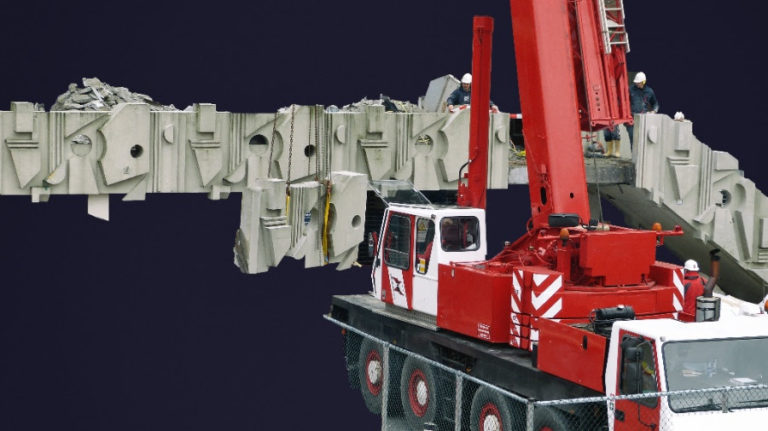
Project Monuments of the Future by Petra Milički and Anika Schwarzlose is a study of monumental places and objects in the light of increasing digitalization and networked communication. Project is a combination of theoretical research with a praxis based approach and an opportunity to establish collaborations with artists, theorists, researchers and scientists in different countries, such as Croatia, Netherlands and Germany.
Our environment is changing radically. Debate and expressions of nostalgia or violence have partly migrated into the digital realm, where they form a new memory culture. At the same time material substance of monumental objects is in the process of disappearing – by active destruction, weathering, decay or obsolescence – and is subsequently replaced by different digital representational techniques.
How exactly the recent expansion of digitalization and archiving techniques has affected our perception of monumental places and objects. How did it change their symbolic value? How will it affect the way we commemorate and process historic events?
Petra Milički and Anika Schwarzlose will present a work in progress: a web platform which collects sculptures that have been removed from public space for different reasons. This collection will be used as source material to build a virtual sculpture garden. A digital refuge and exhibit for once public objects –with the aim to investigate the relationship of material substance and digital representation. What happens when historic events are memorized with monumental objects? What is the effect of those objects becoming transformed to digital representations, and what gets lost in translation?
On display will be as well: 'Monuments of a Yugo-sized Global Village' a video by Petra Milicki, and 'The Law of Good Gestalt' a short film by Anika Schwarzlose and Brian D. Mckenna.
Project is supported by: City of Zagreb and Creative Industries Fund NL
Petra Milički (www.petramilicki.com) is a media designer-artist based in Zagreb. She aquired her education in visual communication (School of Design, Zagreb) and media design (Piet Zwart Institute, Rotterdam). In her practice she is interested in the interpretation of collectively produced found material, as well as the construction of media spaces that facilitate such production. Currently she is curious about different phenomena of memory culture and politics developing in the new media ecology. She works as a freelance media/graphicdesigner, mostly for cultural initiatives and institutions, and is a part of the D Day Festival's organising team.
Anika Schwarzlose (www.anikaschwarzlose.com) was born Berlin, Germany. She received a BFA from the Gerrit Rietveld Academy in Amsterdam and a MFA from the Konsthögskolan i Malmö, Sweden. Her work is exhibited internationally in spaces such as FOAM / Amsterdam, Fotomuseum Winterthur, Institute for Art and Thought / Berlin, Bemis Art Center / Omaha, Nebraska, W139 / Amsterdam, Gallery Format / Malmö, De Brakke Grond / Amsterdam, V Art Center / Shanghai and Gallery Almanaque / Mexico City. She has given presentations and has taught workshops in places like the Rockbundmuseum, Shanghai / the ICA, London / the PR project, Moscow and The University of Lethbridge, Canada. She lives and works in

28/11/2016.
Topic: Precarity in Art
Dates: April 1-30, 2017
Location: Budapest (Hungary) and Zagreb (Croatia)
The first East Calls Curatorial Residency is jointly organized by Easttopics (Hungary) and G-MK (Croatia) in Spring 2017, on the topic of Precarity in Art.
The topic of Precarity in Art mirrors the actual situation in both countries: Hungary has endured a severe shift in cultural policies since 2011, resulting in the desertification of the contemporary art scene and generating new artistic reflexes, independent and alternative ways to operate. Croatia is presently undergoing the same kind of restructuration, foreshadowing an oppressing cultural political climate and situation for the years to come and already witnessing the unprecedented solidarity of the art scenes in a need to act.
The residency lasts one month and is divided in two time blocks,the first one in Budapest (Hungary) between April 3-15 and the second one in Zagreb between April 17-30. The purpose of this residency program is to engage with the thematic of Precarity in Art by connecting international curators with those protagonists of the Hungarian and Croatian cultural scenes who were/are working with minimal financial, spatial or temporal resources, and to map the answers they give to such situation.
The program in each country is articulated around three main pivots: a general overview of the contemporary art scenes of both countries, a focus on the institutions, self-‐organized structures and art professionals dealing with or functioning in precarity, and finally a personally tailored part shaped according to each participant’s points of interest.
Participation fee: 1.000 EUROS
The fee includes the use of office facilities, entry fees of museums and special events, public transport in Budapest and Zagreb, inland transport for provincial venues, transport between Budapest and Zagreb. The fee also covers the production costs or a final publication realized on the topic of the residency program.
Travel to Budapest for the start of the program and back at the end of the program, as well as accommodation expenses are NOT included.
Please send a letter of intent and cv to:easttopics@gmail.com Application deadline: Jan 12, 2017.
Selection process: Jan 19, 2017.
For additional information, please contact us at:easttopics@gmail.com
www.easttopics.com I www.g-mk.hr
05/11/2016.
In the dramaturgical intervention "A Multilogue for Later" Nina Gojić examines the possibility of creating new systems in the art scene and models of cooperation and solidarity among cultural workers. Her research is based on the thesis about the continuity of self-management and self-organizing practices in the Yugoslav cultural space resulting from non-alignment, which today function as a tangible alternative to the neoliberal logic which is increasingly shaping the management of culture. The idea of non-alignment is extended to the development of the discourse on still unformed collectives, unfinished or not yet started processes which, on the level of cultural production, become a potential basis for imagining new communities. The work consists of two events and a soundmap that the author created through conversations with her previous collaborators. Starting from the reflection on the idea of cooperatives in culture, the work also questions the collaborative models and the sharing of resources in the art scene. The dramaturgy of the multilogue is realized on three levels: through the spoken text, through the way the text is edited, and through the minimally choreographed gallery space. Sound design: Iva Ivan Set up design: Tea Truta The audio installation is on view until November 26. For the duration of the exhibition there will be two public events. More details about the program will be available soon.
The exhibition is part of the project "My sweet little lamb (Everything we see could also be otherwise)" which presents works from the Kontakt Collection in Vienna along with other historical, contemporary and new works that provide interpretations and critical rethinking of the collection. Founded in 2004, the collection includes capital works by a number of the most prominent artists from Central, Eastern and Southeastern Europe from the 1960s onwards. The project is dedicated to Mladen Stilinović (1947-2016) and is named after his work from 1993. "My sweet little lamb (Everything we see could also be otherwise)" will take place over several months (November 2016 – May 2017) in six episodes in various gallery spaces, ateliers and private apartments. The project is curated by WHW in collaboration with Kathrin Rhomberg.
24/08/2016.
Dreamers
In her artistic practice, Maja Hodošček regularly collaborates with high-school students, aiming to use micro interventions to infiltrate the barely permeable tissue of educational institutions. Proceeding from a perception of schools as one of the institutions defining the dominant knowledge, the artist primarily addresses the students since they are the ones expected to embrace this knowledge unconditionally. She is interested in the students as thinking subjects, which is why she moderates only the initial content and the framework captured by the camera, while the students are in charge of the process itself and the specific reactions. Through the students' active participation and use of video, the artist seeks to increase the dynamism of the field of education, which is generally perceived as a rigid system defined by a multitude of rules.
The exhibition Dreamers presents the works that further develop the artist's attempts to discover new ways of articulating the ideas and meaning arising from the dominant language.
The video What is Community? (2016) is a continuation of the work Dreaming Society initiated at the exhibition We Need a Title at Škuc Gallery.[1] The work consisted of a series of workshops in which the participants defined their own reflexions on predetermined concepts such as community, democracy, but also dreams.
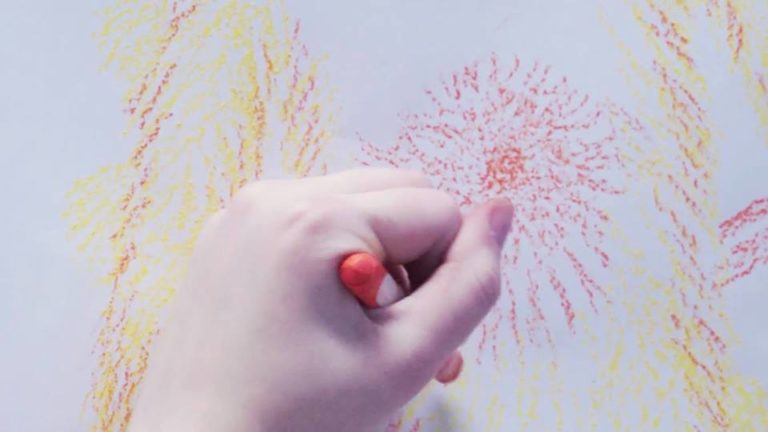
The question "What is community?" forms the core of one of the visual experiments whose purpose was to reconsider the meaning of this rarely questioned concept. It was important for the artist to address that question to the members of a generation whose political voice is not taken seriously, while at the same time current political tendencies are shaping their future. For the purposes of the experiment, Hodošček presented several photographic documents which show the pioneer induction ceremony, the meeting of political representatives of the EU, media photos of refugees, and the OHO group in the village of Šempas where they had founded a commune. Despite being ideologically very different, these photographs function as a subtext for considering the idea of community, and the participants are asked to describe how they perceive the content of the exhibited images. Ultimately, their answers take the form of four drawings, and the process of drawing is recorded on camera. Even though all participants responded more or less equally to the content of the photographs, their understanding of community was vastly different. It is precisely this heterogeneity of understanding of a seemingly monolithic concept that interests Hodošček.
This is why the video What is Community? presents the perception and imagination of community in a heterogeneous manner.
Pointing to the fragility of this imaginary construct, the artist actualizes the issue of who is actually responsible for rendering its dominant definition.
The philosopher and educator Michael Apple also discusses the fragile foundations of community: "Everybody should participate in determining what community is. It needs to be constantly rebuilt."[2] The reason for re-examining this construct is that its members are constantly culturally changing, which is why it is rarely that everyone participates; a homogenous community can never
08/07/2016.
Re-Making / Re-Mixing History project deals with innovators and scholars from Galileo to Alan Turing, observing them through hybrid art and hacker/maker culture, and consists of a series of separate exhibitions with the following themes: mechatronics, kinetics, robotics, device_art, interaction design, BIOart.
Re-Making / Re-Mixing History deals with scientists renown as pioneers of their fields, but which due to the spirit of times in which they lived were persecuted, obstructed in their work, imprisoned, forced to emigrate or even deprived of life. Artist and philosophers throughout history were often viewed as heretics and opponents of the system in which they lived, but they did not stay alone in the fight for progressive ideas. Scientists and innovators also contributed by defending their inventions, claims or beliefs. On countless occasions all professions mentioned were embodied in one person, so a blend of art, culture and science is no stranger to the history of civilization. These forms of creativity constantly permeate throughout the history, thus giving the cultural history of science and art history the equal importance.
Those scientists, often innovators, who went ahead of social circumstances by sacrificing many aspects of their lives for greater good, inspired Radiona's interdisciplinary collective. This is by no means a series of exhibitions about „martyrs“, as it is not a documentary exposition of work of particular scientists, but a series which will present different aspects of work and life of people which marked the development of civilization through intermedia works in the field of innovative and contemporary practice.
Alan Turing – “electronic alchemist”
Alan Turing is an unavoidable name in computer science, mathematics, logic, theoretical biology and cryptography, but he was also a member of the community of hackers and makers at a time when these concepts were not yet present on the horizon of everyday social context. Turing was not just a theorist. His work desk was one of a practitioner – piles of wires, breadboard, soldering irons... Fingers scorched by the hot soldering iron, he was what nowadays we call a hands-on person. Although he was convinced that algorithmic formulas and calculations should be implemented in practise, in many cases he ended up disappointed, since companies that led projects on which he worked did not permit this.
Turing wanted to bring theoretical and speculative imaginarium of mathematics and logic to a final goal in the practice, like an alchemist, as he was attributed from primary school to the end of life. Only such a lucid mind could play a key role in decoding the Enigma and contribute to the faster end of the Second World War, but the enigma of his own life never existed – open and honest in his naivety he did not hide anything. Ready to make concessions when working with others, he could never agree to compromise with himself. Today we are left with a strange impression of a man who broke codes in the spying system of his time, but in the end he himself was spied on and
01/06/2016.
The artist Oliver Ressler will present his work on the opening and he will be joined by Dragutin Varga, union representative of Regional industrial trade union and president of the workers steering committee in factory ITAS - Prvomajska d.d. from Ivanec (Croatia), one of the prominent advocates for taking over the factory.A 3-channel video installation by Dario Azzellini and Oliver Ressler97 min. (combined)2014 – 2015The economic crisis that began in 2007-8 led to layoffs on a massive scale, leaving thousands of newly unemployed workers with little hope of another job. Their response put workers’ control back on the agenda in Europe. For many yearsbeforehand, factories had been occupied and recuperated almost exclusively in Latin America.In most cases an occupation is not a deliberate step towards workers' control but a means of workers' struggle against the closure of a production site or company or the relocation of production to another country. The struggles often fall apart without any concrete results. “Occupy, Resist, Produce” focuses on the rare, better organized cases where the purpose of the struggle is to bring production under workers’ control.The workers do more than protest, they take the initiative and become protagonists, building horizontal social relations on the production sites and adopting mechanisms of direct democracy and collective decision-making. The recuperated workplacesoften reinvent themselves, building links with local communities and social movements.The 3-channel video installation “Occupy, Resist, Produce” consists of three films on occupied factories in Milan, Rome and Thessaloniki. In these cases the workers didfind ways to organize labor under their own control. Each film is based on discussion with the workers. The workers' assemblies – always the main decision-making bodies – were recorded. It is fundamental to recognize the differences between the situations, contexts and practices of the three worker-controlled companies, but it is also important to understand workers’ control or recuperation of workplaces as a socio-political action rather than a merely economic procedure.Maflow, a multinational car parts producer based in Milan, closed its production facilities in 2009, with proprietor Italian Lifestyle Partners facing bankruptcy fraud charges. The workers began a struggle to reopen the plant under workers’ control. In 2013 they occupied the plant, and since that day 20 workers have participated fulltime in the project, completely reinventing themselves and the factory, which they renamed RiMaflow. Applying the concept of an “open factory”, the workers started recycling computers and electronic household devices, opened a bar and cafeteria, and organized a flea market and cultural activities with the local community. Theyalso built alliances with local organic agricultural producers, creating a group for solidarity shopping.Officine Zero, formerly RSI (Rail Service Italia), once specialized in maintenance and repair of sleeping cars. When Italian railroads stopped running night trains in December 2011, RSI closed. Some 20 workers from a workforce of almost 60 refused to accept the closure, and in February 2012 they occupied their workplace. In 2013 Officine Zero was officially founded as an eco-social factory. Officine Zero literally means “Zero Workshops”: “zero bosses, zero exploitation, zero pollution”,
26/05/2016.
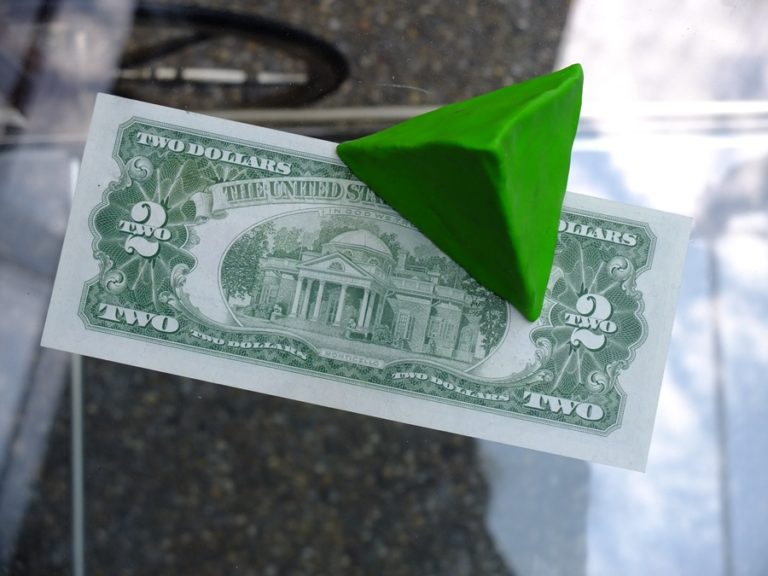
The exhibition thus points to the deleted 'other' of contemporary and historical practices of constructing the visible. Continuous reaccentuation of the Deleted produces the eerie effect of a mundane transgression, of witnessing the representation of the unrepresented.Suffused with speculation and commentary, technical drawings and architectural models invite viewers' eyes to rest within the comforting space of invention, marked by oversight and omission. The 18th century plantation Monticello is resurrected within the digital realm, hinting at the dubious possibility of a historical continuity of a war on the perceptibility of labour. Digital network technology enters into a material communion with vintage service carts and financial signifiers.These juxtapositions of historical and digital materials seduce and irritate the beholder, until contemporary practices of seeing and unseeing emerge in their historical specificity.Under the newly sceptical gaze, existing visual regiments are destabilized, offering a glimpse at the possibility of alternative systems of distributing and reassembling the visible.Artist talk with Elli Kuruş - Sunday, 29th of May at 6 pm.The exhibition is open until Sunday.Working hours: 26th of May 12-19, 27th and 28th of May 15-20.Elli Kuruş is a Leipzig-based collective artist, 44% complete. Her practice spans artistic and curatorial approaches that converge into installations, videos, sculptures, performance lectures, and text productions. Investigating the agency of the things around her, she critically examines the development of media and technology, reading the present as material history.Production and exhibition was funded by Kulturstiftung des Freistaates Sachsen.Elli Kuruş is invited as InterCity/SwitchCity - a project by KKW-Leipzig, Pogon Zagreb and funded by Goethe Institut Zagreb, Ministry of Culture of the Republic of Croatia and City of Zagreb
