



06/05/2016.
On Friday, May 6th at 19 h, at the Gallery Miroslav Kraljević, a talk will be held with Beti Žerovc, Slovenian art historian, theorist and curator, presenting her latest book: When Attitudes Become the Norm: contemporary curator and institutional art. The book was published thanks to the joint cooperation of Igor Zabel Association for Culture and Theory (Ljubljana) and Archive Books (Berlin), while the promotion is organized by Gallery MK and Curatorial platform, as part of a continuous program ‘Meet the Curator’.
The book by Beti Žerovc is a collection of essays and interviews on the topic of curatorial practice in the context of contemporary art. In this very extensive and layered publication, the author examines the curatorial practice within a wider socio-political and economic framework, but also in relation to the paradigm shift that took place in the art world over the last century. Žerovc analyzes the position of the curator as a key figure in that develops and participates in the institutionalization of contemporary art, arguing that it is through institutional curators that art comes to its reformulation.
While the first part of the book establishes the historical and contextual framework for understanding the phenomenon of curating, the sketches and outlines of the powers and activities of a curator of contemporary art, in her later essays, Beti Žerovc analyzes the global spread of curatorial practice and the politicization of the field and possibilities of socio-political intent of contemporary exhibitions and other curatorial projects. The last segment of the book deals with the idea of the curator as an artist, and curated exhibitions of contemporary art as an artistic medium, event and ritual. The book contains a conversation with the prominent theorist Mary Ann Staniszewski, author of the referent book from this field, The Power of Display: A History of Installations Exhibition at the Museum of Modern Art (MIT, 1998).
Betty Žerovc teaches at the department of art history at the Faculty of Philosophy in Ljubljana. Her research focus consists of visual art and the world of art since the mid-19th century to present-day, with a special emphasis on their role in society. Over the past fifteen years, her interest is focused on the phenomenon of curators of contemporary art, modern art exhibitions as media and the changing role of art institutions.
03/05/2016.
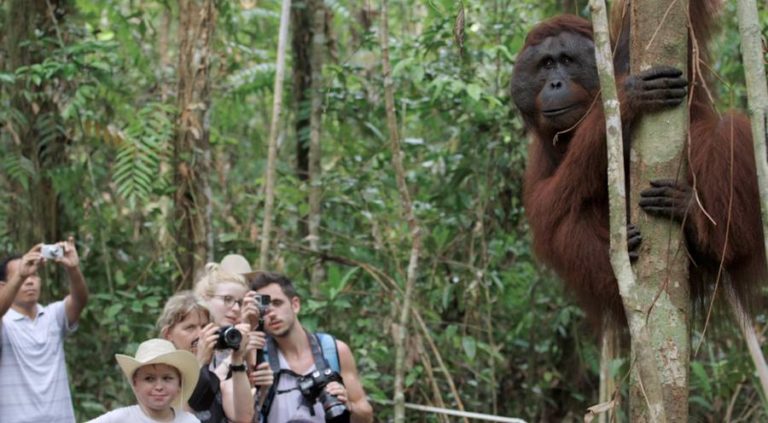
He is invited to accompany a group of primatologists and ethnologists while they research the habits of primates and their interaction with the humans. The primates research and the art project are directly intertwined because they both utilize an act of observation as an important research method.
Multi-channel film installation opens new insights into the potential of observational cinema and observational filmmaking methods which are focused on grasping direct, lived and real time experience. Observational films are also focused on the experiences of the subjects, openly capturing and representing the relationship between the filmmaker and the subjects.
The project by Emanuel Mathias unveils several different observational positions (primatologists, ethnologists, apes, locals, camera operators, artist) that are mutually dependent and in constant interaction. In that sense the film offers multiple points of view parallelly present during the fieldwork research. This method enhances the viewers immersion in the position taking process that's being constantly negotiated during the research. In order to catch the action on the run the gaze of the viewer is shifted and redirected so as to discover variety of perspectives on different events. The viewer is therefore asked to actively engage his gaze and fill the unmediated space of the film. It is exactly the act of showing (so vividly present in the observational cinema) that enables fluidity and ambiguity of actions presented (most of the time without commentary). Avoiding mediation actually allows the spectators to draw their own conclusions and interpretations.
The project also uncovers moments of self-observation which openly question filmmakers act of observing and behaving among the rest of the research team. The role of artist is recognized just as equal as any other role in the film and is frequently present as the one being observed too. Throughout the flm we are continually confronted by various levels of revelations and disclosures that speak directly about the backstage (weather it's the backstage of the filmmaking process or the backstage of the scientific research).
Exhibition is organized in partnership with ETNOFILm festival and Faro11.
Exhibition is supported by City of Zagreb and ETNOFILm festival.
06/04/2016.
We are inviting you to the opening ideas for what will be an ongoing engagement.
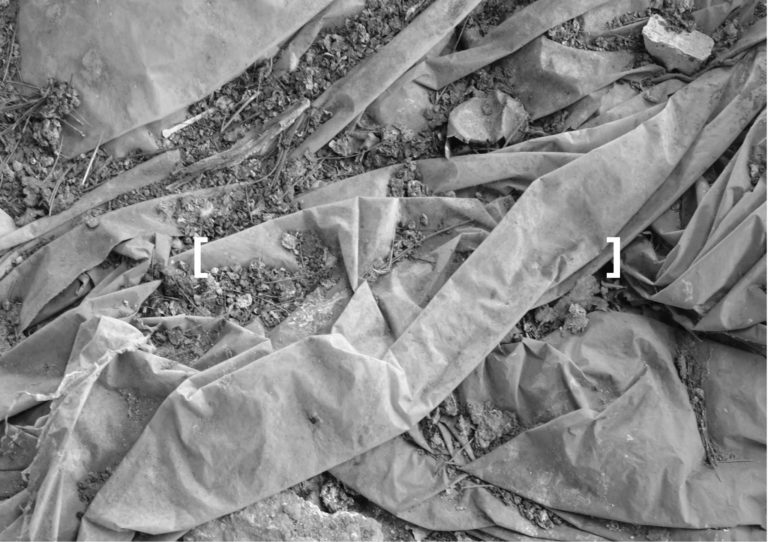
A collaboration between London Metropolitan's Cass Faculty of Art, Architecture and Design and Zagreb Acedemy of Fine Arts, Department of Animation and New Media. The work is based on exchange, draws parallels between the two cities, and in part responds to urban environments and industrial cultural heritage.Yours sincerely,Charley Aiken, Maura Batarilović, Frederique Evans-Jeanrenaud, Joshua Hill-Walsh, Barbara Miše, Sendi Pucer, Nika Pećarina, Grace Radford, Karlo Pavičić Ravlić, Noemi Ribić, Andrew Stevenson, Nikola Taylor i Richard TaylorProject coordinators: Nicole Hewitt, Ben Cain and Vida guzmićA collaboration between London Metropolitan's Cass Faculty of Art, Architecture and Design and Zagreb Acedemy of Fine Arts, Department of Animation and New Media. The work is based on exchange, draws parallels between the two cities, and in part responds to urban environments and industrial cultural heritage.Supported by: ALU, The Cass London Metropolitan University, GMK, City of Zagreb

18/12/2015.
Ana Kuzmanić's interdisciplinary artistic research commences with in depth reading of children's books from different periods and places, but with a specific focus on Yugoslavia. The book I can't wait to grow up: children's messages to grown-ups by Branka Praznik was especially important for the research. The book, published in Zagreb in 1980, gathered various childeren's statements about their everyday life. The book mirrors the local history, as well as the author’s personal experience of childhood (Ana Kuzmanić was born in 1980). However, while the children’s statements in this book are interpreted as politically neutral, the artist reads them through the ideology of time and space in which they were created.
Inspired by the book, Ana Kuzmanić created a series of interactive workshops for children aged between six to eight years (altogether three workshops were held during October and November 2015, in collaboration with the pedagogues Ivana Ðula and Milica Kostanić from the Artarea platform). The workshops were a means by way of which Ana gathered written and visual reactions of children on four topics: relationships with grown-ups, experience of public space, war and conflict, and personal desires.
During the workshops a number of children’s books were used as the basis on which certain topics and discussions were introduced, but the artist developed her own methodology for the gathering of children's testimonies. The central theme of her work is to recognize how children´s ideological assumptions are manifested in words, images and captions. Childhood is always the product of ideological structures – children convey what they see in the media, hear at home, and learn in kindergarten or school.
Exhibition is supported by Ministry of Culture and City of Zagreb.
Gallery is supported by Kultura Nova.
Exhibition is open till 23/1/16

19/11/2015.
Friday 6pm – presentation of international platform INAPPROPRIATE MONUMENTS and the discussion about the exhibition On Revolution Roads - memorial tourism in Yugoslavia Saturday 6pm – guided tour through the exhibition On Revolution Roads - memorial tourism in Yugoslavia
View the full programe here.
