



30/11/2010.
Martek himself divides his poetry into Pre-Poetry, Poetry and Post-Poetry, and this in jumbled order: poetry, written from his earliest youth, pre-poetry, from the end of 1970s and post-poetry from the mid 1980s where he surrendered himself to writing poetry without any self-censorship. Today he engages with all three. (…)The focus here is on Martek’s pre-poetry, as it is a reflection of his Post-Conceptual strivings to which this book is dedicated. Martek the pre-poet did not want to write classical poetry, but that is why it has overflown into the various forms of his art. His 'poetic revolution' first denied poetry, and then transcended it. He dismissed the poem to make room for the 'elementary processes in poetry' – the synergy of the concrete material elements used to write poetry and the ideas of tautology at that time characteristic for Conceptual art and primary painting. He used these processes to render 'violence onto poetry', but also to put it into action, breaking up its immanent static form and opening it up to new possibilities.
In his desire for poetry to be in a social function, Martek promoted ideas close to contemporary urban society; he addressed the audience both on the street and in the gallery. He is conscious, emancipated and open-minded; his strategy is critical and resistance poetic. He does not recognize boundaries and does not like divisions in art; he is interested in all of life’s situations. Many of his poetic actions demonstrate that everything is political. They are lyrical even when the themes are political and vice versa. His longing for justice and beauty is a reflection of his desire for presence, for a fullness in which nothing is strange, in which he as an individual can prove himself.
Martek is also a postmodernist – in his works and actions he often refers to works and ideas from various areas of culture. His references go in all directions, but mostly towards the ideas of writers and poets. Martek, who has spent his entire working age employed in a library, is a connoisseur and enjoyer of literature, philosophy and art. He is an obsessive reader and his art is largely “derived” from the world of the written word – which has always been a haven for this romantic rebel. His work alludes to specific ideas of Surrealism, a certain concept of the world from which special methods are derived, an irreconcilable attitude to life, rebellion, the striving for a new state of mind and different world. He does not call on the power of dreams, but chance carries special significance. His encounters with various elements re sult in unusual combinations, and when looking at his poem-objects and drawings, books and actions, the rational and irrational need to be mutually taken into consideration. As his imagination is poetic, Martek is unpredictable in the visual arts. Poetic images and metaphors are in the background of his works and the constant exchange between the utterly concrete and the metaphoric makes his work that much more intriguing.
From the vast

26/10/2010.
The second chapter of the long-term, collaborative project Where Everything Is Yet to Happen takes place in Banja Luka, Mostar and Sarajevo taking the form of an exhibition,as well as a series of seminars, workshops, and new productions. The project, curated by Ivana Bago and Antonia Majača, was initiated by a collaboration with a team of invited co-curators (Anselm Franke, Ana Janevski, Vit Havranek & Zbynek Baladran, Erden Kosova, Nina Montmann and Jelena Vesić) which resulted in the exhibition Can you speak of this? – Yes, I Can, in Banja Luka in 2009. Incited by the WEIYTH's underlying concept of a prospective rethinking of the notion of community, the artistic and curatorial propositions delineated in the first chapter opened up a set of topics, designating the course of the further development of the project: the issues of collaboration, complicity, articulation of trauma, exile and return, politics of language, politics of memory, culturalization of politics and politization of art. These topics became a base for initiating new collaborations, gathering groups and constituting temporary communities of artists, theoreticians, activists, students and curators, in a process of creating new social and creative platforms generating new vocabularies that together form Exposures, the second chapter of the project. Like the first one, it keeps insisting on the question: "Can you speak of this?", where an affirmative answer points first of all to an acceptance of responsibility to articulate and question one's own position in relation to the historical, social and political context the project is set in, as well as in relation to particular topics it addresses. The project gathers artists, film-makers, and intellectuals who in their practice, deal with some of the many aspects of the trauma of the break-up of Yugoslavia: war, genocide, dissolution of the socialist economic and political system, transition into 'wild capitalism', destroyed economy, perpetuation of war 'by other means', as well as the influence of these dissolutions and disasters on the youngest generations, informed by fear and abjection toward the ethno-confessional Other. Accepting our invitation to participate in this long-term curatorial, artistic, theoretical and transformational quest, and addressing the invitation to others, has emancipated the very process of searching while embracing the exposure to a state of radical uncertainty. For all involved in the process – organizers, curators, participants, guests and public – it has meant accepting the state (and action) of exposure without compromise - exposure also to the gap between the public's expectations formed by dubbing the project a 'biennial' and the decision to question exactly how such a project can subvert the imperative of spectacularity and representation; where 'art' as material product is secondary to the processes of political subjectivization and articulation of relations between all who have been, and who will yet become, involved in the process – exposure, most relevantly, of one to each other. Programme: Exhibition, Banja Luka 30.10.-30.11.2010 Rudi Cajavec Factory, Salon of the Museum of Contemporary Art, Public Space Events (Mostar and Sarajevo): 14.10. 2010, 18.00 Lala Rascic, Damned Dam, performance
26/10/2010.
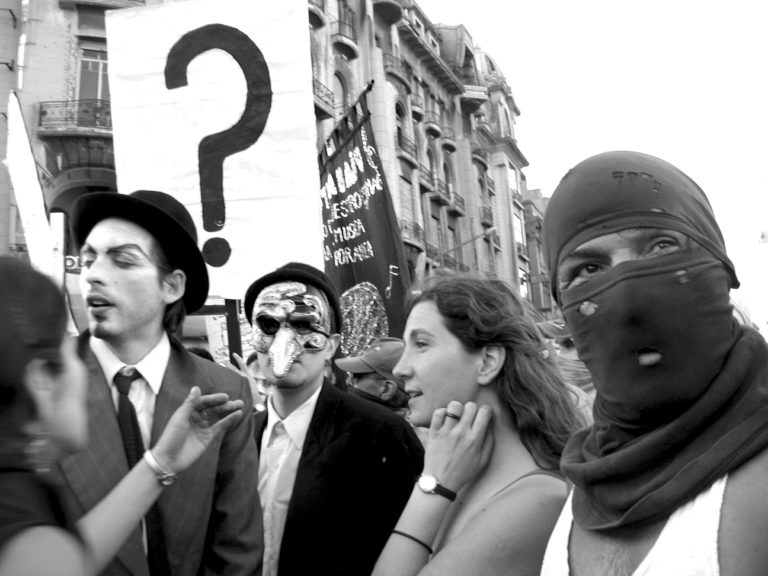
In the sphere of art and exhibitions, increased attention has recently been devoted to the mediation of art. Documenta 12 was accompanied by two large publications dedicated to the mediation of art, whereas Irit Rogoff even speaks about the “educational turn in curating”. Education as a critical practice has been attributed an emancipating potential. Rogoff focuses on the intermediate spaces and the spaces of action where publics are created and where unexpected encounters take place. In this way museums and exhibitions sometimes depart from their paternalistic history as spaces with open doors for everybody and they become public spaces: places of critique and agency. At the same time, institutions are under growing pressure because of neoliberal conditions. Therefore, education in connection with exhibitions has many other tasks: sponsors must be convinced that the mediation of art increases the value of their investment, institutions must fulfill their educational task, uncertain working conditions must be accepted, and last but not least, visitors must become interested and eventually satisfied. How radical can education be in these conditions? Where is the position of the mediation of art in the old conflict between the institutional critique and institutionalisation? And how can education be meant as a rebellious, reflective practice leading to changes?
Art Education and Critical Knowledge Production in Vienna and the network Schnittpunkt, exhibition theory and practice. She currently teaches at the Academy of Fine Arts in Vienna and is co-director of the ecm - educating/ curating/ managing – Masterprogramme for exhibition theory and practice at the University of Applied Arts Vienna.
http://www.trafo-k-at
http://www.schnitt.org
http://www.uni-ak.ac.at/ecm
Organizers: [BLOK] – Local Base for Culture Refreshment & DeLVe | Institute for Duration, Location and Variables
Supported by: Ministry of Culture Republic of Croatia, City of Zagreb – Office for culture, education and sport
Micropolitics lecture series is a part of THE ART OF URBAN INTERVENTION, a project by < rotor > association for contemporary art/ Graz, University of J. E. Purkyne/ Usti nad Labem, [BLOK] – Local Base for Culture Refreshment/ Zagreb, The Blue House Foundation/ Amsterdam, Institute of Contemporary Art/ Sofia and NABA – New Academy of Fine Arts/ Milano.
etcetera, /not doing everything/, Bildpunkt. Magazine of the IG Bildende Kunst Vienna, Summer 2008, p. 16-17
THE ART OF URBAN INTERVENTION is supported by the Culture Programme of European Union.

17/10/2010.
\'The human figure, the artist himself, is shown as a sign on the white surface without objects, set on the ground with no support, within a rectangular cut of the frame in the abstract field of the world of image. This loss of a “centre” is the loss of support – optical, moral, symbolic, or physical/material, manifested as a symbolic loss of ground under one’s feet. The illusion of depth, the linearity that once ensured the stability and integrity of image and subject as required by the story, has now been demolished, emphasizing flatness and fragmentation through which the detail/fragment acquires the features of a symbol, a sign. As a consequence of the crisis of representation, this reorganization of the sense of time and space through manipulation or multiplication has indicated the position of a decentred subject and the fragmentary character of his identity.\'(from the text by Branka Benčić)rnrnGallery Miroslav Kraljević presents the solo exhibition of the winner of the 2009 Radoslav Putar award, Goran škofić,in which the artist shows video works from his emerging new series under the name White. In the framework of the exhibition a publication under the same name has been produced.rnGoran škofić was born in Pula in 1979. His main fields of interest include video art, cinema, photography, and the new media. In his work, he combines electronically manipulated images, collage techniques, moving images, and sound. In his recent pieces, he has been using his own body as a medium to explore the so-called greater body. He also uses various objects and spaces of everyday life for investigating and interpreting the world we live in. rnškofić has graduated in video design from the Art Academy in Split, in the class of Dan Oki, having previously completed his basic training at the School of Applied Arts and Design (graphic design) in the class of Ivan Obrovac. He has won the Radoslav Putar Award for artists under 35. He has spent two months at the prestigious ISCP (International Studio & Curatorial Program) residency in New York. In 2009, he represented Croatia at the Biennial of Young Artists from Europe and the Mediterranean. He has exhibited at numerous exhibitions and festivals in Croatia and abroad. He is a member of the Croatian Association of Artists Istria (HDLUi) and the Croatian Freelance Artists\' Association (HZSU). He currently lives and works in Poreč and Zagreb. rn.....................rnrnThe exhibition has been realised with the support of the Republic of Croatia Ministry of Culture of the Republic of Croatia, the City of Zagreb- City Office for Education, Culture and Sport, and the Institute for Contemporary Art, Zagrebrn.
............rnrnThe solo exhibition of Goran škofić in Gallery Miroslav Kraljević is part of the Radoslav Putar awards, which are organised by the Institute for Contemporary Art, Zagreb, which follows on from a 6 week study/artist residency, during February and March 2009 in the ISCP/International Studio & Curatorial Program in New York. Gallery Miroslav Kraljević, who in one of its programmatic directions is particularly focused towards the production and presentation

27/09/2010.
The Culture Lobby is a long-term collaborative project, aimed at creating a participatory, 'active archive' of cultural memory in the Western Balkans. The archive consists of photographic, audio and textual material, and is based on an open process of communication with citizens of Albania, Bosnia-Herzegovina, Croatia, Kosovo, Macedonia, Montenegro, and Serbia, and their vision of transformations following the process of their countries joining the EU.
The results of the artistic research and collaborative work on the project are brought together in the form of an open Internet archive (http://www.theculturelobby.com), a publication, and a series of exhibitions in capitals of the region, launched with an exhibition in Belgrade, in May this year. The exhibition in Galerija Miroslav Kraljević will present a selection from the rich archive of photographs, audio and textual records, while the very methodology of the project – involving 'art as (ethnographic) research' and 'the author as producer' – will be the topic of the debate that is to take place on 7 October 2010, at 6 pm, involving Croatian artists who partipated in the project, Nives Sertić i Nebojša Sljepčević, together with other invited guests.
Authors of the project: Cindy Blažević & Pascal Paquette
Participating artists: Ana Adamović, Cindy Blažević, Aleksandar Grozdanovski, Armand Habazaj, Astrit Ibrahimi, Amer Kapetanovic, Imrana Kapetanovic, Dorijan Kolundzija, Duško Miljanić, Atdhe Mulla, Pascal Paquette, Lazar Pejović, Leonard Qylafi, Nives Sertić, Nebojša Slijepčević, Ryan Taylor, Lupćo Temelkovski
Curators: Milica Pekić (KIOSK, Beograd), in collaboration with: Ivana Bago (Galerija Miroslav Kraljević, Zagreb), Julia Farrington (Index on Censorship, London), Asja Hafner (SCCA-Sarajevo), Biljana Isijanin (Elementi, Bitola), Alketa Kurrizo (Tirana), Dren Maliqi (Prishtina), Svetlana Sošić (ProStory, Podgorica), Valbona Shujaku (LAB, Priština).
The Culture Lobby project is realized within the British Council\'s Creative Collaboration program and in partnership with Fund for Open Society, the European Cultural Foundation, Balkan Trust for Democracy, the European Fund for the Balkans, the City of Belgrade, Swiss Cultural Program and the Ontario Arts Council.


09/06/2010.
The exhibition 'Suck Squeeze Bang Blow' by the young artist Dina Rončević brings all the segments of her four-year process of acquiring the car mechanic diploma, simultaneously transforming it into her graduate theses at the Academy of Fine Arts in Zagreb. Dina\'s work examines gender roles in the academic and educational environment as well as the conditions through which identity is created within the wider social context.
One of the outcomes of the project from the 'retraining' from an artist to a car mechanic is an artist book in which the documentation of the evolution of work through the years is presented. In addition to spatial installations and collages, the exhibition also brings the administrative records of registration to the driving classes, the high school re-training program and the accompanying documents, documentation of buying a motorcycle ( driven as a part of the project ), artist's final paper submitted at the school for car mechanic as well as an article written for the graduation at the program of the Center for Women's Studies.
The exhibition takes place in the framework of The Academy Files, Part II, belonging to the long-term project dealing with the relationship between institutional and non-institutional education in the field of contemporary art. The project started in 2008 with an exhibition of the works by the former students of the Academy of Fine Arts in Zagreb. The exhibition presented the graduate theses projects which might be characterized as "problematic" from the perspective of the highly traditional educational model at the art academy. The project considered these works as the possible precedents functioning as small shifts from the expected and conventional modes of teaching and receiving knowledge at the Academy. In its second part the project will be implemented through exhibitions, workshops and discussions that will continue to open questions related to the modes of operation at the Academy, as well as the roles, positions and responsibilities of educational institutions today.
Dina Rončević was born 1984 in Zagreb, where she completed the School of applied arts and design in 2002. In 2003 she enrolled in the Academy of Fine Arts in Zagreb, and in 2007 she started retraining as a car mechanic, which she finished in 2009. In the same year she completed the program at the Center for Women's Studies and in 2010 joined the program 'Legal clinic for gender equality'. She recently exhibited at several group exhibitions such as 'Superturist' at G-MK, Zagreb; Salon of Revolution, HDLU, 2008 and 'Kiberdzezva', Galženica Gallery, 2008. Organizers: Institute for duration, location and variables and G-MK
Curators: Ana Kovačić & Ana Kutleša
