


07/03/2012.
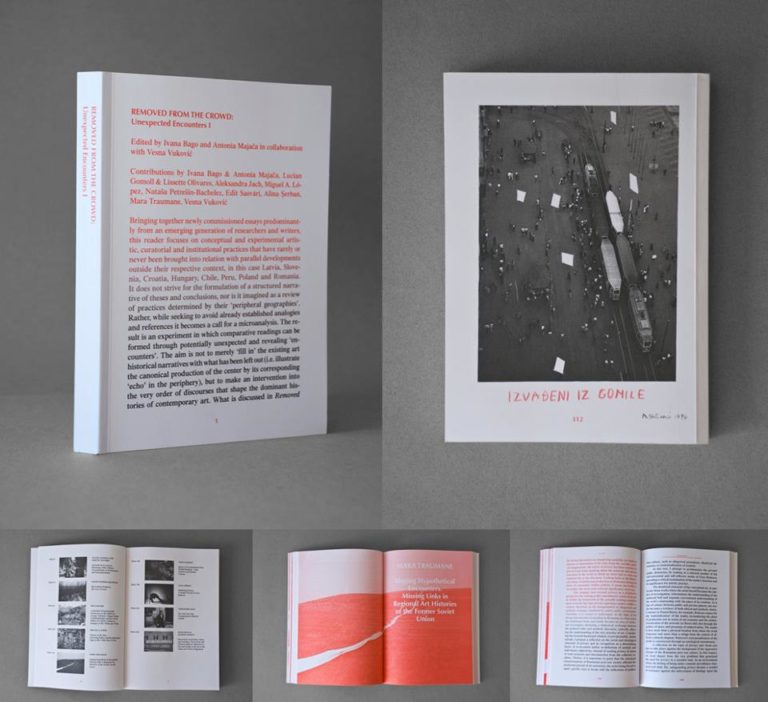
Bringing together newly commissioned essays predominantly from an emerging generation of researchers and writers, this reader focuses on conceptual and experimental artistic, curatorial and institutional practices that have rarely or never been brought into relation with parallels outside their respective context, in this case Latvia, Slovenia, Croatia, Hungary, Chile, Peru, Poland and Romania. It does not strive for the formulation of a structured narrative of theses and conclusions, nor is it imagined as a review of practices determined by their ‘peripheral geographies’. Rather, while seeking to avoid already established analogies and references it becomes a call for close reading. The result is an experiment in which comparative readings can be formed through potentially unexpected and revealing ‘encounters’.
Bringing together newly commissioned essays predominantly from an emerging generation of researchers and writers, this reader focuses on conceptual and experimental artistic, curatorial and institutional practices that have rarely or never been brought into relation with parallels outside their respective context, in this case Latvia, Slovenia, Croatia, Hungary, Chile, Peru, Poland and Romania. It does not strive for the formulation of a structured narrative of theses and conclusions, nor is it imagined as a review of practices determined by their ‘peripheral geographies’. Rather, while seeking to avoid already established analogies and references it becomes a call for close reading. The result is an experiment in which comparative readings can be formed through potentially unexpected and revealing ‘encounters’.
The aim is not to merely ‘fill in’ the existing art historical narratives with what has been left out (i.e. illustrate the canonical production of the center by its corresponding ‘echo’ in the periphery), but to make an intervention into the very order of discourses that shape the dominant histories of contemporary art. What is discussed in Removed from the Crowd: Unexpected Encounters I are exactly those practices that were themselves in search of new methodologies, exploring the interstices between the collective and individual, private and public, action and escapism, art and non-art, artist and curator, urban and nature, visible and invisible. Many of them were taking place in private spaces, in solitude, in nature, or camouflaging themselves as non-art, as part of everyday life, a protest, a crowded street, radically redefining or ignoring the idea of audience. They rather counted (consciously or not) on ‘an audience to come’ and so could be said to have been meant for the future. The art historians invited to contribute are thus today their ‘delayed public’, approaching them from both historical and contemporaneous perspectives, shaped by their own preoccupations and urgencies.

07/03/2012.
G-MK presents the new project by the Swedish artists and architects Magnus Bartas and Lars Henrik Stahl. The project is the result of a several months of research focusing on the usage of public space in the city of Zagreb and is based on questioning the relations between the public and private sector and their role in reshaping the urban landscape in the Croatian transitional economy.
In the video installation "Bogey", Bärtås and Ståhl develop parallel narratives revolving around the two neighboring areas in Blato, one of the Zagreb suburbs: the never completed building of the University hospital from the 1980s and the newly developed Golf & Country Club Zagreb. The presence of the huge building of the hospital next to the exclusive golf club points towards the dramatic changes and shifts in recent Yugoslavian and Croatian history. rnrnThe artists depart from the location of the hospital by repetitive reading of the text addressing the story of its history and its present. The last remaining guard keeps patrolling the hospital unable to prevent the continuous robbery of the building that gradually becomes stripped of all of its functioning parts and valuable metal. The gigantic skeleton of the hospital has kept resisting the influence of the weather but the nature is now invading its rooms and roofs. rnrnAnd while the public hospital has been deteriorating, the private golf club has been expanding. By the 2010 court settlement, the owners of the golf club were ordered to pay 4,5 million Kunas as a compensation for the illegal digging along the Sava River, close to their premises. By that point they have excavated 300 000 cubic meters of sand and gravel, which probably caused the contamination of the groundwaters of Sava. rnrnThe reading at the hospital along with the many sounds from the building and its surrounding, form a common sound track for the two films and their two realities. The routine walk of the guard through the hospital building exposes the marks of thieves, squatters and graffiti artists, and enfolds in parallel with the movements of the golf cars of the neighboring gated community.rnrn.....
rn
rnMagnus Bärtås is an artist, writer and professor of fine art at Konstfack in Stockholm. In his works he has been focusing on biographies, storytelling and architecture. His works is currently on view at Apex art in New York and he is developing new works for the Gwangju Biennale in South Korea, Tensta Konsthall (Stockholm) and the Art museum of Uppsala (Sweden).rnrnrnLars-Henrik Ståhl is an architect, artist and professor in Theoretical and Applied Aesthetics, Lund University. He has been the leader of arts-based research project such as Los Angeles Islands- American architectural influences in a Swedish region, and recently, Placebo-replacement strategies in hospital architecture (Zagreb project being part of it). Ståhl is also the director of ResArc, Swedish research school in Architecture.rn
rn
........rnrnSupported by: Ministry of Culture, Republic of Croatia, City of Zagreb – Office for Culture
rn
The artists\' research has been made possible through

07/03/2012.
Bartas i Stahl svoje istraživanje prenose u dvokanalnu video-instalaciju ”Bogey” kreirajući paralelu između nikada dovršene sveučilišne bolnice i Golf & Country Club-a Zagreb, dva \'carstva\' koja se nalaze jedno uz drugo, na samoj obali Save u zagrebačkom Blatu.
Dok je javna bolnica polako ali sigurno propadala, u njenoj blizini je rastao privatni golf klub. Odlukom suda 2010. godine naloženo je vlasnicima golf kluba da isplate 4,5 milijuna kuna za ilegalno iskorištavanje predjela oko Save u blizini njihovog zemljišta. Vlasnici su do tog trenutka, naime, iskopali 300 000 kubičnih metara pijeska i šljunka, što je uzrokovalo zagađivanje podzemnih voda oko rijeke Save.
Rad se razvija oko figure posljednjeg i jedninog preostalog ”čuvara bolnice” koji patrolira zgradom, nemoćan u namjeri da spriječi propadanje zgrade i konstantnu krađu svih vrijednih materijala s njenog skeleta. Narativ u bolnici i brojni okolni zvukovi čine zajednički soundtrack dva videa i njihove dvije stvarnosti. Čuvareva rutinska šetnja bolnicom sa svim tragovima kradje, skvotera, grafiti umjetnika i drugih istovremeno egzistira s kretanjima automobila za golf.
Magnus Bartäs (1962, švedska) je umjetnik, pisac i profesor likovnih umjetnosti u Konstfacku, Stockholm. U svojim interdisciplinarnim projektima najčešće radi s biografijama, pripovjedačkim metodama i arhitekturom. Njegov video-radovi višestruko su nagrađivani na Les Rencontres Internationales -09, Centar Pompidou, Pariz, Göteborg International Filmfestival. Recentne izložbe uključuju Apex Art u New Yorku, Moderna Museet u Stockholmu,Gävle Konstcentrum te Kalmar Konstmuseum. U pripremi su mu radovi za Gwangju Bijennale u Južnoj Koreji, Tensta Konsthall (Stockholm) i za Art museum of Uppsala (švedska).
Lars-Henrik Ståhl je arhitekt, umjetnik i predavač na Teorijskoj i primjenjenoj estetici Sveučilišta u Lundu. Također je i direktor ResArc-a, švedske istraživačke škole arhitekture. Njegova se inteletualna i umjetnička praksa nalazi na razmeđu arhitekture, umjetnosti, znanosti, urbanizma, istraživanja krajolika itd.
Podržali: Ministarstvo kulture Republike Hrvatske, Grad ZagrebBoravak umjetnika u Zagrebu tijekom istrazivanja i produkcije rada omogucen je suradnjom s MSU Zagreb.

07/03/2012.
\'Invisible landscapes / Part I:Earth\' is an 8 hours sound installation/composition, a part of a larger project \'La cour du domaine\'. The piece investigates the fields of phonography and the phenomenon of ecological perception. The composition consists of sequences of field recordings done on several natural sites over three continents. The linearity of the composition (involving no loops) invites one to be present in the meditation of time, to create a space for inner vision.(Davor Sanvincenti)

07/03/2012.
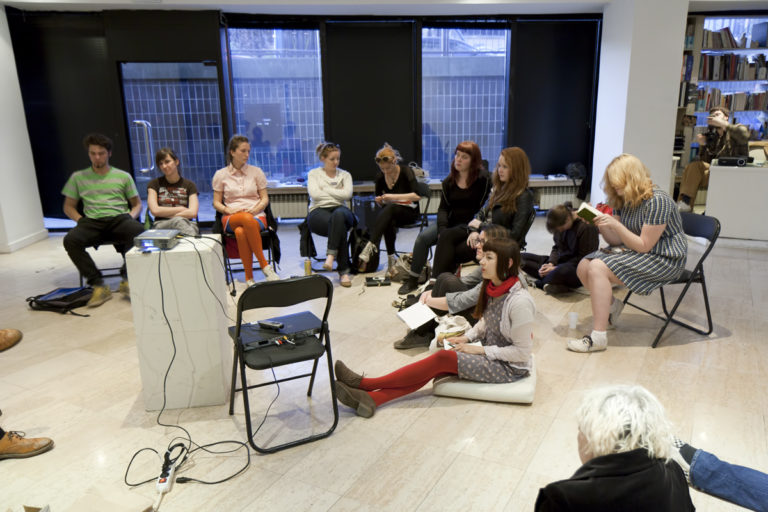
\'Removed From the Crowd\' is an ongoing research and publishing project developed by the Institute for Duration, Location and Variables (DeLVe), focusing on conceptual and experimental artistic and curatorial practices that challenged established notions of the public and the common. Based on the initial study of selected phenomena of the New Artistic Practice in Yugoslavia in the 1960s and 1970s, the project traces the histories of temporary communities and evolves around the notion of delayed, or postponed audience.In collaboration with Tranzitdisplay and local researchers, artists and collaborators, a new constellation of the research archive is being formed daily, based on the interaction of the existing and new material. The Prague chapter of the research is focused on projects in Czechoslovakia from the 1960s and 1970s happening outside the sphere of immediate visibility, exploring the interstices between the action and escapism, individual and collective, the urban sphere and nature, immediate and delayed audience.rnrnThe methodology of research and its presentation is likewise based on rethinking the idea of audience and the imperative of visibility: the archive takes shape through one-on-one meetings with artists, art historians, \'witnesses\'; potentially taking the form of a lecture for one where, the roles of the lecturer and audience get destabilized and interchangeable. It also questions the role of art historians and principles of formulating an interpretation. Instead of an enclosed procedure of creating an art historical interpretation, followed by the public presentation of it as a coherent and closed unit, the process of its formulation is open for interventions and contestation while in the making. The network of people involved thus becomes the immediate public of the research as well as participants in the interpretative procedure, a temporary community of individuals involved in the writing of art history, not unlike the communities around the artists of the period that is the topic of investigation.rnrnAs the collection of the research notes grows, anyone interested to join the process or contribute to the research is encouraged to get in touch and schedule a meeting.rnrn*The title of the project is borrowed from a 1976 work by Mladen Stilinovićrnrn..........................................................................................................................................rnrnrnConcept: Ivana Bago and Antonia Majaca (Institute for Duration, Location and Variables | DeLVe)rnrnResearch associate and coordinator: Vjera BorozanrnContact: delve@delve.hrrnSupported by: Tranzitdisplay, Prague; Ministry of Education, Culture and Sports – Croatia; Zagreb City Office for Culture
