


07/03/2012.
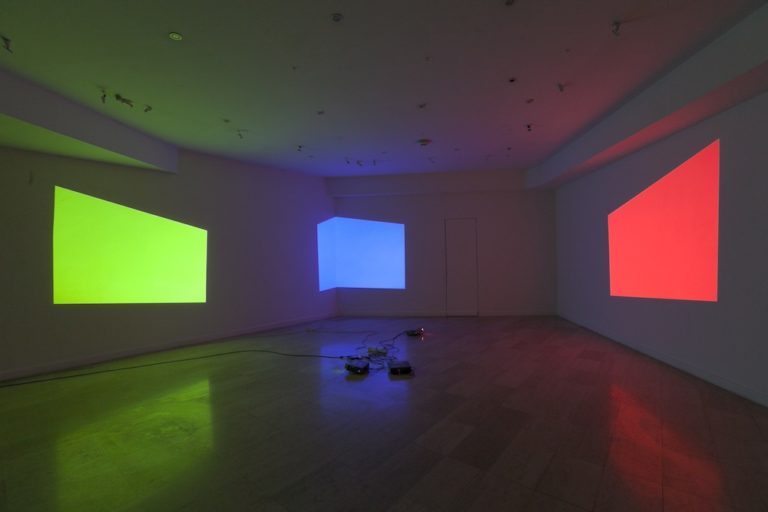
Join us for a one evening presentation of the yearly student project connecting the London Metropolitan University and the Academy of Visual Arts, Zagreb. This year the participants are Vanja Babić, Matija Djanješić, Nadean Downey, Mike Graham, Ana Kovačić, Iva Habus, Ivana Pipal, Elizabeth Mills, Mouez Hamdi, Sara Rodrigues, Fred Vernon, Ana Vuzdarić. Mentors and project coordinators are Ben Cain i Nicole Hewitt. rnrnThe exhibition Bok Bok has been developed within the frame of an annual project of linking students of BA Animation and New Media Department at the Zagreb Academy of Art, with the Fine Art BA students based at London Metropolitan University. rnThe project begins with a series of meetings, readings and workshops which aim to set out some of the objectives of the project. Although the underlying themes change from year to year, they often tend to circle issues related to foreignness, the exotic, tourism, displacement/dislocation, and estrangement. During their time in each of these cities the students from each university take part in group seminars and presentations, as well as attending exhibitions, museums, talks, bars, pubs etc. The work is often developed in and for the city and gallery where the work is presented. rnThe nature of the project embraces the improvisational character of the works, developing in a climate of fluidity and spontaneity. The experience often involves the students’ preconceptions and positions being constantly challenged. Therefore works are not always completed, but rather might form the beginnings of work to be made at a later stage. This joint project and the exhibition is a continuation of a collaboration started in 2005 with the aim of developing a long-term exchange between the two art schools. rnrn- - - - - - - - - - - - - - - - - - - - - - - - - -rnThe exhibition at G-MK has been coordinated by Ana Kovačić.rn.......rnSupported by: London Metropolitan University, Akademy of Visual Arts, Zagreb, Student Assembly, Zagreb rnThe program of G-MK is supported by City of Zagreb, Ministry of Culture RH, rn rn

17/11/2011.
Serija seminara i publikacija Izvađeni iz gomile: Neočekivani susreti okupljaju recentna i metodološki inovativna istraživanja konceptualnih umjetničkih praksi 1960-ih i 1970-ih godina u različitim društveno-političkim kontekstima, s posebnim naglaskom na ‘periferne’ geografije. Cilj nije tek ‘ispuniti’ postojeće povijesno-umjetničke narative s onim što je njime izostavljeno, već intervenirati u sam poredak diskursa koji oblikuju dominantne povijesti suvremene umjetnosti.
Seminar Neočekivani susreti I, održan 2010. u suradnji DeLVe-a i BLOK-a, rezultirao je prvom publikacijom koja će biti predstavljena u okviru nadolazećeg seminara. Okupivši nove istraživačke i tekstualne priloge pretežno od nadolazeće generacije istrazivača/ica i autora/ica, zbornik dovodi u vezu konceptualne i eksperimentalne umjetničke, kustoske i institucionalne prakse koje se nisu nikad, ili su se rijetko, dovodile u vezu s paralelnim kretanjima izvan svog pojedinačnog konteksta, u ovom slučaju Latvije, Slovenije, Hrvatske, Mađarske, Čilea, Perua, Poljske i Rumunjske.
Seminar Neočekivani susreti II kojega uređuje Klara Kemp-Welch okuplja izbor komparativnih metodologija pristupanja internacionalnim konceptualizmima: teoriju afekta putem koje se razumijeva odgovor Mađarskih i Poljskih umjetnika na invaziju Čehoslovačke od strane vojske Varšavskog pakta 1968; istraživanje paralelnih materijala kako bi se doveo u pitanje narativ o ekskluzivitetu Moskovskog konceptualizma i njegovih mitova o nastanku; pojam ‘prestrukturiranja društvenog’ u istočno-europskoj umjetnosti prije 1989.

27/10/2011.
U jednom od svojih tekstova likovni kriticar Marko Golub je zakljucio da samostalna izlozba dobitnika Nagrade Radoslav Putar u Galeriji Miroslav Kraljevic „moze, ali ne mora reflektirati americka iskustva pobjednika, ali sva ocekivanja obicno su usmjerena prema tome.“ U slucaju Davora Sanvincentija, dobitnika nagrade za 2010. godinu, pazljivi slusatelj nece ostati razocaran. Ne samo u doslovnom smislu, zato sto su dijelovi osmosatne kompozicije snimani, pored lokaliteta u Europi i Australiji, i u pustinjama americkog Zapada, vec i zbog specificnog tematiziranja prirode prisutnog u Sanvincentijevom radu.rnPisuci o Polju munja, Walter de Maria ustanovljuje nemogucnost „fotografije, serije fotografija ili druge snimljene slike“ da u potpunosti predstavi taj rad. „Izolacija je esencija land art-a“ biljeska je koja slijedi, ujedno i kraj teksta (Some Facts, Notes, Data, Information, Statistics and Statements, Artforum, travanj 1980.). Raskorak izmedju iskustva umjetnika u pejzazu pri stvaranju rada i reprezentacije za publiku u galeriji nesavladiv je i imanentan nacinu na koji su land art prakse kodirane u zapadnoj umjetnosti. Izolacija, koju trazi land art umjetnik, izmice reprezentaciji. Esencija land art-a ne moze se prikazati.rnSnimljene zvucne sekvence u asimptotskoj su potrazi za cistom divljinom, za zvukom pejzaza lisenog ljudskog djelovanja. Zvuk koji mozemo cuti u osmosatnom zapisu rezultat je selekcije tog iskustva, samim time on je vec nesto drugo – izdvajanjem i stavljanjem u novi kontekst, montazom a potom i uvjetima reprodukcije promijenjeno je i znacenje. Nevidljivi pejzazi/Prvi dio: Zemlja ne pokusava reprezentirati iskustvo, vec manipulira s isjeccima jedne neprikazive situacije i stvara novu perceptivnu situaciju, koja je i sama naglaseno neponovljiva i nesaglediva u cjelini, podcrtavajuci fragmentarnost i procesualnost. Ona funkcionira kao dio vremena i prostora koji meditira nad vlastitim protjecanjem. (Ana Kutleša)

14/09/2011.
Mnoštvo elemenata njegova rada snažno korespondira s poviješću hrvatske/jugoslavenske afirmacije progresivne visokomodernističke umjetnosti, njenog univerzalizma, s pitanjima oko njene ideološke neutralnosti, kao i s njenim potiskivanjem ili zaboravom tijekom konstituiranja narativa unutar politika novih nacionalnih drzava na ovim prostorima 1990-ih. Dinamike između radova na izložbi i lokanog konteksta u kojem su ovom prilikom predstavljeni tako impliciraju misljenje o subverzivnom potencijalu apstrakcije, ukazujući na kompleksnost odnosa između umjetnosti i idelogije u okvirima modernizacija umjetničkog jezika osobito izvan vladajućeg, zapadnog modernističkog narativa. Problematika Baskijskog modernizma inherentno pritom sadržava i pitanja o tome u kojoj je mjeri njena apstraktna univerzalnost sadrzavala i prikriveni, mitski identitarni idiom. Otxarkoaga (M-L) se bavi sudbinom bisti Marxa i Lenjina koje stanovnici radničke četvrti Otxarkoaga u Bilbau ad hoc prilagođavaju iz bisti za unutrašnji prostor u javne skulpture, nehotično ih pritom čineći formalno bliskima povijesti lokalne minimalne skupture poput one baskijskog umjetnika Jorgea Oteize. Rad Targu Jiu istražuje pak slučaj Brankusijevog Beskonačnog stupa, javne skupture u umjetnikovu rodnom selu u Rumunjskoj, te propituje razloge zbog kojih je taj naizgled posve eteričan, apstraktan spomenik toliko puta bio meta napada. Hernani se bavi slucajem kada zbog zabrane preimenovanja istoimenog parka imenom ubijenog borca ETA-e, policija uklanja sve plakete s njegovim imenom pritom nehotično uklanjajući i jednu ranije postavljenu apstraktnu skupturu iz parka. Slucaj krive identifikacije apstraktne skulpture kao monolita posvećenog poginulom borcu ETA-e postaje tako simptomatičan za načine na koje se idiom apstrakcije upisuje u određeni kolektivni imaginarij. Asier Mendizabal (Ordizia 1973) živi i radi u Bilbau. Njegova se praksa, fundamentalno vezana za skulpturu kao program, pronalazi u različitim medijima i procedurama, često uključujući pisanu riječ. Materijalnost znaka i jezika koji kreiraju reprezentaciju i formu kolektiva služi mu za čitanje fenomena poput identiteta i ideoloških odnosa koje izmiču konvencijalnoj interpretaciji. Mnogostruka presjecanja između specifičnih kodova moderne i njene aktualizacije kao popularne kulture u politici, kinematografiji i glazbi formiraju polje referenci njegova rada. Izlagao je na samostalnim izložbama u Artis den-Bosch, DAE, San Sebastian, MACBA Barcelona, Culturgest, Lisbon te recentno u Museo Nacional Centro de arte Reina Sofía u Madridu. Sudjelovao je na grupnim izložbama kao sto su Chacun a son Gout, Guggenheim Bilbao Museoa; Després de la notícia u CCCB Barcelona; Manifesta 5; Taipei biennial; Insiders, CAPC Bordeaux; Flüchtige Zeiten, Westfälischer Kunstverein; On Handlung, Bucharest Biennial and ILLUMInations; 54th Venice Biennale. Trenutno priprema samostalnu izložbu u galeriji Raven Row u Londonu. Podržali: Ministarstvo kulture Republike Hrvatske, Grad Zagreb i Veleposlanstvo Kraljevine španjolske u Hrvatskoj

21/07/2011.
rn rnAsier Mendizabal’s works presented at the exhibition ‘Prizemljeno’ at Galerija Miroslav Kraljevic focus on the historical relations between form and ideology, primarily through analyzing the meanings of abstract utopian universalism and its historical reception. Through different media (sculpture, text, photography and collage), Mendizabal is looking into popular and artistic practices and the configurations surrounding the relations between politics and art in public sculptures, particularly in the politically complex territory of the Basque country. rnThe exhibition at G-MK points to the mechanisms between abstract modernism and ideology and the ways in which the narratives around it are reshaped through the historical and political transformations; becoming, through rehabilitation, a constitutive element in the new political narratives or being erased from the public discourse. Numerous elements of Mendizabal’s practice correspond strongly with the history of Croatian/Yugoslav affirmation of the progressive high modernism, its universalism and the issues surrounding its ideological neutrality, as with the amnesia and suppression in instituting new paradigms in the nation state building in the 1990s. The dynamics between the works in the exhibition and the local context in which they are on this occasion presented, point to rethinking the subversive potential of abstract modernism and the complexities of the relations between art and politics outside the Western, master paradigm. The specific context of the Basque modernism inherently evokes the question to which extent its abstract universality contained also a hidden, mythical identitarian idiom.rn rn rn rn rn rn rnOtxarkoaga (M-L) deals with the destiny of the busts of Marx and Lenin that the citizens of the working class neighborhood in Bilbao adapted from indoor to public sculptures unintentionally evoking the forms of the Basque modernist tradition, especially the work of Jorge Oteiza. Targu Jiu relates to the case of Brancusi\'s Eternal Column, a public sculpture in a Romanian village of artist\'s birth, and looks into the reasons for which this ethereal, abstract monument became the subject of several violent attacks and attempts of destruction. The piece Hernani revisits the case from the Basque country, when following the governmental decision to ban naming the Hernani park by the name of a deceased ETA fighter, the judges and the police incidentally also removed an earlier public monument from the park. The case of the mistaken identification of the abstract sculpture as a monolith erected in honor of the ETA member becomes symptomatic of the ways the particular idiom of the abstraction informs certain collective imaginary. rnrnAsier Mendizabal (Ordizia 1973) is an artist based in Bilbao. His practice, fundamentally attached to sculpture as program, is resolved in diverse media and procedures, often including written word. The materiality of the signs and languages that create the representations and forms of the collective serves him to try a reading of phenomena like identity and ideological relations that eludes conventional interpretations. Multiple crossings between the specific codes of modernity with its actualization as popular culture in politics, cinema or music conform the most recurrent references in his work.rnHe has exhibited individually, among others, in Artis den-Bosch, DAE in San Sebastian, MACBA

14/07/2011.
U suradnji s galerijom Tranzidisplay u Pragu i lokalnim istraživačima, umjetnicima i suradnicima, te na temelju postojećih i novih istraživačkih materijala, stvara se, svakodnevno mijenja i nadopunjuje arhiva projekta u studijskom prostoru galerije. Fokus istraživanja u Pragu su umjetnički fenomeni iz razdoblja 1960-ih i 1970-ih u Čehoslovačkoj, koji su se odvijali izvan sfere neposredne vidljivosti i istraživali međuprostore između akcije i eskapizma, individualnog i kolektivnog, urbane sfere i prirode, neposredne i odgođene publike.
Metodologija istraživanja i njegove prezentacije također se temelji na preispitivanju ideje publike i imperativa neposredne vidljivosti: arhiva se uobličava kroz individualne susrete s umjetnicima, povjesničarima umjetnosti i svjedocima kroz predavanja za jednog slušatelja u kojima se, međutim, uloge predavača i publike stalno destabiliziraju i izmjenjuju.
*Naziv projekta prema nazivu rada Mladena Stilinovića iz 1976.
Koncept: Ivana Bago i Antonia Majača (Institut za trajanje, mjesto i varijable | DeLVe) Glavna suradnica na istraživanju i koordinatorica: Vjera Borozan
Projekt su podržali: Ministarstvo kulture RH, Grad Zagreb - Gradski ured za obrazovanje, kulturu i sport, Tranzitdisplay, Prag
10/06/2011.
\'The Dystopia Files\' at g-mk is the newest iteration of Mark Tribe\'s ongoing project, which recontextualizes the history of demonstrations in the US. Tribe had gathered an archive of protest footage, which serves as a base for creating site specific video installations in gallery and museum spaces. The work poses the questions about power relations, spectatorship, image manipulation, participation, interaction and political engagement.rnThe relationship between these issues and recent curatorial practices will be discussed during the workshop held by the artist. In a lecture following the workshop, Tribe will present his multimedia artistic practice, including his acknowledged projects such as Rhizome and Port Huron.rnrnrnrnThe exhibition is curated by ®eljka Himbele Kožul.rn rn...rnPhoto credit: Marko ErcegovicrnrnMark Tribe, The Dystopia Filesrn rnPublic protests, demonstrations and rallies on the streets, with their origins going back to the nineteenth century, have historically shown how people, by acting together, gain an active role on the political stage. Getting out on the street presumes claiming a certain territory and occupying places of historical or symbolic connotations. The street becomes a stage for the conception and execution of public events, offering participants the possibility of being present and visible, directly expressing feelings and beliefs and creatively showing resistance and dissatisfaction with existing conditions. These events facilitate bonding among the like-minded, and interaction between the proponents and opponents, as well as communicating with the society at large. Because they establish alternative forms of political agency, mass mobilizations are usually treated as threats by traditional political structures. Their inherent subversion, potential for political impact, and complex, continuously changing and fluid dynamics can rarely be predicted or completely controlled. As a result, street protests are almost always policed by state agencies, which use various forms of repressive power against them.rn rnMark Tribe’s The Dystopia Files—a series of video installations and performances, each time adjusted to a particular exhibition/theatrical venue—derives from an archive of video recordings of public interactions between police and protesters. Assembled by the artist, this archive contains footage shot by activist groups, journalists, external observers, the artist himself, and, significantly, by the police. The project is exclusively focused on documentation of North American protest actions that took place after 1999—the year in which the historic demonstrations against the World Trade Organization in Seattle took place. While this event was important for the geographical spreading and worldwide mobilization of the counterglobalization movement, it also marked an important shift in the forms and structures of grassroots organizing and public protest. The so-called “Battle of Seattle” also triggered significant changes in the security measures employed by the police and security companies, including increased surveillance, infiltration of activist groups, the use of alternative weapons, and various other tactics including preemptive arrests.rn rnBut Tribe is not exclusively interested in the socio-political and historical circumstances which triggered and/or modified these protest actions. Rather, by recombining and recontextualizing clips from his archive, the artist draws attention to the ritualistic and theatrical aspects of protests and conflicts. He focuses on grouped bodies and mobilized crowds, which often appear to perform

04/06/2011.
'The Dystopia Files u Galeriji Miroslav Kraljević dio je istoimenog dugoročnog projekta američkog umjetnika Marka Tribea u kojem rekontekstualizira povijest prosvjeda u Sjedinjenim američkim državama. Prikupljeni arhiv snimaka prosvjeda predstavlja bazu za site-specific video instalacije u kojima umjetnik propituje odnose moći, načine gledanja i manipulacije slikom te pitanja interaktivnosti, participacije i mogućnosti angažmana. Ovim će se temama baviti i radionica koju će Mark Tribe održati u okviru svojeg gostovanja, s posebnim naglaskom na kustoske prakse kao formu socijalne produkcije, nakon čega slijedi predavanje gdje će između ostalog predstaviti i svoje dosadašnje projekte, kao što su platforma Rhizome i Port Huron.
Kustosica izložbe je Željka Himbele Kožul.
Molimo sve zainteresirane za sudjelovanje na radionici da se ranije jave na info@g-mk.hr. Veselimo se Vašem dolasku
Mark Tribe (r. 1966.), američki umjetnik, školovao se na Sveučilištu Brown u Providenceu i Kalifornijskom sveučilištu u San Diegu, gdje je 1994. stekao MFA titulu. Njegovi umjetnički projekti uključuju različite medije i tehnologije, a tematski se kreću u polju institucionalne kritike, aktivizma, participacije publike i suradnje te otvaraju pitanja o performativnosti, medijaciji i javnoj sferi. Izlagao je u institucijama kao što su Wexner Center for the Arts u Columbusu, Ohio; LACE (Los Angeles Contemporary Exhibitions); Ronald Feldman Gallery u New Yorku; Bijenale u DeCordovi, DeCordova Museum and Sculpture Park u Lincolnu, Massachusetts; Aspen Art Museum; Park Avenue Armory u New Yorku; Haifa Museum of Art u Haifi, Izrael; Nacionalni centar suvremene umjetnosti u Moskvi, Rusija. Kurirao je projekte u New Museum of Contemporary Art, MASS MoCA, i galeriji inSite_05. Autor je dvaju knjiga, The Port Huron Project: Reenactments of New Left Protest Speeches (Charta, 2010) i New Media Art (Taschen, 2006) te brojnih članaka. Predavao je na Sveučilištu Goldsmiths, MIT-u (Boston Museum of Fine Arts), UCLA-u. Trenutno je docent na studiju Moderne kulture i medija na Sveučilištu Brown, gdje predaje kolegije o digitalnoj umjetnosti, kuriranju, open-source kulturi, radikalnim medijima i nadzoru. 1996. osnovao je Rhizome, organizaciju koja podržava produkciju, prezentaciju, očuvanje i kritiku umjetničkih praksi u nastajanju koje uključuju tehnologiju.
Hvala: Helena Anrather, Glassbead Collective, Larry Hildes, Ariel Hudes, Zinka Ivankovic, Sarah Kay, Ivan Marusic Klif, Ron Kuby, William Linn, Ines Loje, Brandon Neubauer, Nikita, Shruti Parekh, Sarah G. Sharp, Time\'s Up Video Collective, Suncana Tuksar
Projekt podržali: Ministarstvo kulture Republike Hrvatske, Grad Zagreb, Veleposlanstvo Sjedinjenih američkih država u Zagrebu
