


02/01/2021.
For the beginning of 2021, we present the work by Vida Guzmić, winner of the competition for the production and exhibition of the new work Tvornica under the title „Shadows of her paintings“. During the month of December, Vida Guzmić used the gallery space as her studio, a place where processuality and production coexist. „Naive for women“ was the working title of the accepted proposal for research of the archive of amateur artist Sofia Guzmić, the artist's grandmother, and her intervention in the collection of grandmother's never-before-exhibited paintings. The idea for the work arose from the continuation of research on feminist geography with focus on the relationship between amateur and professional artistic position. It is an important fact that this work is located in the space of Miroslav Kraljević Gallery, whose work until the mid-nineties was associated with amateur art. Sofija Guzmić used painting on glass as her main technique - on the backs of the paintings it can be seen that it was in the period of the eighties and nineties. Her paintings were created by copying, redrawing and collaging, and Vida also appropriates these techniques, using them in the analysis and deeper understanding of her grandmother's art. In this work, the artist experiments with color and light, making the gallery space a place of close encounter between traditional and contemporary approaches to artistic and amateur work. Vida Guzmić (b. 1986, Zagreb), works with painting, video and sound. She holds a Master's Degree in New Media from the Academy of Fine Arts in Zagreb. She graduated in Women's Studies and Curatorial Platform Program 2013. Since 2009 she has been exhibiting in Croatia and abroad. She was a resident at V2_Summersessions Test Lab, V2_Institute for unstable media in Rotterdam 2016 and KulturKontakt Austria in Vienna 2017, participant in WHW Academy in Zagreb 2018, and Home Workspace program , Ashkal Alwan, in Beirut 2019. Recent works deal with gender geography, relationships between objects and subjects, and still lifes. From 2012-2018 she was a member of the collective Space is Tactics. She organizes and leads workshops through Studio Pangolin, an art organization in which she has been a member since 2013. She is part of the recently formed collective Zvukospjevi (with Nicole Hewitt and Ivan Slipčević).
08/12/2020.
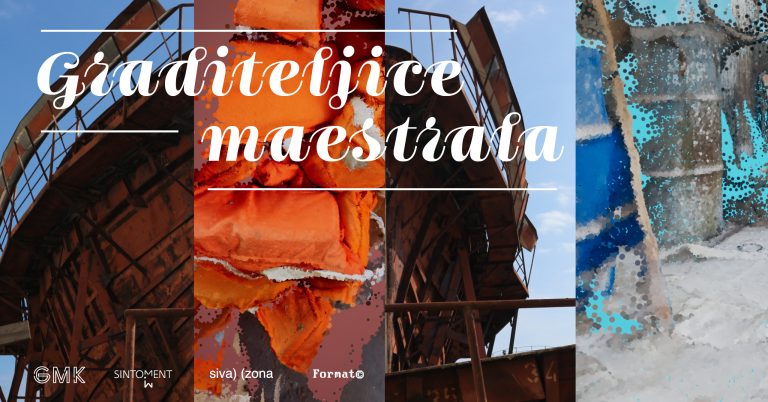
Within the project Industrial Heritage of Korcula island on the 10th of December 2020 at 6 pm there will be an online presentation of the project of the Shipbuilders of Mistral by Dijana Protić. The project is realized in partnership between Miroslav Kraljević Gallery, grey) (area, Format C and Sintoment. The project will be exhibited in 2021 as a VR installation / exhibition at GMK and as part of the Gray Area exhibition program. The project Industrial Heritage of Korčula island was officially launched in 2014 within the Gray Zone Association in Korčula. The project is conceived as an inclusive collaborative platform, a multi-year scientific and artistic research that combines an interdisciplinary cultural anthropological, ethnographic, artistic and curatorial approach, including dialogue and cooperation with the local community, institutions, associations and initiatives. The project is primarily focused on the area of Vela Luka, where we tackled two spots (the Jadranka fish processing and canning factory and the tin packaging factory 8. Mart) through several texts and artistic work by Božena Končić Badurina. For the past three years, emphasis has been placed on the third important case study - the Greben shipyard. Dijana Protićs artistic research began in 2017 with a focus on women's perspectives and work experience in Greben, and the backbone of the research was set by the stories of women former Greben workers. Although the initial idea was to turn the research into a film, the medium of the VR installation soon proved to be an important new element for deepening the theme and possible interpretation of the shipyard silenced female history. In collaboration with Marta Stražičić and Manja Ristić, the project gained a new visual and acoustic dimension that reflects new forms of presentation of industrial heritage and specific female memory crucial for (re) writing official and unofficial local history. A female voice guides us through the exploration of the abstracted space of Greben. Her memory intertwines several life and professional stories of narrators / former female workers in Greben, with a special emphasis on work in the so-called plastics, a key areas in which women were mostly employed. Project raises awareness of the extremely health-vulnerable and unprotected position that women were in. At the same time, we learn about the micro experiences of emancipation and financial independence that women gained while working in Greben. In addition, it alludes to the relevance of the women's collective, both in joint women's work and the interpersonal support that such a community creates. (Lea Vene) Access the project presentation via this link: https://talk.formatc.hr/ _ Partneri projekta / Project partners: Udruga Siva zona - prostor suvremene i medijske umjetnosti, Sintoment- udruga za multimedijalnu umjetnost i afirmaciju kulture, Format C Tehnička podrška / Technical support: Vedran Gligo, Format C Voditeljice projekta Industrijska baština otoka Korčule / Industrial heritage of Korčula Island project leaders: Marija Borovičkić i Lea Vene Kustosica / Curator: Lea Vene Art direkcija, modeliranje i VR tehničar / Art director, modeler and VR technician: Marta Stražičić Kompozicija zvuka / Sound composition: Manja

19/11/2020.
"The prototype of a motif (breakfast with all other objects on the table) is vacuumed into the plastic and automatically it becomes an artifact of ecological pollution. In retrospect, the motif is with its singularity, content, and physical appearance compression of historical and artistic meaning (as dead nature), and of the making process (vacuum forming). This process retroactively sublimes the whole garrison of the similar plastic progeny of our market: from plasticized tangerine slices to living plants wrapped in plastic. In that way, the process disrupts any possible potential of transmedial aggregation of pollution. Motif Dead nature is the reconstruction of my breakfast and contains a plate with food and utensils, a cup of coffee, a box of eggs, an artistic magazine, two books, a bowl with fruit, and two house plants. The scene is reconstructed in the plastic form via the termo vacuum-forming technique. During the making process, some motifs were vacuumed from both sides. Newly-made copies are still in 3D but they are hollow and they are just the illusion of their outer form and texture on transparent plastic. They are becoming disguised entities that are detached from the plastic mass only as of the illusion of the original. Plastic reproductions are precise copies of the prototype's „spirit“; the original is sacrificed for the sake of their unnatural offsprings and future recursive multiplication of trash. Material „Dead nature“ is the poorest in terms of quality and at the same time most problematic for our environment in terms of quantity. This quantity is the main lesson of the installation. Focus is shifted from the intimate, personal routine to the group dynamics of plastics which reflects new formal and content dispersion of previous living individual nature into the global problem." - Vesna Salamon Exhibition is opened until 28th of November. Considering epidemiological situation we kindly ask all visitors to wear mask in the exhibition space. This project is supported by the City of Zagreb. Work of GMK is supported by Kultura Nova Fundation, Erste Solidarity Fund, Foundation for Arts Initiatives and INA d.d.

10/11/2020.
Day: 14/11/2020 Time: 12:00 -13:30 (GMT+1) Place: via Zoom platform and Live at ZMAG association, Croatia. In 2018, ZMAG launched the Community Seed Bank as an informal and locally managed institution owned by its members, open to the public, food producers, small farmers, gardeners, and consumers. The main activities are the preservation and cultivation of domestic seeds, which will be saved, shared, reproduced, and passed on to future generations. On behalf of ZMAG - Sendy Osmicevic and Marija Zrnic will speak about their experiences of organizing and managing Croatian’s Community Seed Bank. On the other hand Italian geneticist, Prof. Salvatore Ceccarelli will speak about the role of biodiversity in plant breeding in relation to complexity, location specificity, and combined challenges of climate change, human population increase, human health, and food security, safety, and sovereignty. Prof. Anna Scialabba will reflect on her experiences of establishing the Seed Bank of Palermo University and the challenges of conservation of biodiversity in Sicily. Zoom link: https://zoom.us/j/98497127275?pwd=NTVrMndrSXhYL0VHcS9qQzBKNmZHQT09 Meeting ID: 984 9712 7275 Passcode: 523212 Speakers: Sendy Osmicevic and Marija Zrnic Members of ZMAG association. Green Network of Activist Groups (ZMAG) is an association established in 2002 in Croatia which unites organic gardeners and food producers, practitioners of sustainable technology and engineering, permaculture designers, economic justice model researchers, and participative forms of organizing. ZMAG deals with the promotion, education, and application of permaculture ethics and establishing a foundation for sustainability, which comprises various social, ecological, and economic levels. Info: https://www.seeds4all.eu/seed-distributors/croatia/zmag/ Prof. Salvatore Ceccarelli He is an Italian geneticist author of over 250 publications, of which about 140 in scientific journals. His career can be divided into the university period, the period of international genetic improvement, and the period dedicated to participatory genetic improvement - a strategy that keeps breeding knowledge and seeds sovereignty into the community of cultivators. Further development of this strategy led to the idea of participatory selection, which was initially implemented in Syria, and then extended, to Tunisia, Morocco, Eritrea, Ethiopia, Jordan, Iran, Algeria, Yemen, Egypt, and recently to Italy. He has worked with Vandana Shiva and many other activists and researchers. Info: https://www.researchgate.net/profile/Salvatore_Ceccarelli Prof. Anna Scialabba, UNIPA She is a Professor of Botany at the University of Palermo where she has carried out her teaching and research activities. Since its establishment in 1993, she has been in charge of the Germplasm Bank of the STEBICEF Department of Palermo University and has dealt with ex situ conservation by favoring biological aspects of plant genetic resources applied in the management of the banks. She is the author of more than 200 publications and articles. She participated in different national and international conferences. Info: https://pure.unipa.it/en/persons/anna-scialabba-6 Moderators: Egle Oddo and Lea Vene Egle Oddo is an Italian artist living in Finland. She has been researching plant seeds, vegetal consciousness and agency, plant analogies and plant imagery since 2007, with a specific focus on seeds and their interaction with the human population. Her work has been presented in international biennials and museums as well as

25/10/2020.
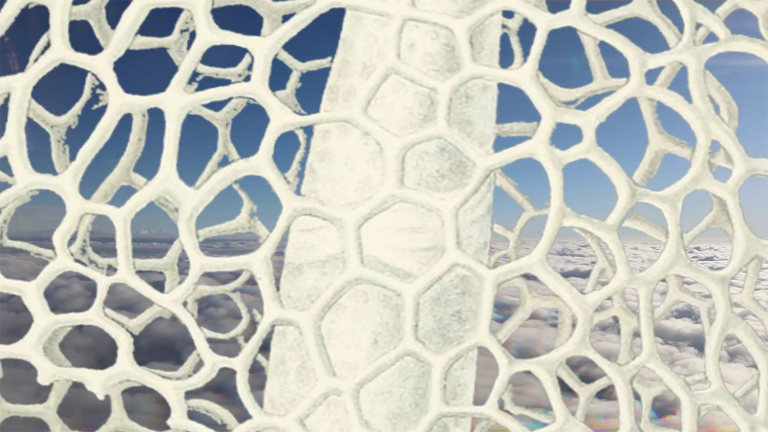
The monographic exhibition Five Short Stories by Egle Oddo, and curated by Lea Vene, will open on the 12th of November 2020 at GMK. The exhibition includes open air performances on 13/11/2020 and an online debate open to the public on 14/11/2020 at the headquarters of the Zmag association in Vukomerić. For this exhibition Oddo presents a non-linear narrative including elements of her long-term trans-disciplinary research, focused on plant seeds seen as elements asserting their way through the relations inter-species and vital balances regulating the biosphere. Observing the lives of scientists and activists involved in the conservation of seeds, Oddo conceived five fictional characters who have a common destiny, establishing a communication between human perception and plants. During a series of public performances, Oddo shares imaginary actions drawn from the life of those characters. The objects displayed in the gallery are fragments of their existence and bear traces of the characters' tactile experience. Oddo uses the title Five Short Stories exclusively in her solo shows, and in doing so resumes a long research that began twenty-three years ago, in 1997. Oddo's solo shows are rare. Being aware that most ideas and concepts move intensely in the hybrid spaces of digital communication, the artist usually chooses to merge her action within a choral project (as in the case of the Myymälä2 gallery and Pixelache Helsinki), or to put it in communication with other artists as in the case of Collective Intelligence for Manifesta12. The performance series is part of the Performative Habitats project supported by the Italian Council (8th Edition, 2020) program to promote Italian contemporary art in the world by the Directorate-General for Contemporary Creativity of the Italian Ministry of Cultural Heritage and Activities and Tourism. Exhibition is open until 12/12/2020. The project is supported by: Ministry of Culture of the Republic of Croatia, City of Zagreb, ZMAG, Italian Council, Arts Promotion Centre Finland, Finnish Cultural Foundation. The project is realized thanks to the collaboration with the STEBICEF Department of Palermo University and the CBBC - Center of Biotechnology of Borj Cedria. Locations and dates: 12/11/2020, Five Short Stories opens at the GMK 13/11/2020, performances (Marticeva street and outside the Meštrović Pavilion, the Croatian Association of Artists) 14/11/2020, online debate, conducted at Zmag association (Vukomerić 23/3, 10418 Dubranec) The program may be subject to changes due to the health emergency. GMK is supported by INA, Foundation Kultura Nova, Erste Solidarity Fond and Foundation for Arts Initiatives. Photography by: Antti Ahonen
08/09/2020.
Sprouting from a persistent need to share our artistic processes and find a possibility for contact even now when every such potential seems to slip out of the domain of the possible or reachable into the domain of total biopolitical control Ivana Mirchevska, Natasha Nedelkova and Elena Chemerska (Skopje, North Macedonia) will try and meet for a three week long residency in Zagreb during September of 2020.
31/08/2020.
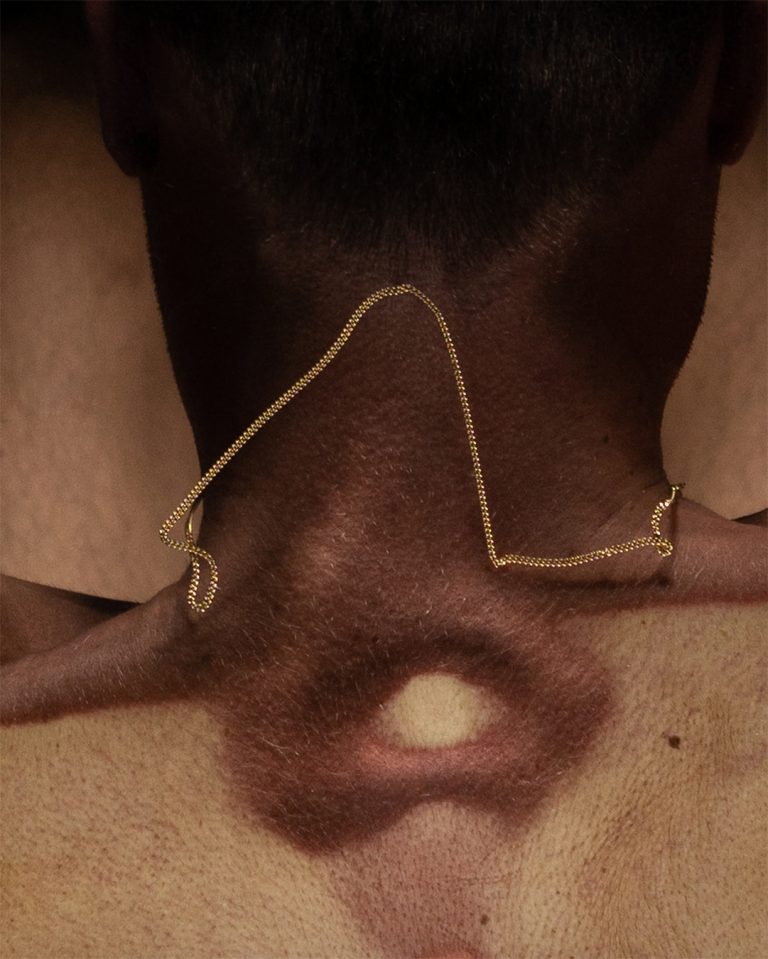
“Privacy advocates will find it difficult to convince the public that traditional definitions of privacy are of higher value than the freedom to leave your house. No one should want to abandon privacy as a value, of course, or even to downgrade its importance. But it’s entirely possible to develop a concept of privacy that is less metaphorical, with new boundaries consistent with the practical challenges society now faces.” (1) In a time of self-isolation, the home becomes the main arena of events. Between a film set and a black box theater, the home becomes the setting for a staged life, a life that only recently took place somewhere outside. The illusion of normalcy is enabled by the screen that delivers new functions with each day. We have set a new framework of living within which, isolated behind glass, we fulfill our needs, desires and obsessions. Meetings and sex parties over Zoom, socializing via Chatroulette, Michelin-starred restaurants available thanks to Wolt, 6 a.m. raves on Sundays at regular Club Quarantine parties. The screen has become the only place where any significant contact takes place, it enables us to reintegrate into the society from which we are cut off. In front of it we confess, learn, dance and undress – we define who we are or at least who we think we are. I magnify your feet with my thumbs. The possibilities of screen-mediated communication consequently generate new opportunities for voyeurism and surveillance. In interaction with technology, the body becomes its extension, code and base. Similar to the stranger’s arrival in Passolini’s Teorema, the screen seduces us, makes us confess and deprives us of our previous identity by transforming us into a code. We no longer associate surveillance with the act of watching but with the principle of organization, analysis and storage of collected data. Although it is bodies and actions that are being observed, the human element is completely erased from the process of watching. The main actor is now the algorithm whose eye is not neutral due to the fact that it is, like humans, laden with beliefs, assumptions, prejudices and opinions posing as objective truths. Although the virus has solidified our cohabitation with the screen, it has also impacted the redefinition of the concept of privacy. In numerous countries, efforts have been made to develop sophisticated technologies that conduct mass home surveillance under the pretense of fighting the virus. Trusted computing involving agreed surveillance has led to the reappropriation of technologies primarily related to war and profit, with a resolute goal – to preserve human life. Among them is the experimental program developed by the Government of the Republic of Croatia – SCAN. A wide-angle lensed micro scanner has been built into our phones. Under the guise of safety and infection prevention, SCAN has created a new monitoring ecosystem that continually records the patterns of behavior manifested both outside and inside the home. The power of trusted computing stems from its invisibility. Our computer, chip, network or cloud
23/08/2020.
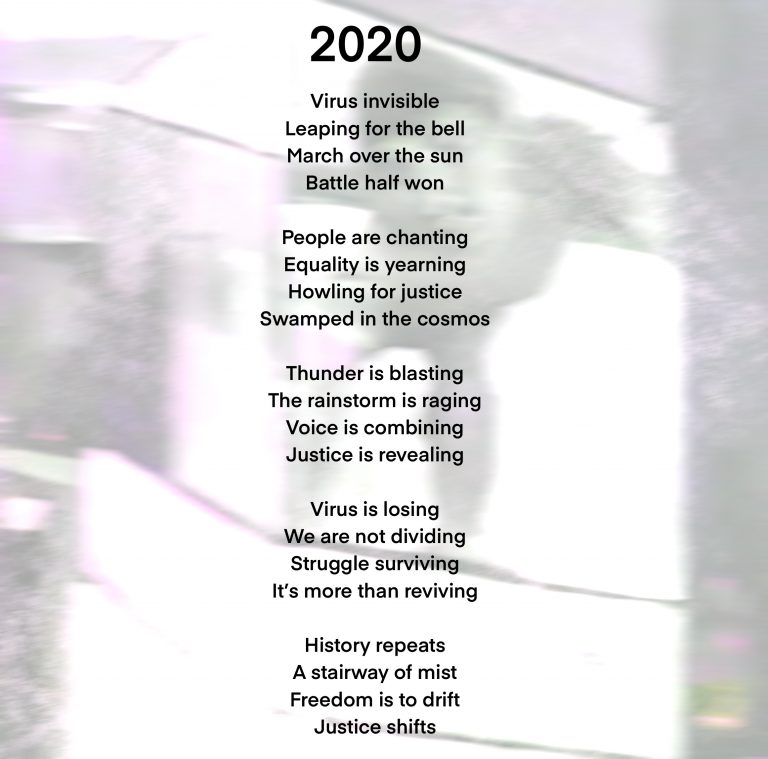
Annual student exchange facilitated by Nicole Hewitt and Ben Cain. During an exceptionally difficult period that included a pandemic and earthquakes, along with various other challenges, BA Art students from Zagreb Academy of Fine Art and LondonMet found ways to communicate, to share times, spaces, ideas… and to make work together over distance. Ordinarily -and this has been happening for more than 10 years now- this is an exchange project that involves real physical travel between London and Zagreb. On other occasions this project would also include an exhibition event at GMK Zagreb. Travel restrictions and social distancing have meant that we have had to manage the project very differently this year. Instructions, links, images, sound, text etc. were exchanged online, and following remote discussions on various platforms people responded to each other’s prompts and started making work. Much of that work dealt with changing conditions for interpersonal contact, and with world-changing situations at home and on the street (the period of the exchange coincided with the murder of George Floyd). Some of that work is easy to call collaborative, and some of it perhaps isn’t, but everything that’s presented here has developed from a shared space of remote contact and from attempts to exchange in a meaningful way over distance at a time of immense and intense change. List of participants: Sunčica Svilković, Isabel Southey, Luka Tomić, Stuart Lee, Ante Dujmović, Karla Labrador, Mayara Garcia Deo, Marijeta Mikačić, Jilly Topping, Ingeborg Reichel, Eun Howie, Karla Zrinščak, Konrad JabukowskiEun Mi Howie When the George Floyd incidence had happened, the writing was one of the ways to express and support the protest. In this video, cutting and throwing letters is a metaphor for violence and division from the communities and the race. The echoing voices is a metaphor for the people's voice integrated with one rather than individuals; having a sense of community is more potent than a sense of individuality. In this context of my poem, the virus indicates inequality. I hope one day we all have an equal society regardless of the colour of skin and be kind to others. Sunčica Svilković Isabel SoutheyThese x 4 films are a collection of short stories based on my childhood memories. Each story is a merge of fantasy and fact. The films explore the ‘murkiness’ of my memory. To emulate this I have created fictional characters that are personal to me. I decided the best way to articulate these memories was through audio. There is something comforting about stories being told to us. Perhaps this derives from childhood. The images accompanying each story are specific places or symbols, relevant to each story. Karla Labrador and Konrad Jabukowski here's a universal song all can understand and sing along to! Following the entirety of this project, there were many misunderstandings and miscommunications from all parties and individuals involved, in some way, shape or form. While discussing this and similar topics, Konrad and I settled on a common theme of native tongues, language and translation,
