


02/07/2020.
Final event of Open Studio: Vlad Brăteanu4.7.2020. 19h / 7ica artist statementFor this open studio, I am proposing several works // interventions // collaborations that centre around communication, interaction and urban acupuncture in public spaces. Scrutinising societal and geographical issues in neoliberalism, supermarkets as a place of exchange, consumption, labour and gathering, have been my point of departure for this artistic examination. With the presented ideas, I am conflating the matters of architecture and language to reflect on issues of exchange, value systems and the public sphere.When looking at public spaces, one can distinguish between places in use or places of gathering and non-places or abandoned places. I am juxtaposing supermarkets as a representative of living places to the forsaken place that is depicted on the wallpaper. Presented as a barcode, it asks of the value of these forgotten places, about Socialist architecture and how we deal with memory and heritage.Special guests: Ivan Kuharic, Sven SoricbioVlad Brăteanu (1986, Romania) holds a M.A. in Photography and Moving Image and a B.A. in Graphics from the Bucharest National University of Arts. He studied Philosophy in the Context of Contemporary Art with Catherine Malabou at the Royal Institute of Art in Stockholm. His background in graphics forms the base for theoretical and conceptual considerations for which photography functions as a primary medium and is extended through sound, found objects and video through constant playful semiotics of imagery. He is the co-founder of Template, an artist initiative and exhibition project that started in Bucharest in 2018 and is an alumnus of WHW Akademija in Zagreb.
17/06/2020.
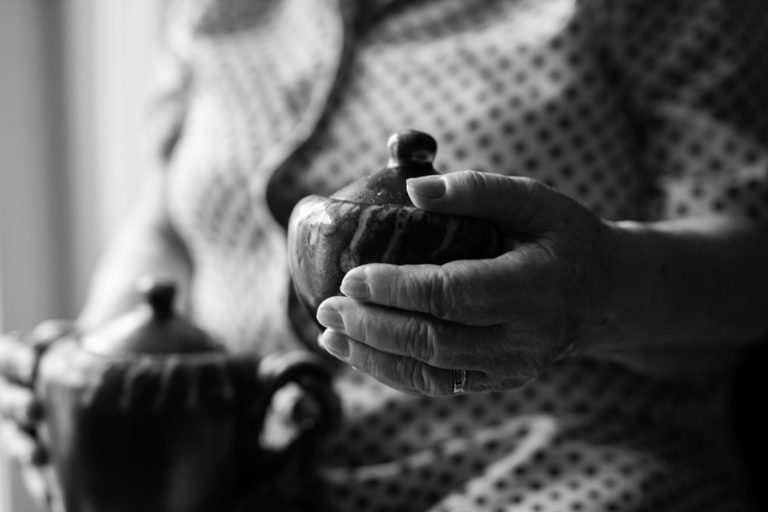
Through the glass ceiling, you can see the sky filled with clouds. Simultaneously, the ceiling is both an impassable barrier and a fragile, yet sturdy, protection from the elements. This ceiling is the metaphor for a woman which is, at first glance, in 21st-century society, completely free; however, her true freedom is unreachable due to this almost invisible obstacle. On the other hand, she proves every day that she is much stronger than the society assumes. Social roles are filled with stereotypes - a woman is a housewife, mother, wife. She nurtures, comforts, and listens. Female roles are passive; almost inseparable from terms like home, household, and family. “Female history” is also (with few exceptions) closely connected with the narrow parts of everyday life. Female history is not written by women. As gender theory and feminism show, female history is written by men - those who are, traditionally, presumed to be in the role of leader. Female experiences are marginalized, especially in societies with deeply rooted patriarchal values. The 20th and 21st centuries have brought more rights and liberties to women; but realizing true gender and sex equality remains on the distant horizon. “Od5Do95” is a multimedia artistic project which redefines current female history in Croatia. This project is a medium for transferring female stories and experiences. Girls and women talk about what it is like to be a female in Croatia and how their life path differs from those of their mothers, grandmothers, and great-grandmothers. In the project, each of the protagonists symbolically represents one of the years in life: from 5 until 95. Artists Andrea Kaštelan and Arijana Lekić Fridrih avoid intervening in the material. They document individual stories by asking the same questions, marking the answers through video. During the editing process, they make the videos colorless - transforming it into black and white. Without further comments, their documentary approach leaves an open space for audience interpretation. Besides interviews, the project includes a series of different materials, such as a photo gallery of objects from the personal history of the protagonists - photographs and video of female hands as the so-called female archetype. All the material is available on the web site: www.od5do95.com and YouTube channel. The project continuously runs from 2016, and since 2019, has been exhibited. The main idea is to translate the existing virtual museum of Croatian female history into material space. The exhibition in GMK is a voyage through female life with an accent on experience and common expectations still present in Croatia. Although each interviewed woman is perceived as an individual, there is a common theme that reveals itself while watching the entirety. That theme is conflict - a conflict between the woman and social norms, but also her inner conflict. Starting from personal situations in their own families, through examples that include wider social phenomena, women are in continuous conflicts with social expectations and forced norms, traditions, customs, and roles. At the same time, being immersed in rigid social rules since
07/05/2020.
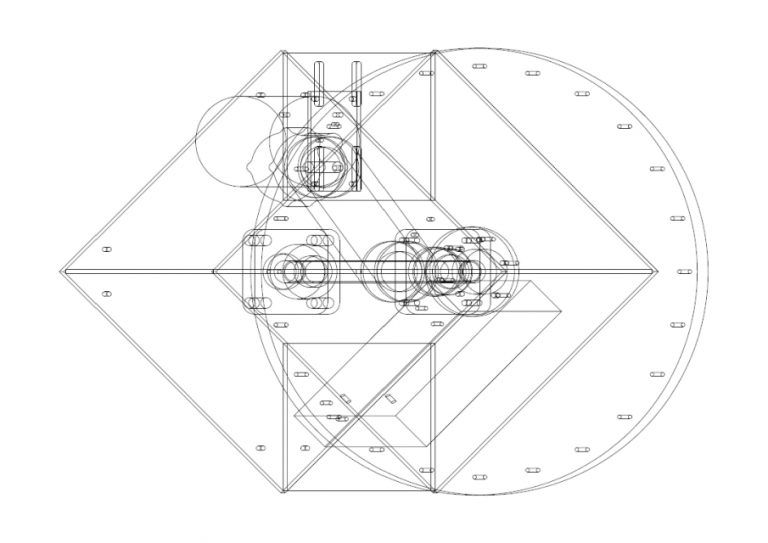
Rotoprojektor is a research dealing with transformation of a film projection into physical space, using mechanical means and physiological phenomena of afterimage and persistence of vision. In a way, it is an attempt to transform the planar space of movie screen into an endless cylinder of Grimoin-Sanson’s Cinéorama by mechanical rotation.During the open studio, Hrvoje Spudić will explore a set of parameters and combinations of a rotating moving image. By establishing a relation between the length of film sequence and rotation speed, the points of film sequence can be connected with points in real space.BIOHrvoje Spudić (1987) is an explorer of media techniques and technology. In his artistic practice he is dealing with sound, light, image, mechanics and print, researching them from their smallest units. His work was presented on platforms such as Sound art inkubator, MMSU Rijeka, GMK, Mjestimice svjetlo, Device_art 4.013, galerija Nano and others. He graduated from Zagreb Architecture school in 2015., where he now works as the assistant at the Department for drawing and plastic design. He is a longtime associate of Klubvizija film lab and 25fps film festival, for whom he held a series of workshops and analog film projections.
01/05/2020.
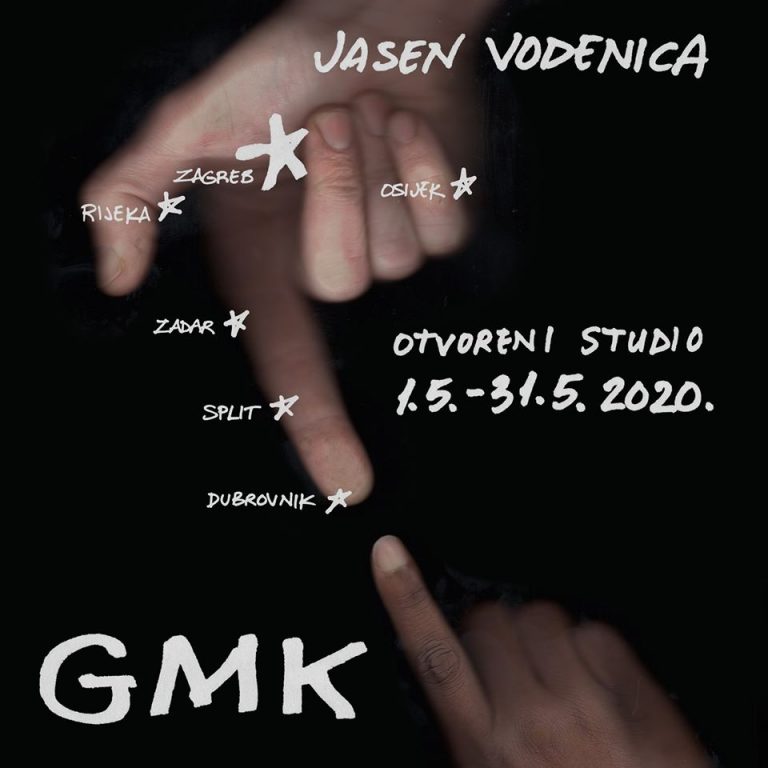
This research deals with the weird intersections of rare metals and all our lives in these entangled times of ubiquitous networked media. It concerns the hegemonic neocolonial relations of contemporary neoliberal globalization (that is, today’s corporate practices of so-called development and sustainability), through extraction of geological materials that are mined from the earth and re-worked into machines that define our technical media culture. Such sites where material turns gradually closer to media are scattered across the globe; however, I am researching only one such supply chain, and its real conditions; that of Tantalum. My focus is in Rwanda, as well as Macedonia, and the space in between.
01/04/2020.
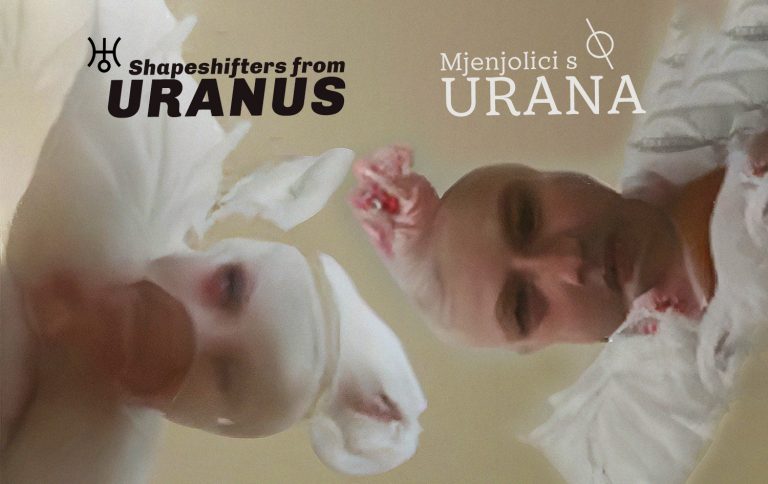
Mjenjolici s Urana predlažu zajednički uron u znanstvenu fantastiku s fokusom na autore koji su već početkom prošlog stoljeća preispitivali kako odnose ljudskog i neljudskog tako i premisu da se bijeli heteroseksualni muškarac (a ne lezbijka iz Ekumena, pas mješanac ili običan kamen) sa svojim tehno-ekstenzijama nalazi u središtu svemira. Želja nam je kroz čitalačku grupu ne samo proširiti imaginarij ‘o budućnosti’ već dovesti u pitanje vrijednosti na kojima se isti temelji. Potičući dijalog u kojem su jedina pravila da je sve što pomislimo (ne)točno te da su svi sugovornici jednako (ne)stručni, Mjenjolici pozivaju da privremeno zamijenimo zaključke opažanjem.
01/03/2020.
Za vrijeme boravka u GMK planiram raditi istraživanje na temu rada i produktivnosti, usavršavanja u svrhu komercijalizacije i konzumacije, te fetišizacije napretka, rasta i brzine. U prostoru ću istraživati relacije i kontraste između aktivnog i pasivnog, imaterijalnog i materijalnog rada, strukture i kaosa koji nastaju kao nusprodukt svakodnevice; polazeći od toga da je ista često uvjetovana učinkovitošću monetizacije našeg djelovanja.
03/01/2020.
A broad topic like that narrows the moment it's touched, in this case focusing on work within the context of artistic and freelace work. Through an exhibition made up of three elements – a booklet, a series of photographs and a short film, the author offers that which was once something to do and is now something done. The experience of simultaneous working and reflecting on work, counting its amount, qualities and accompanying content is about to transform in a most ironic way – the work is ending, while the exhibition is beginning.See you there!✶Tara Ivanišević (b.1990) is a visual artist from Zagreb who often explores and discusses the building elements of the artistic medium she is using, along with a chosen theme she is interested in at the time. Her chosen artistic media are performance, text, photography and film. She has a master's degree from the Academy of Fine Arts in Zagreb, Department of Animated Film and New Media (2017) and is a member of the Croatian Association of Visual Artists – HDLU (2017).

18/12/2019.
download pdf First issue of The Hub (Čvorište) — a publication imagined as a virtual exhibition space acompanied by a year long program enclosing exhibitions, performances, artist talk, screenings etc. Framed as a sub program of GMK, its focus is on procesual, hybrid, ephemeral and experimental art practices. ArtistsKaren Nhea NielsenVala T. Foltynnika pećarinaMax BrandsTaraSepp EckenhaussenVienne ChanMark Fridvalskiedited, designed & facilitated by Marko Gutić Mižimakov more info at http://cvor.site
