


28/03/2019.
Laura Netz
Live stream lecture (30 min + Q&A)
Vitalist materialism. Mining life
Start: at 7:30 pm
Interested in the Anthropocene, I think abour how my work as an artist and curator can denounce the exploatation of natural resources. It is known that all information and communication technologies need minerals to be created. Any piece of hardware is dependent on this source of natural wealth that are minerals. Currently, computers need rare minerals and minerals. A little investigation around the production channels of these technologies reveals that most of the minerals come from ex-colony countries that have been mistreated by colonialist policies. The Congo is currently suffering from post-national politics based on imperialist capitalism that is intensely technological. In Congo, the red mines are not regulated by the government of the Congo. The green mines are those that are subject to government controls and issue certificates of authentication to the EU and US corporations. However, the red mines are currently resulting in child exploitation, the guerrillas (who control these mines) and the displacement of people, with consequent famine and unhygienic living conditions. This dependence of the computational with the minerals transforms the geographical discourse into a geological dimension. The interest in materials lies in the so-called materialisation of the media, where geophysical elements express the scarcity of resources, the technological regimes, the geopolitics of labour, the planetary excavations, and the aftereffects of electronic waste. Here, my position is critical with the planned obsolescence in a capitalist technological and unsustainable model of innovation.
Regards des lieux
De nos Mains / With our hands
Silent movies and the sound of modified guitar
Start at: 8: 30 PM
A series of short films documenting men's relationship with matter, their work; talking about their gestures, their movements, their choreographies in their daily spaces. In this projection, unlike original one where along with the movies a musician plays on modified guitar, guitar sound will be recorded as the movie soundtrack.
It opens with rope, a lumberjack and a horse, then a human-sized machine and men around, and next a blast furnace and pebbles are transformed into metal. These three films are silent and yet. You almost hear the snow creaking and the flames crackling. In front of the streched screen, a man looks at an instrument, a guitar he prepared. He had placed various objects through the strings which made it possible to alter the sound, to do something else. He plays with movies all along, with pictures, and with silences too. It's a story of work through his altered instrument and his connection to the man in the three short films, put in sound and live music.
Laura Netz Web site: http://netzzz.net/Research: https://miningarchive.wordpress.com/Curator's practice: https://soundingdiy.wordpress.com/ Regards des lieux (Jérémie Lamouroux i Martin Debisschop) Web site: http://regardsdeslieux.fr/Vimeo: https://vimeo.com/user90133787
Saturday: 06th of April, 2019.
7 – 10 PM
Final exhibition: artworks produced during Open studio/ Tin Dožić
We are also representing the final exhibition of artworks by Tin Dožić, finalist of the Radoslav Putar Award, which was produced during Open studio. This
04/03/2019.
Tin Dožić has completed the study of psychology on the faculty of Croatian studies, University of Zagreb and New media department on Acadamy of fine arts in Zagreb. He uses the sound medium as a starting point in his art. His fields of activities also include field recordings, radio, experimental music, and art installations. His work is based on media research through the practice of developing his own electronic musical instruments, appropriation of outdated technologies and recycling. In his work, he questions the role of technology and media in pollution of the planet Earth and the link between natural resources and technology. His interests are DIY culture, Anthropocene and geology, alchemy, contact between science and art, sleep and dreams. He has exhibited and performed in many Croatian and foreign platforms, both solo and as a part of collaborative projects (Summer Sessions @V2_Rotterdam, Creart @LAVA Valladolid, Gallery Windows, ZK/U Berlin, Showroom of contemporary sound, MIMO, Sine Linea, Sound art incubator – Zagreb, Device art @Prag). Dožić's work Electromagnetisms: 14 simple interactions with electronic devices was used to represent Croatia on Palma Ars Acoustica Award 2018 organized by European Broadcasting Union. Artwork named Songs for Anthropocene won the award Golden watermelon (Zlatna lubenica) as a part of Media Mediterranea festival in Pula, 2018. Open studio will be opened for the public: 16.03. – 23.03. – 04.04. from 7 PM until 10 PMProgram Open studio is financed with the funds from the Ministry of Culture. GMK is supported by Zaklada Kultura nova and Foundation for Arts Initiative (FFAI).General sponsor: INA d.d.
24/01/2019.
Žižić/Kožul Open Studio 15.01. – 28.02.2019. First open door: 28.01. event starts at 20h
In the works of artist duo Žižić/Kožul discrepancy between socio-economic reality and its highly aestheticised representation is the main topic, and one they continuously approach. Using various strategies of appropriation, they are focused on manipulating both the product and its image as conceived and prepared for market by advertising industry. In their works they question the mechanisms and the possibility of constructing an authentic experience, as well as the role of an artist in creation of generic, seductive and desirable product.
Tourism is one of the main subjects of GMK’s programme for past and current year. Namely, although tourism and associated services generate almost one third of Croatia’s annual GDP (and is therefore a source of income for a big part of population), political and juridical framework for social as well as environmental reproduction is mostly based on ad hoc decisions directed at solving problems of individuals, often followed by suspicious business and political deals made at the expense of local communities. Comodification with sole aim of touristic consumption is becoming a more obvious process amid growing influx of foreign capital towards this branch of economy, while growth and overdependancy on tourism affects everyday lives of country’s population.
Žižić/Kožul act as artist duo since 2013. and have exhibited together on several occasions: 0,50 (HDLU), Wonderful Things will Happen (MMSU Rijeka), Amazing Moments (Pogon), Temporary Landscapes (Muzej Grada Koprivnice), Distinguishable landscape (HDLU), Spektar (MSU Zagreb) and Reccuring Landscapes (MKC Split).
As a part of the „Open Studio“ at GMK they are going to revise materials collected and exhibited in the last five years, focusing specifically on the subject of tourism and the process of creating a touristic item.
„Self inflicted isolation – social autism of some sort, as well as megalomanic understanding of importance of one's own agency, are perceived as analogies of artistic agency and are outlining a contextual framework for using a gallery as a production stage on which the process of making an exhibition is revealed. In our work we often re-use artifacts and photographies from a previous exhibition/ambient for the next one. Open Studio at GMK functions as a cyclic process, essentially a choreographed performance during which, by recycling old, adding new or subtracting redundant elements in equal time intervals, the exhibition is created.“
www.zizickozul.org
First event in Open Studio is going to be held at Monday, 28th January, while following dates will be announced later on.
Programme „Open Studio“ is financed with funds from Ministry of Culture.
GMK is supported by Zaklada Kultura nova and Foundation for Arts Initiative (FFAI).
General sponsor: INA d.d.
18/12/2018.
Anni Puolakka (born in Oulu, Finland) is based in Helsinki and Rotterdam and makes performances, videos, installations, drawings and texts in which situation-specific or documentary materials are incorporated into fictional worlds. Puolakka's works have recently been shown at Bunkier Sztuki (Krakow), BOZAR (Brussels), PLATO Ostrava, Kiasma Museum of Modern Art (Helsinki) and Performance Space (Sydney).
www.annipuolakka.comJaakko Pallasvuo (b. 1333) is an artist. Pallasvuo makes videos, texts, performances and installations that explore the anxieties of being alive now, and the prospect of living in some possible future. In recent years this work has been presented at The New York Film Festival, Museum of Modern Art in Warsaw, Kunsthalle St. Gallen and Jupiter Woods, among other places.www.jaakkopallasvuo.comTarwuk (Bruno Pogačnik Tremow and Ivana Vukšić) is an artist duo based between Zagreb and New York. Tarwuk collaborate with a diverse group of people, including their family members, to produce haunted installations, objects and films. Their recent exhibitions include 'Ti živiš već hiljadu godina' at team gallery, 'Beside Myself' at JTT, 'Tužni Rudar' at 15 Orient, '21070621-141332(2)' at The Museum of Fine Arts in Osijek, Croatia and 'Tout est pret. Au premier signal que vous nous enverrez de Tireste, tous se leveront en masse pour l’independance de la Hongrie. Xrzah' at The Ethnographical Museum of Istria, Pazin.www.tarwuk.comExhibition is supported by: Frame Contemporary Art Finland, FACE Croatia and Ministry of Culture of the Republic of Croatia.GMK gallery is supported by Zaklada Kultura Nova.Exhibition is open till 19th of Jan 2019.
07/12/2018.
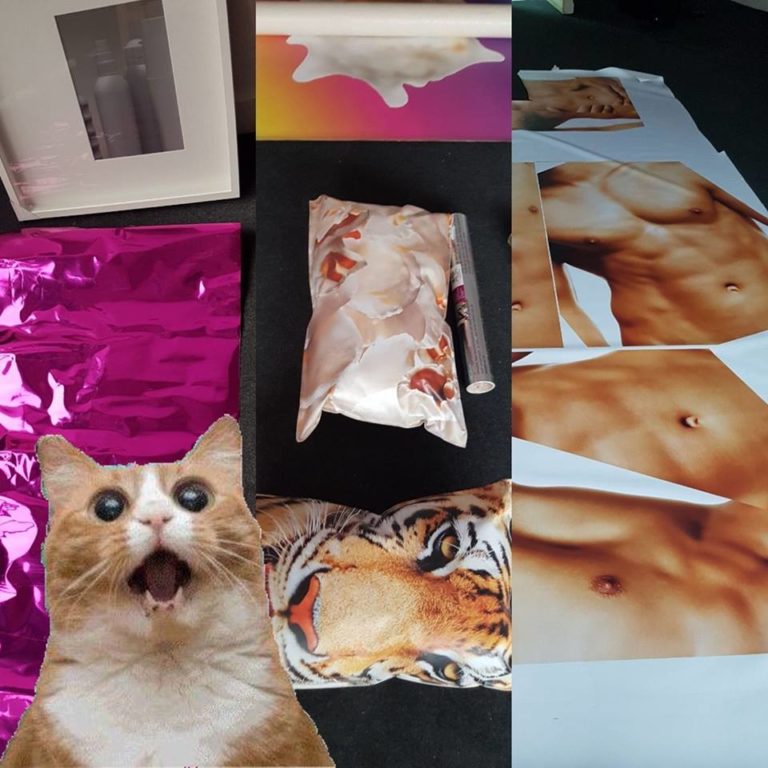
Matija Debeljuh produced his work “Y” as a winner of this year’s “Tvornica” application which awards the proposition for best new artistic piece, and which was focused on the subject of tourism, as one of the principal themes of gallery’s this and next year’s programme. Although services related to tourism generate almost one third of Croatia’s GDP (and are substantial resource for big part of population), political and juridical framework for spatial and social production is based on ad hoc decisions oriented towards solving individual problems, and often followed by suspicious business and political arrangements made at the expense of local community. Comodification which sole purpose is touristic consumption is becoming more visible amid increasing presence of foreign capital, while growth and consequential dependence of local population on tourism affects their everyday lives.
Within the range of key problems concerning the tourism and touristification, we were intrigued by Matija Debeljuh’s proposition to address the subject of sex/swing tourism in Istria, region that is popular among European nudists and swingers. This branch of tourism that flourished during the former Yugoslavia is now reduced to several nightclubs and beaches that state takes no care of and are owned by private owners. Sex tourism is perceived as one of the touristic options, and swinging is a legal branch of it.
Both couples and individuals voluntarily take part in swinging, and we distinguish between so called soft and hard swinging. Former understands no penetration except between partners, while in the latter partners are exchanged with no restrictions. Couples from surrounding countries come in Istria for swing tourism, motivated in large part by the things that are usually recognized as motivating factors for going on the journey: principal motives in large number of researches are “release of tension, intellectual enrichment, intimacy with fellow traveler, exotic adventure, getting to know yourself, finding out our true personality, and escape.”*
Matija Debeljuh approaches the subject from the perspective of a young, swinger couple. While spending time with them, he gets to know a local swinging scene: clubs and their owners, swinger lifestyle as well as its perception in the context of Croatian society. His work eventually focuses on the couple themselves, on production of swinger identity between document and fiction. Consciously chosen male gaze leads us into the swing club where we peep at sexualized woman body. Her choreography is performed in front of her partner and camera at the same time, additionally intertwining relation between artist and the couple. Male body remains largely invisible, and is sporadically reflected in just one of the portraits that accompany the movie. Performance is followed by the sound recorded during one of the parties in a swing club, as well as by the several frames of the club itself - of rooms in which we can imagine sexual games, various possible scenarios.
Scenes of woman’s movements are interrupted with fragments of conversation between artist and the couple, emphasizing their experience as swing tourists, but at the same time intimate perception of individual relationship towards their body and

20/11/2018.
Garden Road (Vrtni put) is unofficial name of Roma settlement located in south-east of Zagreb (Peščenica-Žitnjak municipal district, local council Savica-Šanci). Settlement is placed on the edge of industrial zone, its boundaries defined with fences that protect private and business properties on one side and above surface heating plant pipe line on the other side.
Around fifteen households are registered on three different addresses. Organic center of the settlement is comprised of educational and sanitary buildings, containers put there during pre-electoral campaign in 2012. Although it was initially announced that they are going to be used for educational work with children from the settlement, that plan was never realized. Therefore, due to practical reasons, container building planned for educational purposes has for the past few years been used as a place to live for a family of ten.
At the same time, aforementioned container building is also the only source of electricity for thirteen shacks in the settlement. Frequent overloads of electrical network cause arrester to break up the circuit, causing blackouts more than ten times a day. Sanitary container building is currently out of function. It is not known who is paying for the electricity, as well as who is responsible for the functioning of a sanitary container building. Concrete water trough with water tap is built in front of it, and it is an only source of water for more than sixty inhabitants, including more than forty under aged children.
There is no officially selected representative for this Roma settlement, while majority of inhabitants are illiterate, which leads to complications and politicization of questions concerning responsibility and status of representation amid noises in communication between municipal and official Roma representatives. Consequence for the inhabitants is type of daily life in which tactical innovativeness is confronted to strategic negligence: laundry can be done in a washing machine even without the existence of water supply line, while shack on the edge of town might be tidier than an apartment in the downtown.
Exhibition is conceived as an experimental ethnography of Roma settlement Garden Road. Thematically, it focuses on collective housing and infrastructural problems faced by inhabitants of this settlement, while subjects from their everyday life are expressed through various media: video clips and photographies are supplemented with diverse graphical illustrations – maps and diagrams. Exhibition presentation resembles video-textual report divided in different segments which present daily life of the settlement from various perspectives.
Bojan Mucko
We would like to thank the inhabitants of Garden Road for their hospitality and countless coffees, and especially families Golubovac, Šečić, Kovačević, Ganić, Hrustić, Delić
Project author: Bojan Mucko
Photo documentation of the project: Ana Guzmić
Project is financed by Ministry of Culture and Municipal department for education, culture and sport.
„Miroslav Kraljević“ Gallery’s annual program is supported by foundation Kultura Nova.
12/11/2018.
Publikaciju možete preuzati ovdje.
Likvidacija
03.05.2014. – 31.05.2014.
Kustosice: Ana Kovačić, Lea Vene, Sanja Sekelj, u suranji sa Sarah Lookofsky
Postav: William Linn
Umjetnici/ce: Alban Muja, Bojan Mucko, Iva Marčetić, Bojan Mrđenović, Rafaela Dražić, Dina Rončević i OUR: Organizacija udruženog rada (Alemka Đivoje, Dalibor Prančević, Robertina Tomić); John Hawke, Patricio Larrambebere, Fatmir Mustafa, Martha Rosler, Andreas Siekmann
Organizacija i koncept konferencije: Mario Kikaš, Tomislav Medak i Multimedijalni institut
(MI2)
Moderatori: Mario Kikaš, Tomislav Medak, Sarah Lookofsky
Sudionici konferencije: Miljana Babić, Neil Brenner, Boris Buden, Teodor Celakoski, Volker Eick, Emin Eminagić, John Hawke, Mario Kikaš, Doagoj Mihaljević, Bojan Mucko, OUR: Organizacija udruženog rada (Alemka Đivoje, Dalibor Prančević, Robertina Tomić), Milenko Srečković

12/11/2018.
Download ovdje.
Partners:
ROM (Romska organizacija mladih),
Zuralipe, SF:ius (Socijalni rub: Zanimljive
neispričane priče), ARCHIsquad
Authors:
Tihana Bertek, Tamara Bjažić Klarin,
Antonija Komazlić, Jere Kuzmanić,
Nikola Puharić, Sanja Sekelj i Lea Vene
Associates:
Ana Guzmić, Bojan Mucko,
Osman Muratović, Siniša Musić,
Igor Sarnavka
Editors:
Ana Kovačić, Sanja Sekelj, Lea Vene
Proofreading:
Petra Bušelić
Design:
Rafaela Dražić
Tisak:
Kerschoffset d.o.o. Zagreb
Naklada:
200
ISBN:
978-953-58132-3-1
Publisher
KUD INA − Galerija Miroslav Kraljević
www.g-mk.hr
Projekt podržali:
Grad Zagreb − Gradski ured za
obrazovanje, kulturu i sport
Grad Zagreb − Gradski ured za
socijalnu zaštitu i osobe s invaliditetom
Ministarstvo kulture Republike Hrvatske
Zagreb, January 2016.
