


08/11/2018.
Work of the panic is three-year-long processes of choreography, research, and production formed by Croatian performance collective BADco which starts with the sneak peek in the constellation of the prevention of an emergency from the perspective of the work which is in the paradoxical correlation with production – it products destruction. Title Work of Panick corresponds with the Croatian translation of the title of the book City of panic by Paule Virili in which the writer connects the logic of creation without creation in the society and art. While terrorism, on the one hand, produces situations like accidents, as annulation of the continuity, work of the safety, on the other hand, produces dobule annulation, double negation, almost esthetical operation at the surface of the transparent city, the city that is overlighted and overviewed. But also the city that produces panicked with control of the public space and with differentiations between social groups, by enclosing towards migrants and retributes bodies in the space. At the same time with the increasing of the work in the sphere of safety, rises general social insecurity – instability of employment, imagining of threats, catastrophic scenarios. The city has become today one unusual combination of museums and theatrical dispositive – overviewed and curated theatre of operation. When we talk about art approaches to this subject mainly different forms of spatial analysis in the organization of bodies and social choreographies predominate. Our wish is to achieve visibility for those hidden processes and relationships with exchanging their time parameters. Crucial of this project is then temporal directions of the project. The project assumes three phases of work from 2018 until 2020: workshop, research, and production. It also includes a great variety of artists: dancers, choreographers, actors, dramatic and visual artists – most of them part of the younger generation of contemporary artists. 10.11.2019., noon. GMKParticipants: Mia Štark, Espi Tomičić, Romina Tonković, Vida ZelićProject by BADco and Drugo more is part of the program direction Dopolavoro project, Rijeka 2020 – European capital of culture, with the support of the Ministry of Culture and City of Zagreb. The work of BADco is supported by Kultura Nova Foundation.
29/10/2018.
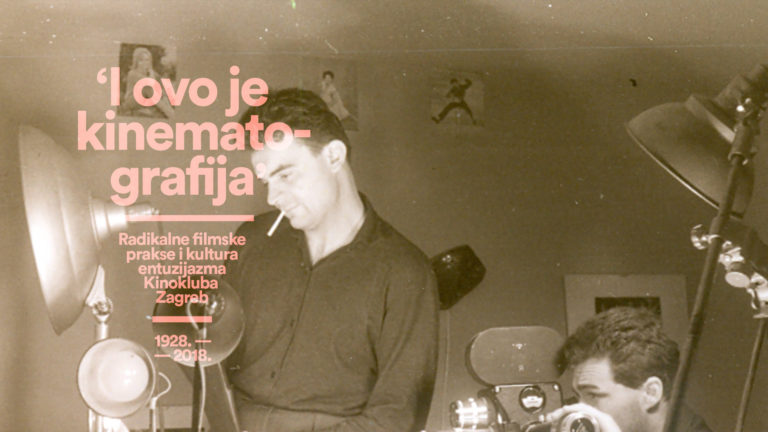
The very classification "amateur" has an apologetic ring. But that very word–from the Latin "amateur"–"lover" means one who does something for the love of the thing rather than for economic reasons or necessity. And this is the meaning from which the amateur filmmaker should take his clue. — Maya Deren, 1959. Question of amateurism and enthusiasm in the contest of Cinema club (Kinoklub) Zagreb is followed by a rich and complicated history of interpersonal relationships, technological changes but also radical approaches to the art of filmmaking. It has survived in its nine decades several different economical and political regimes. From their beginnings in Fotoclub Zagreb formed during the Austrian Hungarian Monarchy, through the Kingdom of SHS and Yugoslavia till NDH, FNRJ, and SFRJ, Kinoklub Zagreb has its 90th anniversary welcomed as serious, organized and well established non-govermental organization. History of the Kinoklub is more or less history of his members, and their gestures had placed today's participants in one specific position considering their material history. In other words, except for a few members, most of them aren't aware of their material history, their heritage, and work. Continuing the tradition of celebration of the anniversary, this exhibition represents one amateur reconstruction of common history and dialog with all of the authors in the past 90 years. That mission for the organisators from time to time seemed like bizarre temporal cadavre exquis. Every unwrapped layer of found material quite often resulted in the demystification of a completely new enigma. Through textual and visual dialog we have found creative, poetic and ideological similarities and differences which this year mark our 90 years. Petra Belc and Working group of the 90th anniversary We are greatly thankful to the Croatian movie association which has given part of its material for this exhibition.

29/10/2018.
As a result of the careless activities and lack of the general system of waste disposal in the economic structure of the state, waste becomes part of marine life. It appears: floating on the surface of the sea and under the sea surface, at the bottom of the sea and on the beaches. It has a different origin, it is in different sizes, shapes, durability, etc. Without proper handling, it becomes a threat to marine life which can be seen in a series of ecological, economic, cultural and health indicators. Jelena Perišić, designer of the visual communication made this concept as visualization and interpretation of the available data of the recent scientific researches on the subject of sea and ocean plastic pollution with the focus on microplastic waste. The base of the concept is the formation of the booklet in PDF which can be shared simply and can easily penetrate in different social groups to raise the awareness of this specific social situation. The booklet is a series of illustrations with two mini-narratives on the ways how plastic can get to our food. Through six scenes, we follow one specific object which finally ends up in the sea (in its micro-dimension) after which it became eaten by sea creatures and then (possibly) people. Story no.1 The yellow plastic bottle of detergent, micro: plastic fragment: usage, inadequate disposal, fragmentation of product under specific environmental conditions, consumption by the sea creature Story no 2Synthetical fabric (red T-shirt), micro: synthetic fabric: usage, washing through sewage system from the washing machine, through water waste system enters the sea and is consumed by the sea creature Apart from the high durability and flexibility of synthetical fibers, they leave less visible traces of being part of the sea environment. Washing machines and water waste systems due to their obvious technological lackings (during water filtration) enable almost undisturbed flow in the sea. Author: Jelena PerišićCoordinator: Tina RajićPartner: GMK

24/10/2018.
The aforementioned audio drama was created as a product of workshops on the theme of memory in which Medveščak home users and preschool and lower elementary school children participated. Workshops were held in the home space during May 2018.
The starting point for the workshops was the Wilfrid Gordon McDonald Partidge picture book talking about the friendship of a boy and a lady living in a nursing home. A boy, faced with the loss of his friend's memory, tries to find out what that memory would be, questioning other people what the memory represents to them.
Through a series of workshops, an effort was made to engage in dialogue between children and the elderly, with memory and its importance being a central theme.
After the presentation, it will be possible to download your own copy of the audio drama.

24/10/2018.
History is an interpretation of the meaning that the past has for us. - Johan Huizinga
The exhibition 'Micro Archeology' shows what happens when a number of integrated circuits - in the common name: chips - are found in one place and move into 'archaeological excavations' below the surface of micro artifacts.
The history of electronics knows the concept of the integrated circuit thanks to physicists Robert Noyce and Jack Kilby who presented their work in 1958 as part of Texas Instruments. Exactly sixty years later, two authors begin their primitive 'archeological' excavations on the surfaces of monolithic chips, some thirty years old, in their local makerspace. Using crude mechanical methods, they defile their artifacts, but at the same time apply methods of preserving objects in situ and fence the surfaces of their excavations on chips, making them 'micro-sites'.
Excavating and scraping archeological artifacts beneath the microscope, they come across a fascinating world of electronic "cities", functional and rational architectural structures and markings. But the author's focus in this case is not on reconstructing the original meanings and logic of the chips (reverse engineering), but on recognizing the aesthetic values of found, commonly unknown and invisible structures.
By exposing the fragility of the chip to the palm of the hand and moving it beneath the microscope, the chip becomes a powerful witness to an advanced civilization, seemingly far more advanced than that of scientists trying to satisfy the curiosity of the surface of the artifact while playing with the position of a micro-archeologist. The process of shifting the admiration of 'explorers' who consume, for example, the 555 chip among many, encounters the complex structure of urban geographies and leaves the site open to future micro-archaeologists and brings the visitor into the strange intimacy of a small and at the same time giant microscopic world.
Thus processed 'artifacts' at some point become 'conserved' objects of 'primitive' technology, while such a time and 'exploratory' micro-journey from homo sapiens to homo ludens allows the question to emerge at what point and at what scale, one the object becomes an archeological artifact.
Exhibited by: Damir Prizmic, Hrvoje Spudic
Curator: Deborah Hustic
Designer: Leo Kirinčić
Lecturer: Vesna Zednik
Organizer: Radiona
Partner: GMK
Supported by:
Ministry of Culture of the Republic of Croatia, City of Zagreb
18/10/2018.
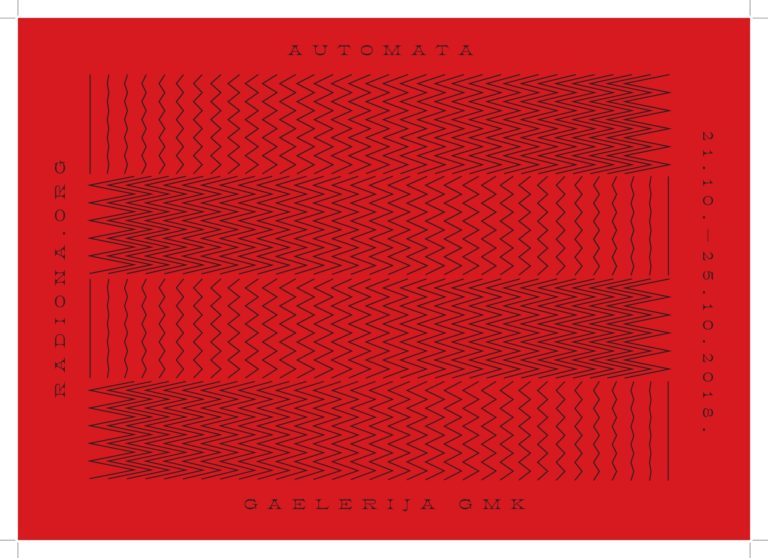
As part of the series "Imaginary Electronics - Coded Worlds", Radiona.org continues its journey through electronic geographies, bringing the game of absurdity and the seriousness of automata theory to the GMK gallery on this occasion.
Two years after the Alan Turing exhibit - an "electronic alchemist" as part of the Re-Making / Re-Mixing History series, where the Turing Machine was exhibited, a theoretical device capable of executing any computer algorithm whose medium is an infinite strip - the ultimate automata instance, returns to the same concept through free interpretations of machines, mechanics and digital interfaces in the context of citizen science.
The automaton as a mathematical and finite model of infinite states executing a certain algorithm can be connected to almost all devices from our environment whose action is enrolled through state and transition. Therefore, the challenge of processing information and the mechanics of automata served as an inspiration to the Radionin collective to approach the creation of machines and digital interfaces that (anger) usefully turn into a co-play of the usefulness of the objects that surround us on a daily basis.
In dealing with the very name of a series of exhibitions, the authors question the ways in which an image that has already emerged is abstractly linked to the perception of an artifact, and how the author and the observer shape their imaginary object through various processes of "reading" works.
Automatics and the theory of automatons seem to the observer distant from electronics as extremely abstract concepts with a thin boundary line to philosophy, but what if we include elements of humor and everyday life in order to bring the abstractness of machine and cognitive processing algorithms to their own accord? Well, let's go to the drones of useless machines to get the usefulness of them…
Exposed by: Davor Jadrijevic, Marko Jovanovic, Goran Mahovlic, Mario Pavlic, Ivica Zdelarec, Jurica Zrna - Marvin
Curator: Deborah Hustic
Lecturer: Vesna Zednik
Designer: Leo Kirinčić

05/10/2018.
In Situ - Missing Objects is a project aimed at finding new articulations of urban public space through active citizen participation. Urban public space is viewed not only as the sum of material and social interactions and their relations, but also as a place of continuous transformation that results from the complex interrelationship of technology, media, society and public space.
In situ publication - Missing Objects includes a two-year exploration of a project of the same name. The aim of the project was to develop citizen participation methodologies in the process of designing / creating interventions in a real and hybrid public space - one that exists at the boundary of the physical and the virtual. The publication archives and explains the conducted research, that is, its theoretical and practical segment, which consisted of a series of workshops and interviews with citizens. In addition to the publication, we will also present a web platform that brings together research findings, but also acts as a space for collaborative reflection on the potential of public space.
Authors: Dora Đurkesac and Karla Paliska
The project and publication were created within the program of the Miroslav Kraljević Gallery Factory with the support of the Ministry of Culture of the Republic of Croatia.
05/10/2018.
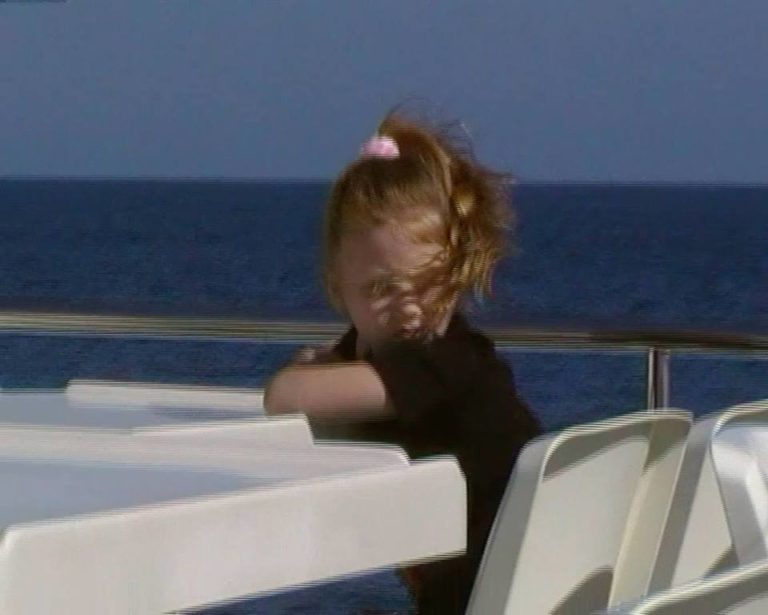
Katarina Šoškić will present her research ”The Tourist: zones, seasons, and fields in between" as part of her PhD in artistic research at University of Applied Art Vienna. She is curious about European coastal tourism in well-organized societies as well as in those in developing countries in the middle of transitional processes. Wild examples of the latter could help me locate and emphasize the issues in the zones where the change of landscape is performed more subtly. What stays invisible and what becomes obvious in these comparisons will serve as a basis for each individual case, emphasizing: the position of a tourist and her encounter with the localities, the way the localities are constructed and maintained and the way this interaction functions or doesn’t through successful and unsuccessful implementations of tourist attractions.Second phase of the research ”The Tourist: zones, seasons, and fields in between” serves as a sample for my investigation on the tools of research, namely photography and written word, their codependency and potential necessity. After the first phase “Poolsides and spring boards”, the film “Tourist agency” comes as an intentional ‘jump’ into 'reality' and investigates relevance of personal experience as opposed to the formal theoretical approach which the previous phase stood for.Katarina Šoškić is invited to take part in the residency program organized by Gallery Miroslav Kraljević. Residency is focused on critical examination of the effects of tourism in Croatia. Katarina Šoškić is an artist researcher from Belgrade, based in Vienna. She is interested in potency of an image — the way its narrative qualities could be employed to question social structures. Šoškić use photography and words to research and analyze social phenomena, culture and subculture, impacts of tradition and history, constructions of social roles and underlying psychological mechanisms. Since October 2016, she is a candidate for PhD in Artistic research at the University of Applied Arts in Vienna with her ongoing investigation on tourism and tourist zones of European coastline.Residency is supported by the Ministry of Culture of the Republic of Croatia and the City of Zagreb.
